Korean Won Dollar Exchange Rate Near ₩1,500 — JPY 158, UST 4.5% & Three June Scenarios
Trending · May 17, 2026 · ~6 min read
Korean won dollar exchange rate is approaching ₩1,500 — a psychological threshold not breached since the post-COVID volatility. The won hit ₩1,497 on May 17 as U.S. 10-year yields broke 4.5% for the first time in a year and USD/JPY touched 158. Iran war escalation and a 6.0% YoY U.S. PPI print have Ed Yardeni declaring Fed rate cuts “essentially impossible in 2026.” Three June scenarios analyzed.

1. Korean Won Dollar Exchange Rate Near ₩1,500 — Trend and Forecasts
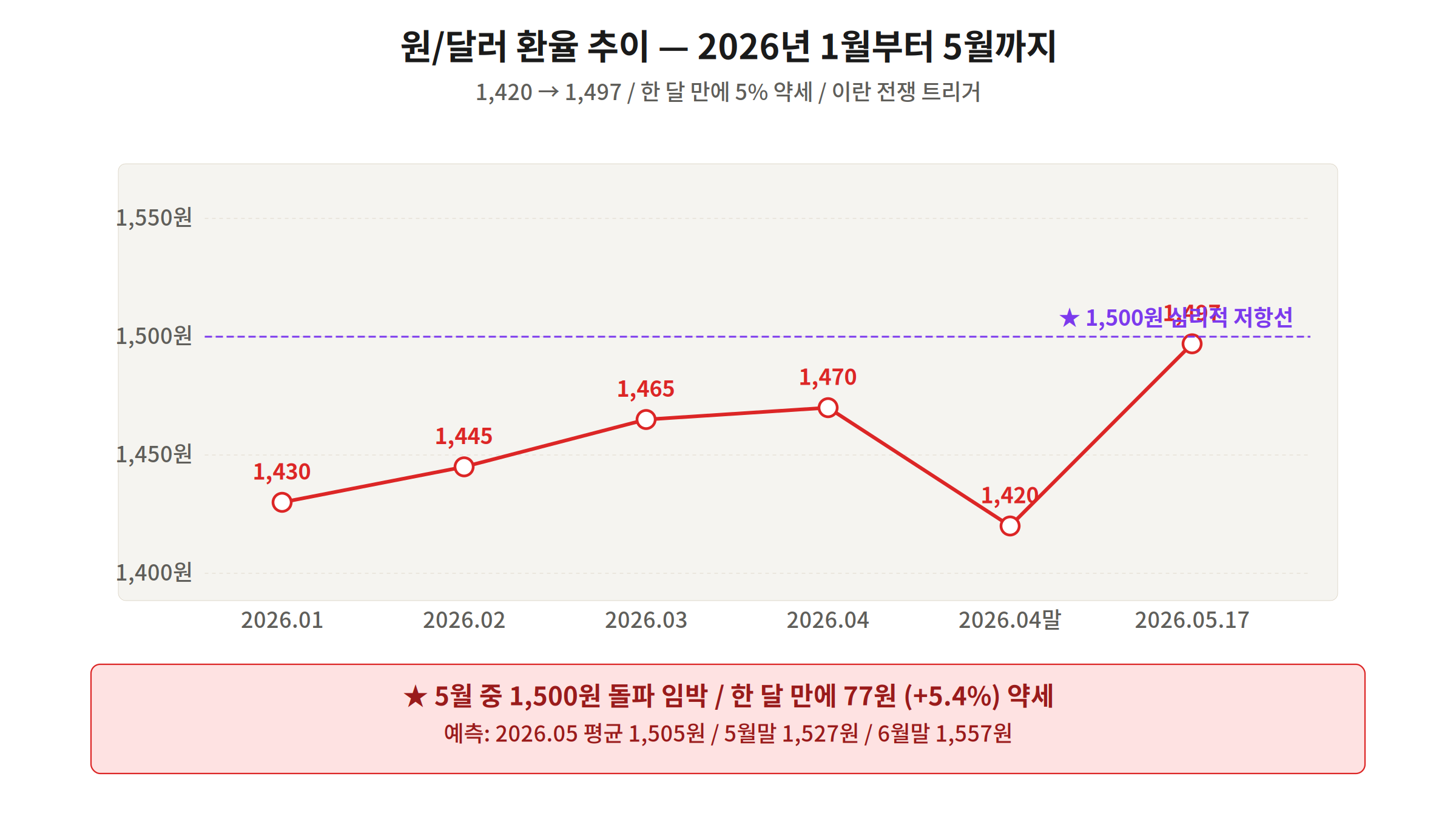
The Korean won dollar exchange rate opened 2026 at ₩1,430. A temporary recovery to ₩1,420 in late April on Iran ceasefire hopes reversed sharply — the won has weakened by ₩77 (+5.4%) in a single month to ₩1,497 as of May 17. The ₩1,500 psychological resistance is now imminent.
wonforecast.com projects ₩1,527 by end-May and ₩1,557 by end-June. A break above ₩1,500 could open the ₩1,520–1,570 range. The Bank of Korea retains intervention capacity, but the 1.0–1.25 percentage-point Fed-BOK rate gap creates structural downward pressure on the won that intervention alone cannot offset.
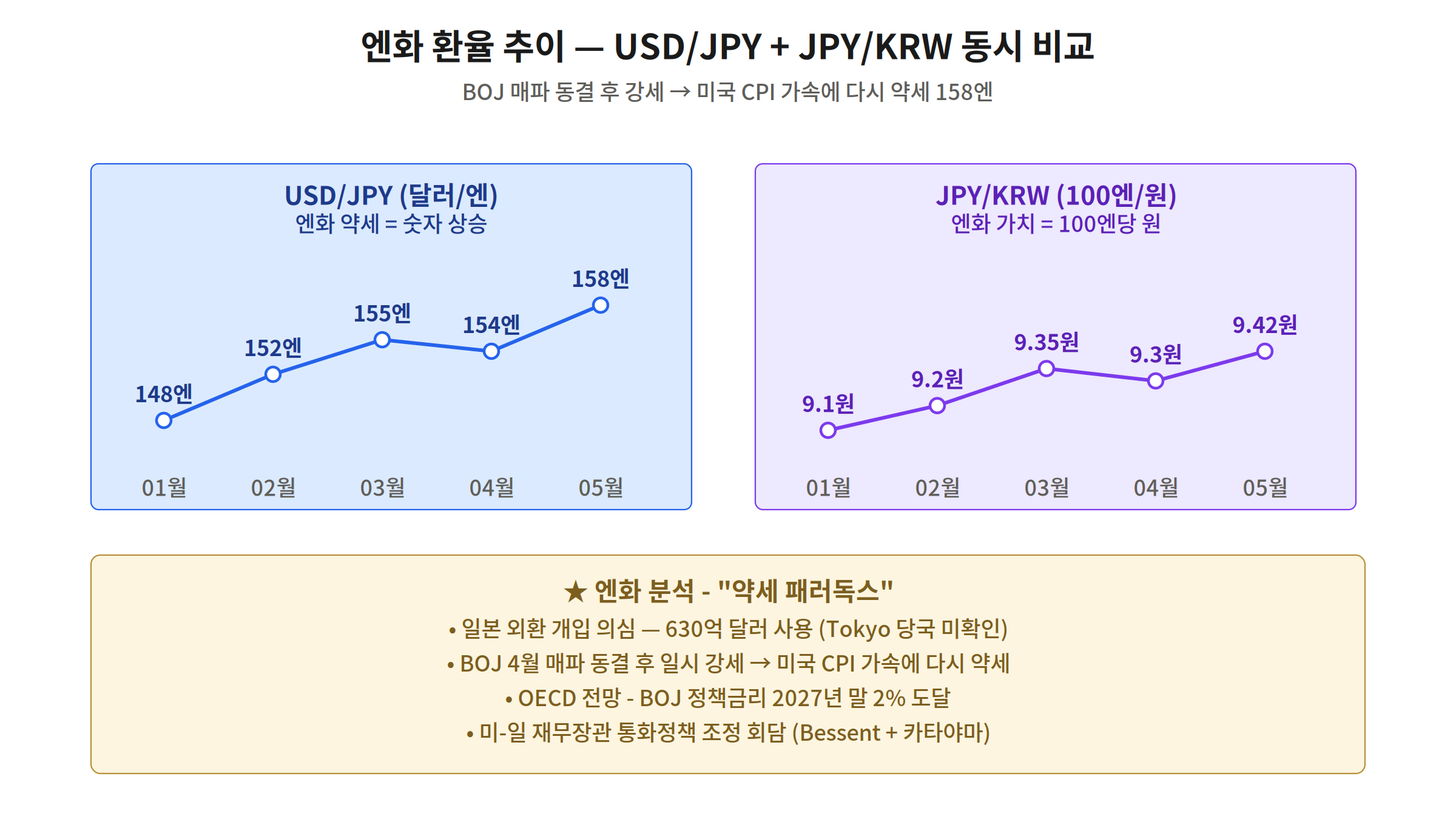
The yen is trapped in a weakening paradox. Despite the BOJ’s hawkish April hold signaling further rate hikes, USD/JPY has re-weakened to 158 as dollar strength driven by U.S. inflation overwhelms domestic policy signals. Japan is estimated to have deployed roughly $63 billion in FX intervention. OECD projects the BOJ policy rate reaching 2% by end-2027 — if that materializes, buying yen below ¥100/₩9.50 in tranches becomes a compelling long-term trade.
2. U.S. 10-Year Yield Breaks 4.5% + Four Central Bank Policy Comparison
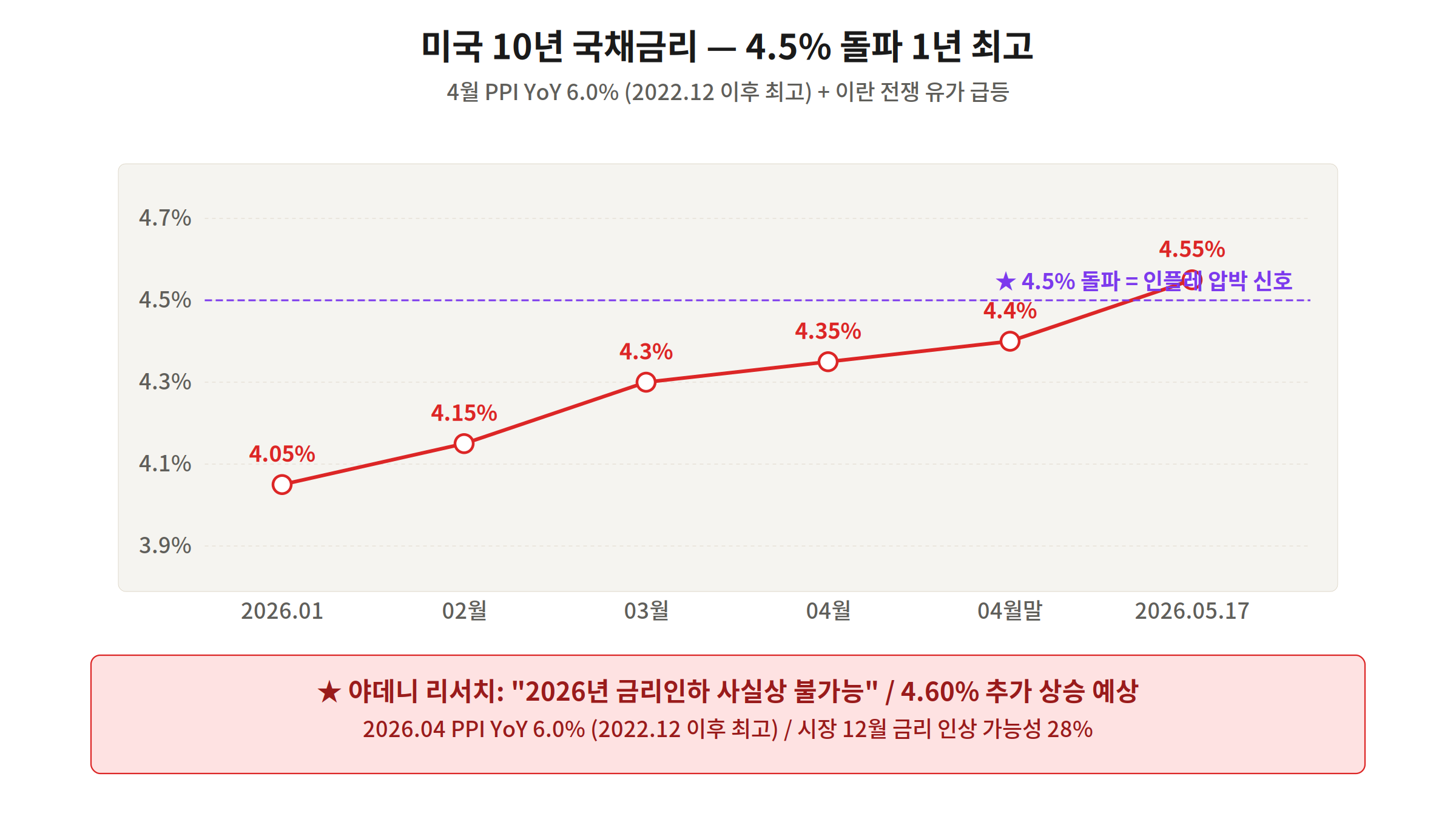
U.S. 10-year Treasury yields broke 4.5% on May 15 — the highest in a year. April PPI came in at 6.0% YoY, the hottest since December 2022. Yardeni Research declared Fed rate cuts “essentially impossible in 2026,” projecting 10-year yields reaching 4.60% within days. Markets are now pricing a 28% chance of a rate hike in December — not a cut. The new Fed Chair Kevin Warsh was confirmed on May 14, adding another layer of policy uncertainty.
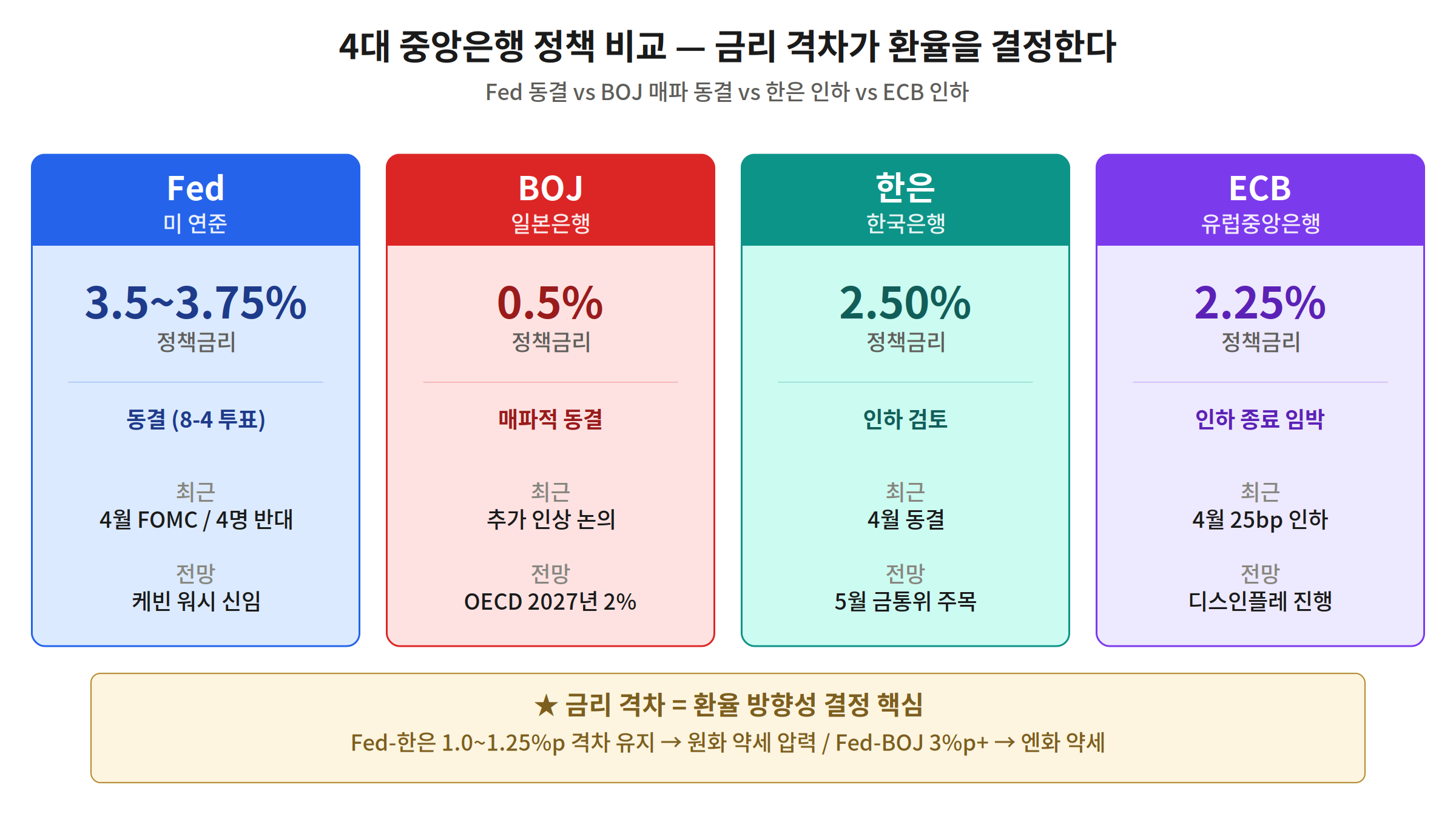
| Central Bank | Policy Rate | Recent Decision | Outlook |
|---|---|---|---|
| Fed (U.S.) | 3.5–3.75% | April 8–4 hold | New Chair Kevin Warsh |
| BOJ (Japan) | 0.5% | Hawkish hold | OECD: 2% by end-2027 |
| BOK (Korea) | 2.50% | April hold / cut review | May MPC in focus |
| ECB (Europe) | 2.25% | April 25bp cut | Nearing end of cut cycle |
3. Six Drivers All Pointing Weak + Three June Scenarios for the Korean Won
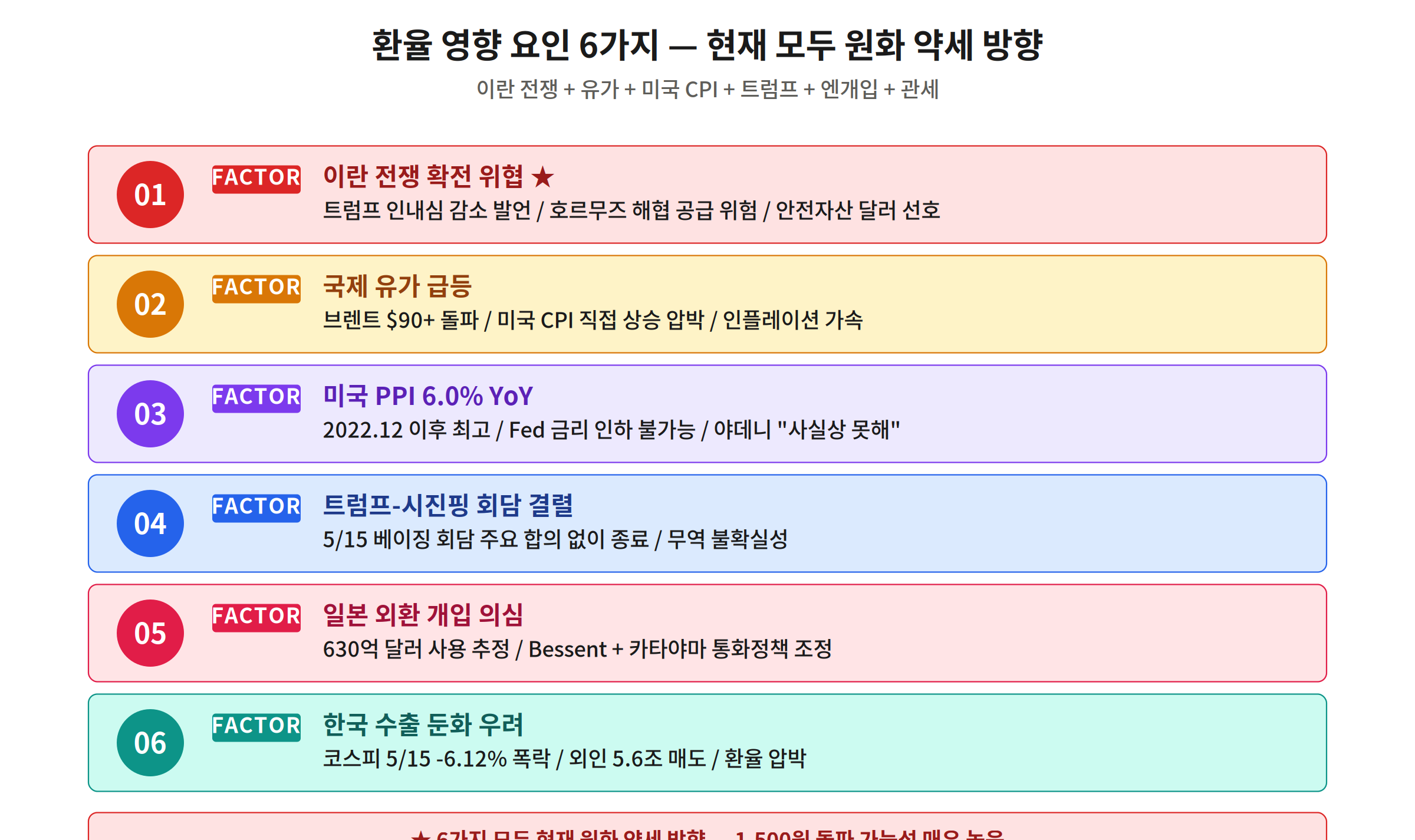
- Iran war escalation — Safe-haven dollar demand surging; Hormuz supply risk
- Oil above $90/bbl — Direct upward pressure on U.S. CPI; inflation acceleration
- U.S. PPI 6.0% YoY — Highest since Dec 2022; Yardeni: “Fed cuts essentially impossible”
- Trump-Xi Beijing summit failed — May 15 meeting ended without major agreement; trade uncertainty persists
- Suspected Japanese FX intervention — ~$63B estimated deployment; Bessent-Katayama coordination talks
- KOSPI foreign net sell ₩5.6T — May 15 -6.12% crash; capital outflow pressure
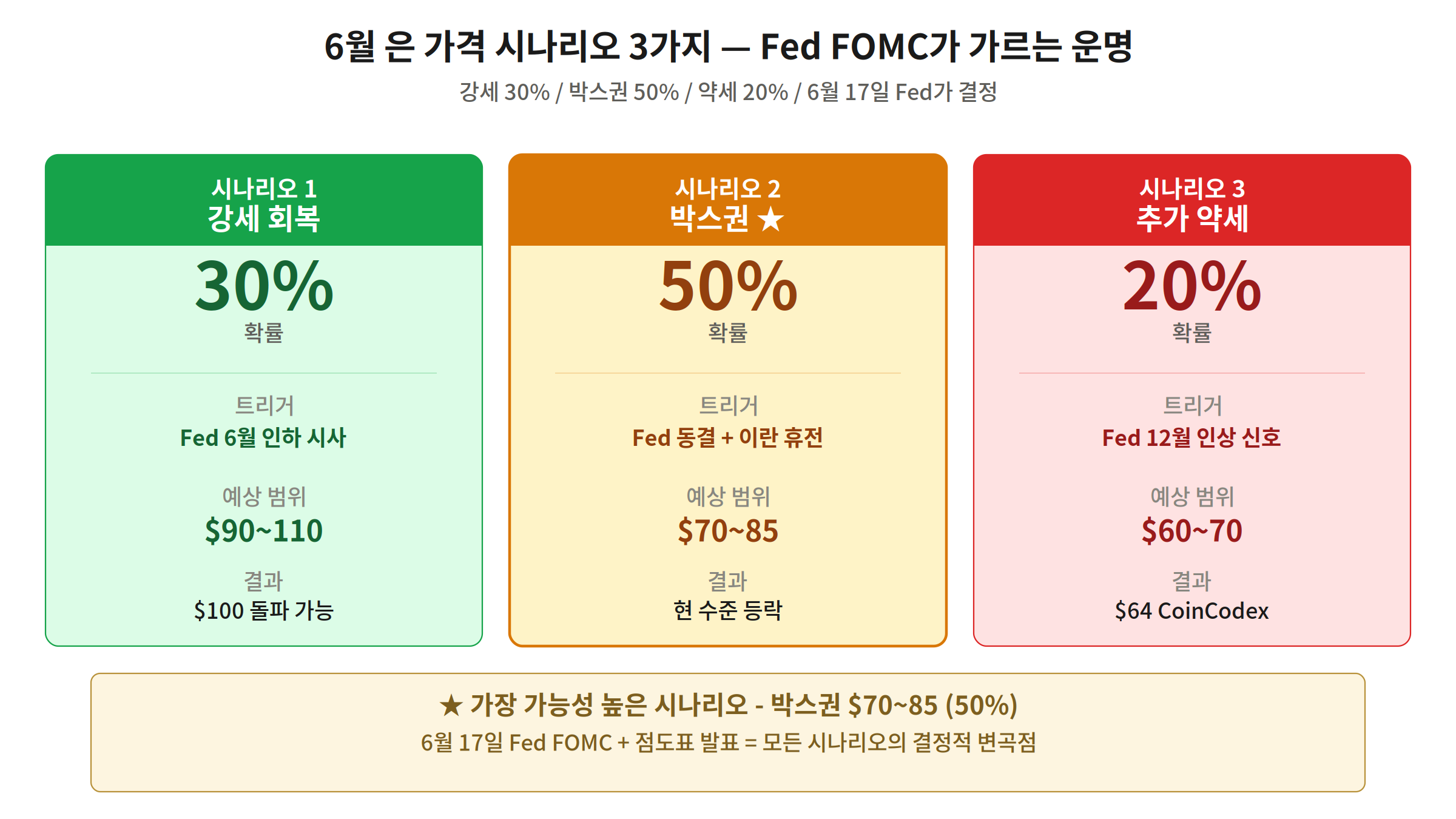
| Scenario | Probability | Trigger | Range |
|---|---|---|---|
| ① ₩1,500 break | 40% | Iran escalation + oil $100+ | ₩1,500–1,570 |
| ② Range-bound ★ | 45% | Iran ceasefire + Fed holds | ₩1,470–1,520 |
| ③ ₩1,450 recovery | 15% | Fed cut signal + ceasefire + CNY strength | ₩1,420–1,470 |
Probability-weighted June-end forecast: ₩1,525 — close to wonforecast.com’s ₩1,557 projection. The single most important event is the June 17 Fed FOMC: Kevin Warsh’s first policy decision, updated dot-plot projections, and the first formal Fed response to 6% PPI.
4. Five Investment Strategies + Daily Monitoring Signals

- Dollar asset diversification — U.S. ETFs (SCHD, QQQM, VOO) / dollar deposits / dollar-cost average in tranches
- Yen below ¥100/₩9.50 in tranches — Positioning for BOJ 2% by 2027; TIGER Japan Nikkei225
- Overweight export blue-chips — Samsung Electronics, SK Hynix, Hyundai Motor benefit directly from won weakness
- Commodity ETF hedge — KODEX WTI Crude / TIGER Gold Futures — safe-haven against Iran escalation
- Hedged vs. unhedged ETF selection — Hedged (H) favored near-term to absorb FX drag; unhedged (UH) better long-term
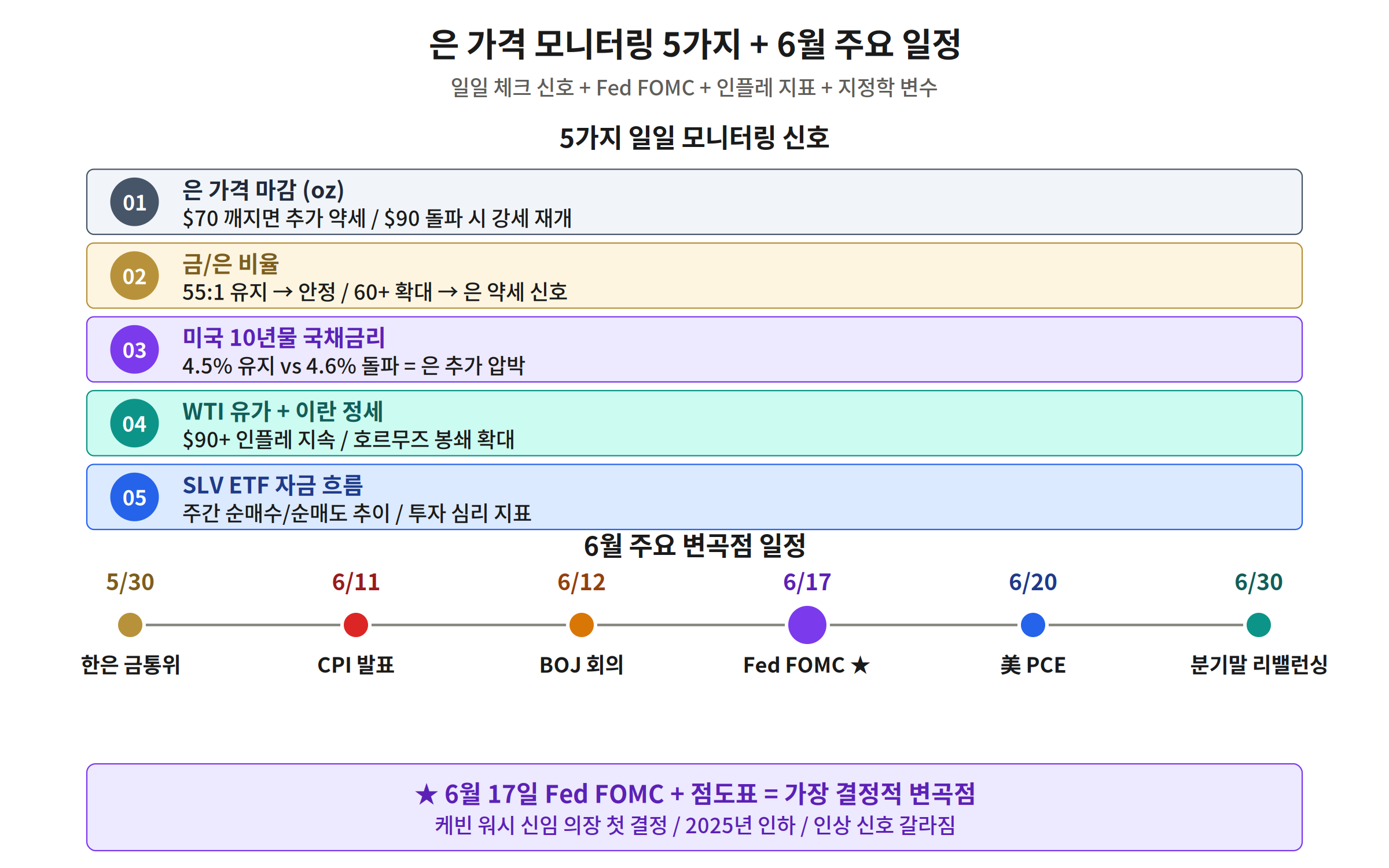
| Date | Event | Key Watch |
|---|---|---|
| May 30 | BOK MPC | Cut signal vs. hold |
| Jun 12 | BOJ meeting | Rate hike announcement |
| Jun 17 ★ | Fed FOMC | Most decisive inflection point |
| Jun 20 | U.S. PCE | Inflation trend confirmation |
| Jun 30 | Quarter-end yen carry | Japanese capital repatriation pressure |
“Fed rate cuts in 2026 are essentially impossible. The 10-year yield can rise further to 4.60%.”
— Ed Yardeni, Yardeni Research (May 15, 2026)
The Korean won dollar exchange rate breaking ₩1,500 would be more than a technical level — it is a psychological line with historical resonance. The prescription is clear: don’t bet on the exact peak; dollar-cost average across multiple entry points. The June 17 FOMC will determine whether the ₩1,500 break (40%), range-bound (45%), or recovery (15%) scenario plays out. Five daily signals, five minutes — that’s all the monitoring required.