Samsung Electronics Strike Emergency Adjustment: 5/21 D-Day, ₩100T Risk & 4 Historical Precedents Analyzed
Trending · May 17, 2026 · ~6 min read
Samsung Electronics strike emergency adjustment is now on the table. Prime Minister Kim Min-seok issued a national address on May 17 warning he would “use every available measure, including emergency adjustment.” With 46,000 workers set to strike on May 21 and economists projecting up to ₩100 trillion in economic damage, a 21-year-dormant legal power may be revived — analyzed through four historical precedents.

1. Samsung Electronics Strike Emergency Adjustment — How the Mechanism Works
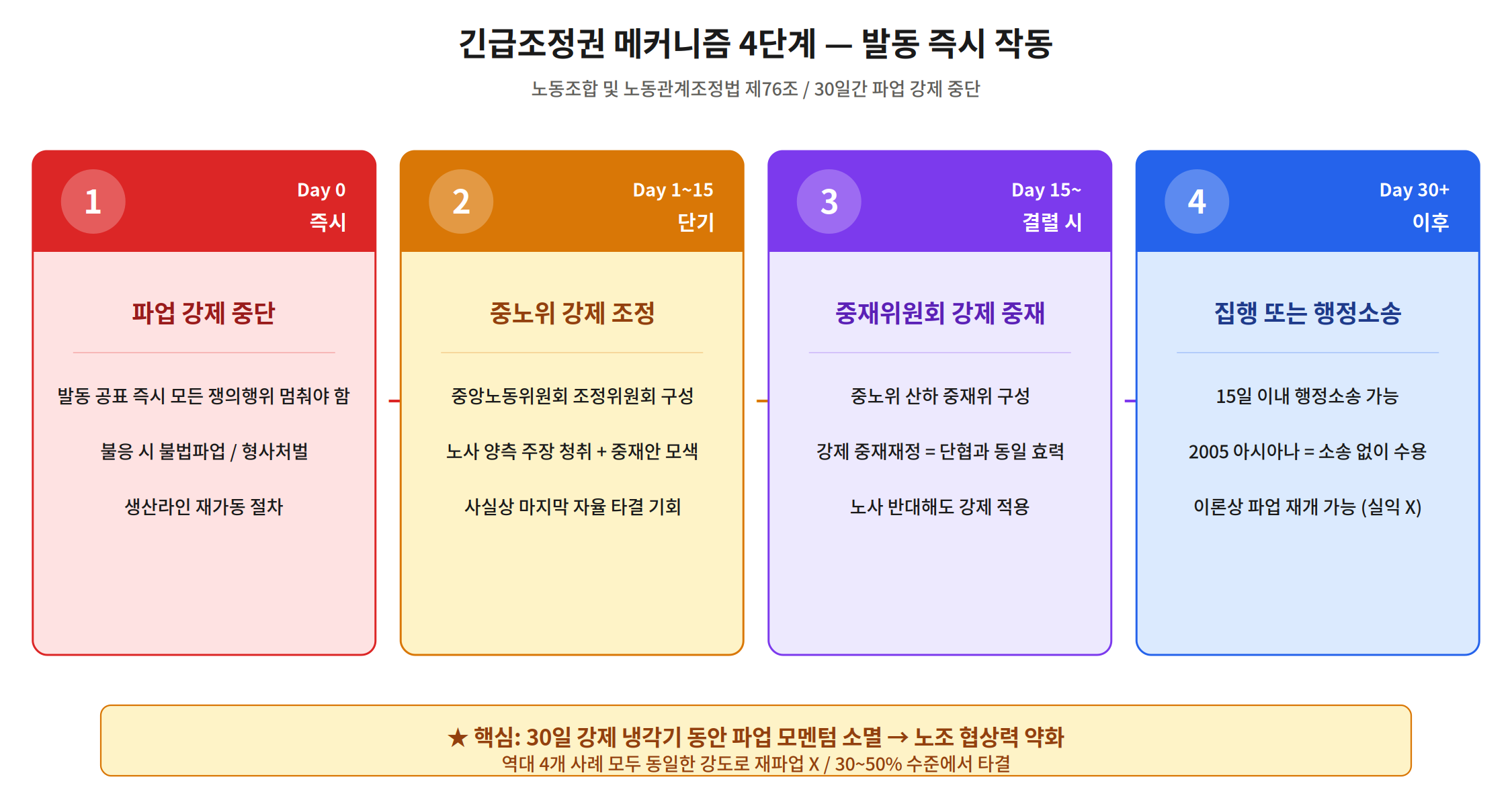
The Samsung Electronics strike emergency adjustment power is grounded in Article 76 of Korea’s Trade Union and Labor Relations Adjustment Act. The Minister of Employment and Labor may invoke it when “a labor dispute is likely to significantly harm the national economy.” Introduced in 1963, it has been used only four times in 63 years — the last in 2005 against Korean Air. Invoking it now would be the first use in 21 years.
The four-step sequence: ① Day 0 — immediate forced strike suspension (non-compliance = criminal liability + civil damages) → ② Days 1–15: mandatory mediation by the National Labor Relations Commission → ③ Mediation failure triggers binding arbitration (imposed on both parties regardless of consent) → ④ Day 30+: enforcement or administrative litigation. Across all four historical cases, unions accepted settlements at 30–50% of their original demands. No re-strike has ever followed an emergency adjustment.
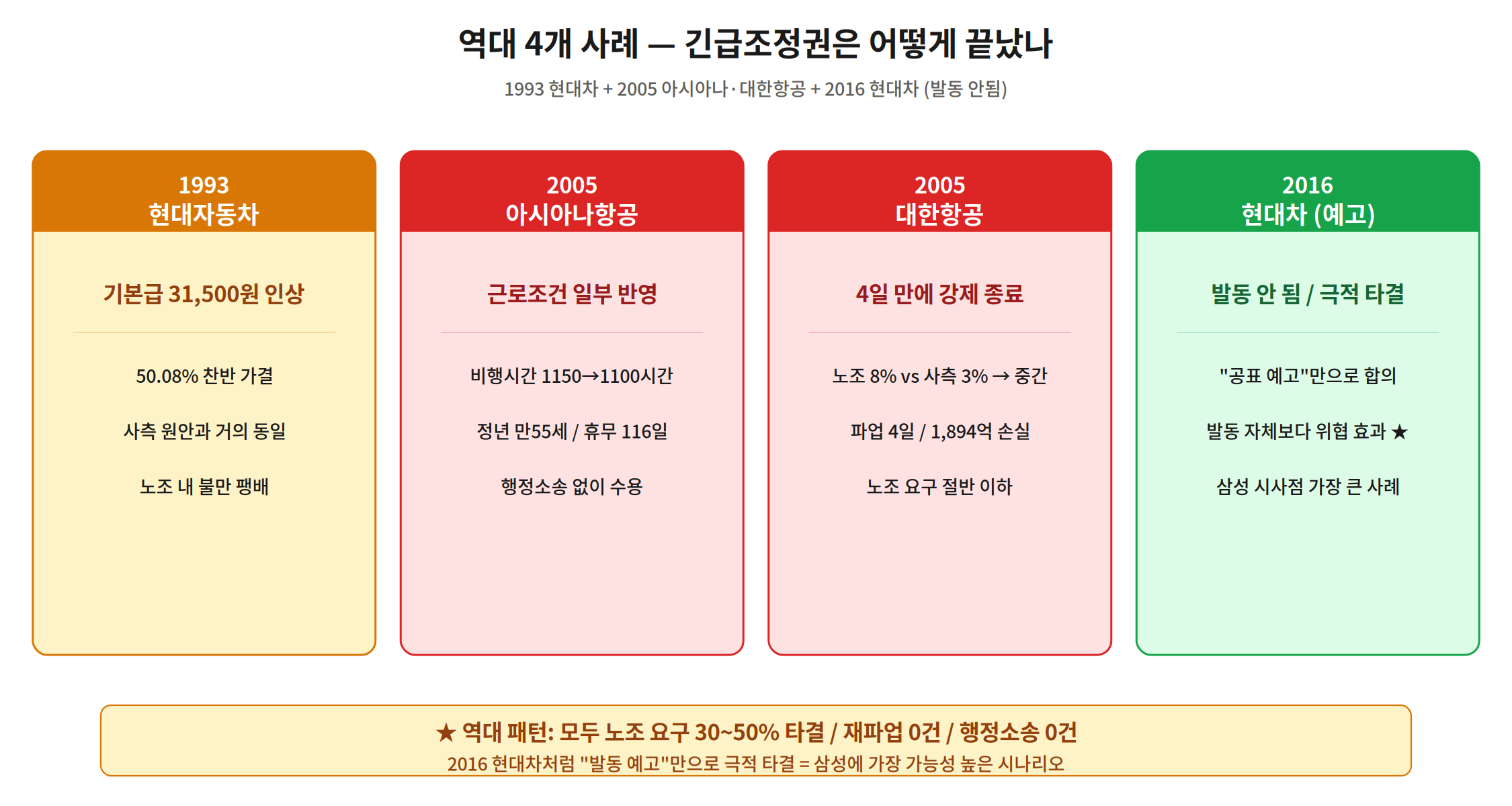
The most relevant precedent is 2016 Hyundai Motor: the government merely announced it was considering emergency adjustment, and labor and management reached a dramatic last-minute agreement — the power was never actually invoked. Prime Minister Kim’s May 17 address appears designed to replicate precisely this effect: the threat can be more powerful than the act.
2. Union Demands vs. Management Offer + Four Samsung-Specific Factors
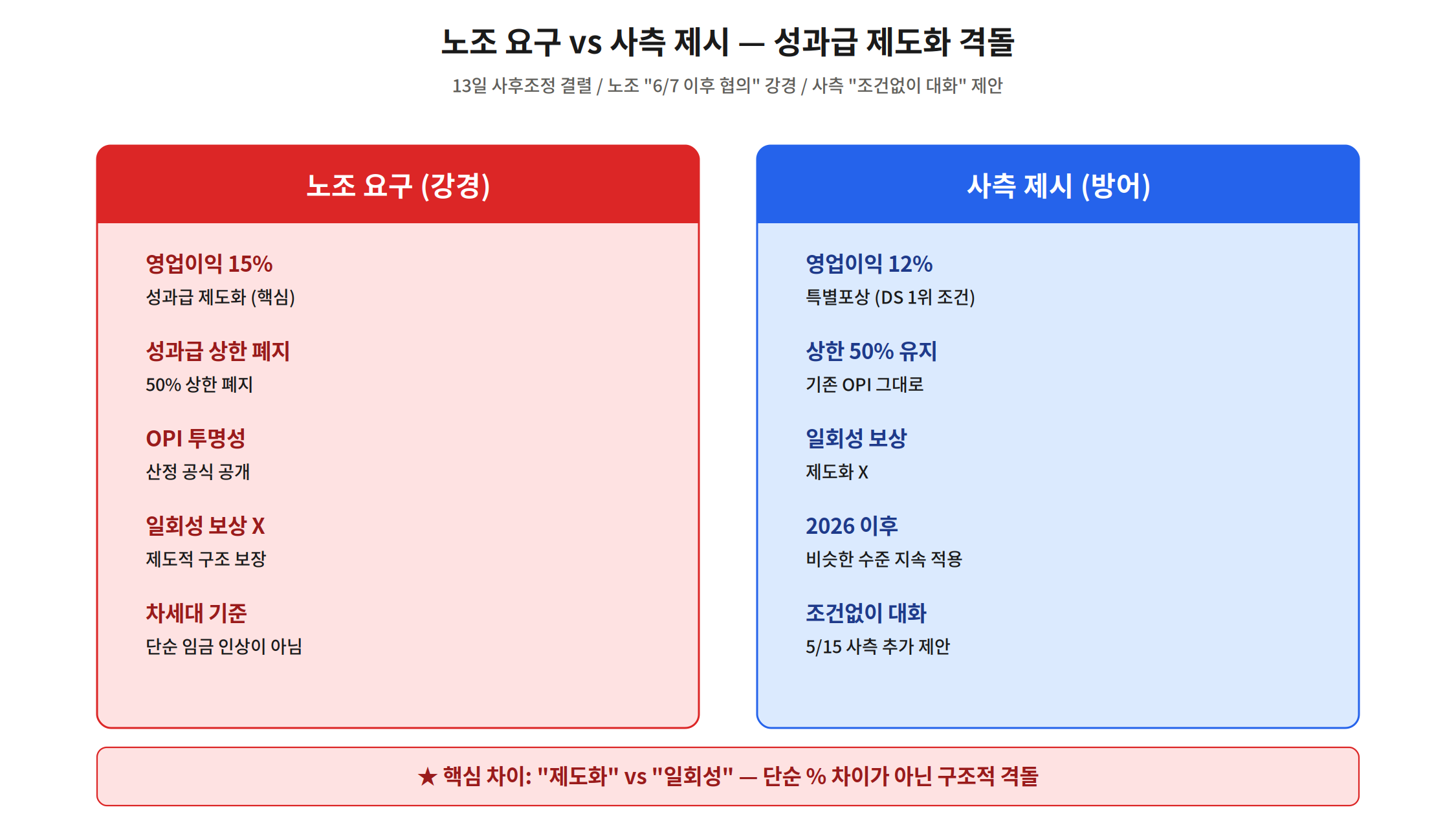
The core dispute is not about percentages — it is about structural institutionalization. The union demands 15% of operating profit be locked in as a permanent bonus formula, plus elimination of the 50% bonus cap and full disclosure of the OPI (Excess Profit Sharing) calculation. Management offers a conditional one-time special award (12% if the DS division ranks No. 1 in performance), with no structural changes. Even if emergency adjustment succeeds in ending the strike, the union’s fundamental grievance will remain unresolved.
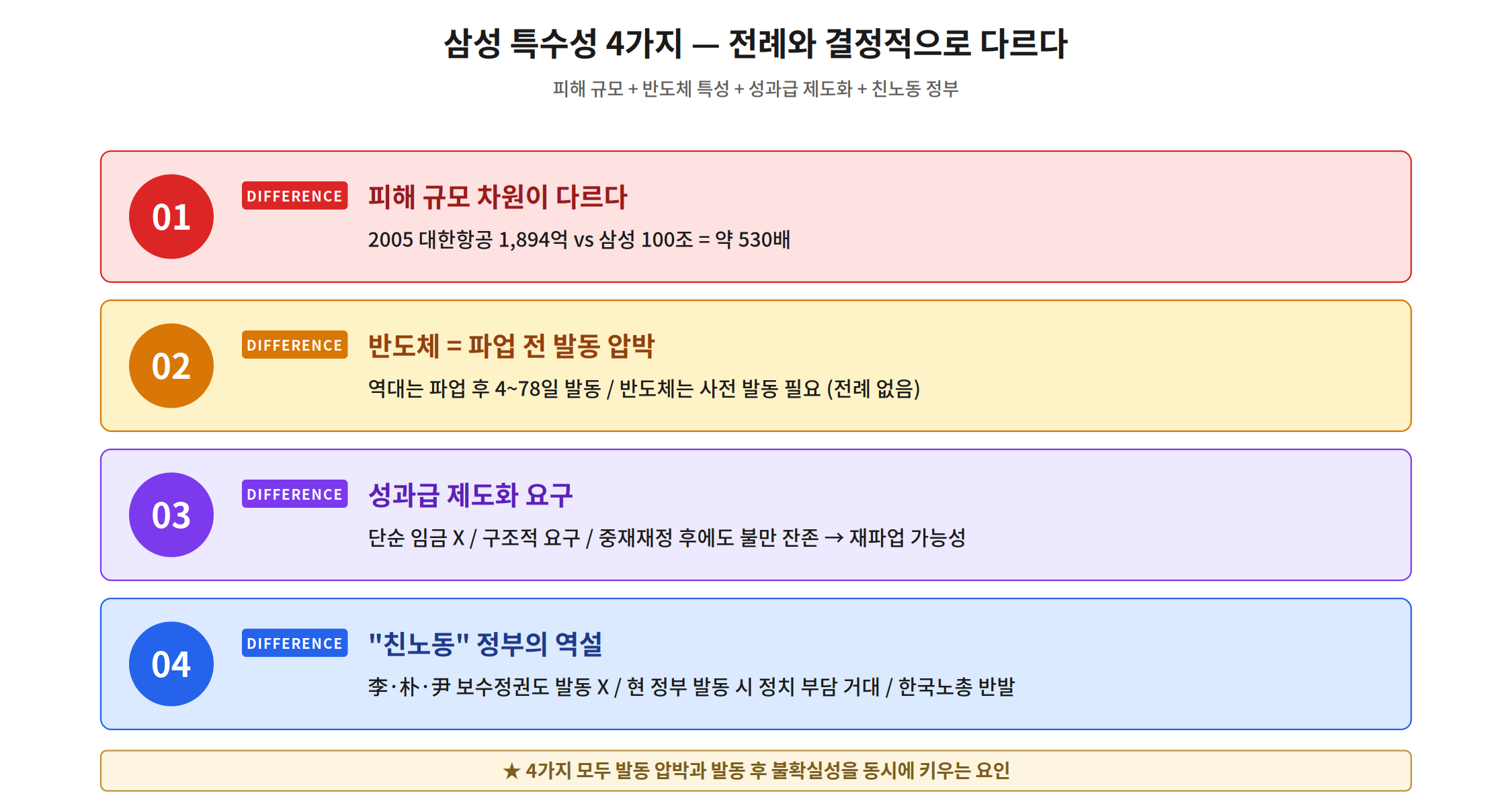
Four factors make the Samsung Electronics strike emergency adjustment unprecedented: ① Scale: ₩100 trillion vs. ₩189.4 billion (2005 Korean Air) — 530× larger ② Semiconductor fabs cannot be paused without catastrophic loss, creating pressure to invoke before the strike begins ③ The structural “institutionalization” demand will survive any arbitration ruling ④ The current administration bills itself as “pro-labor” — invoking a power that conservative governments never used creates a massive political liability.
3. Three Scenarios + Key Dates to Watch
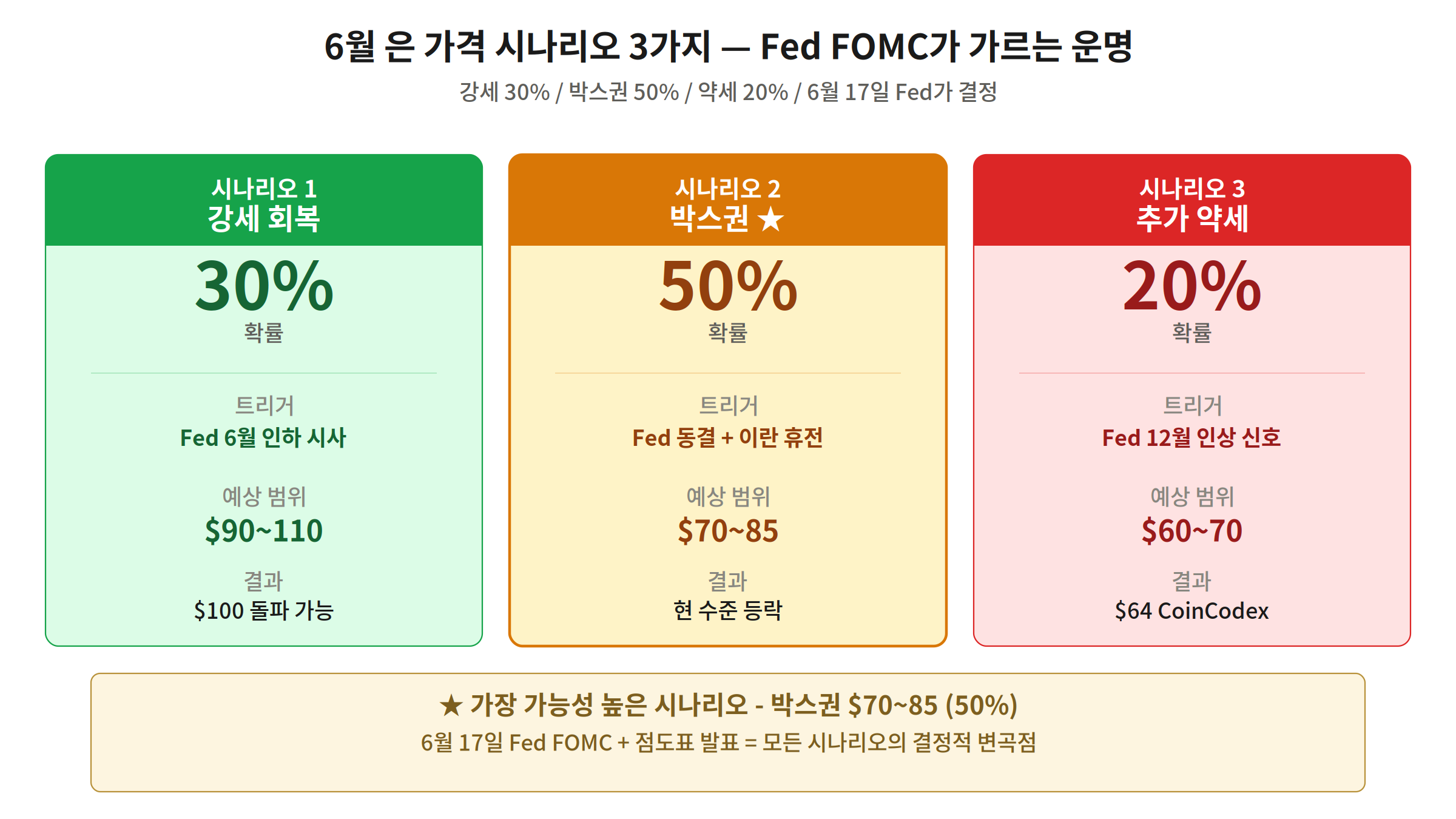
| Scenario | Probability | Development | Historical parallel |
|---|---|---|---|
| A Pre-strike settlement | 40% | Dramatic deal at May 18 mediation | 2016 Hyundai Motor |
| B Post-strike activation ★ | 45% | May 21 strike → immediate activation | 2005 Korean Air |
| C Prolonged strike | 15% | Political delay; activation deferred | No precedent |
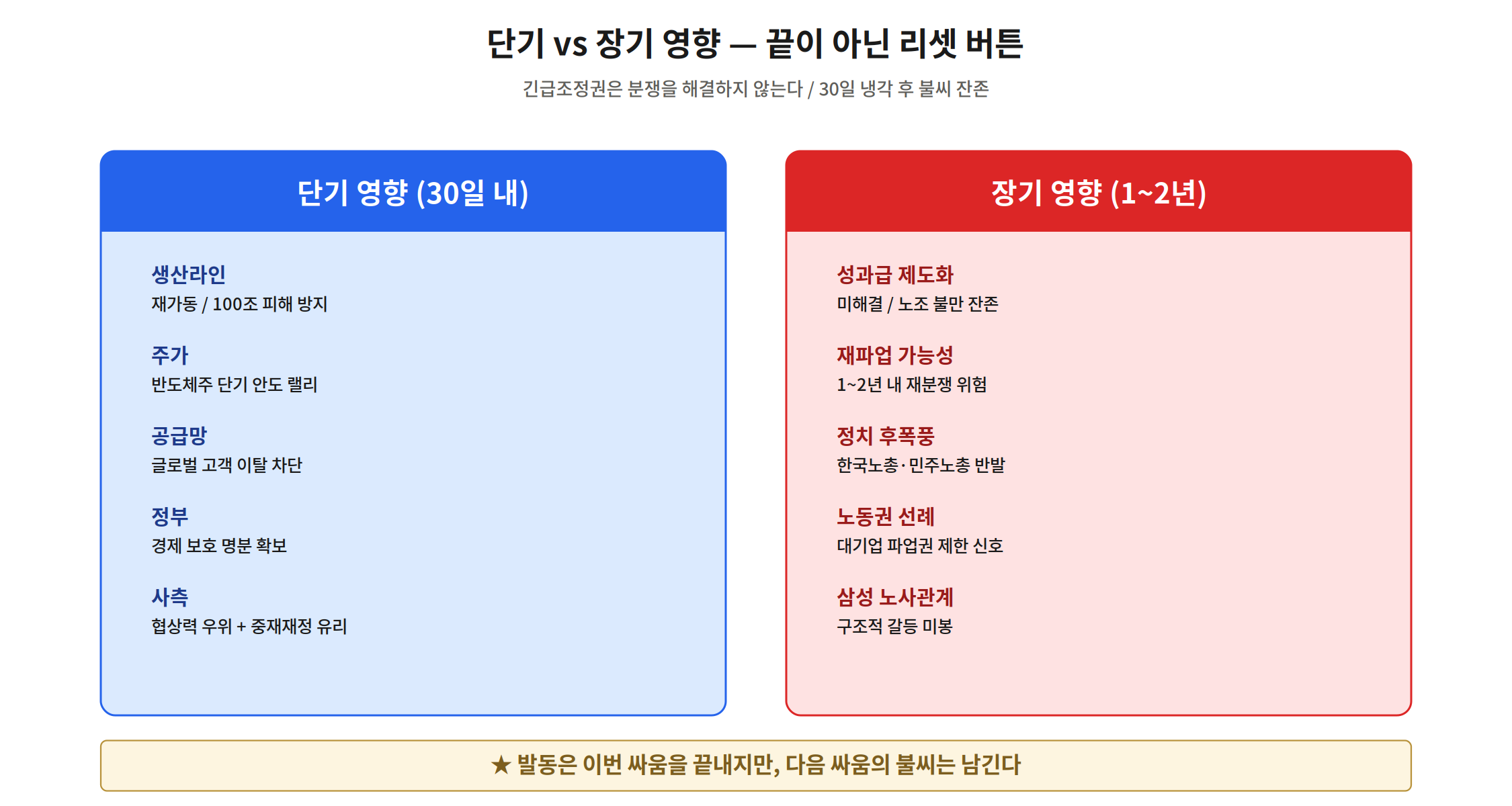
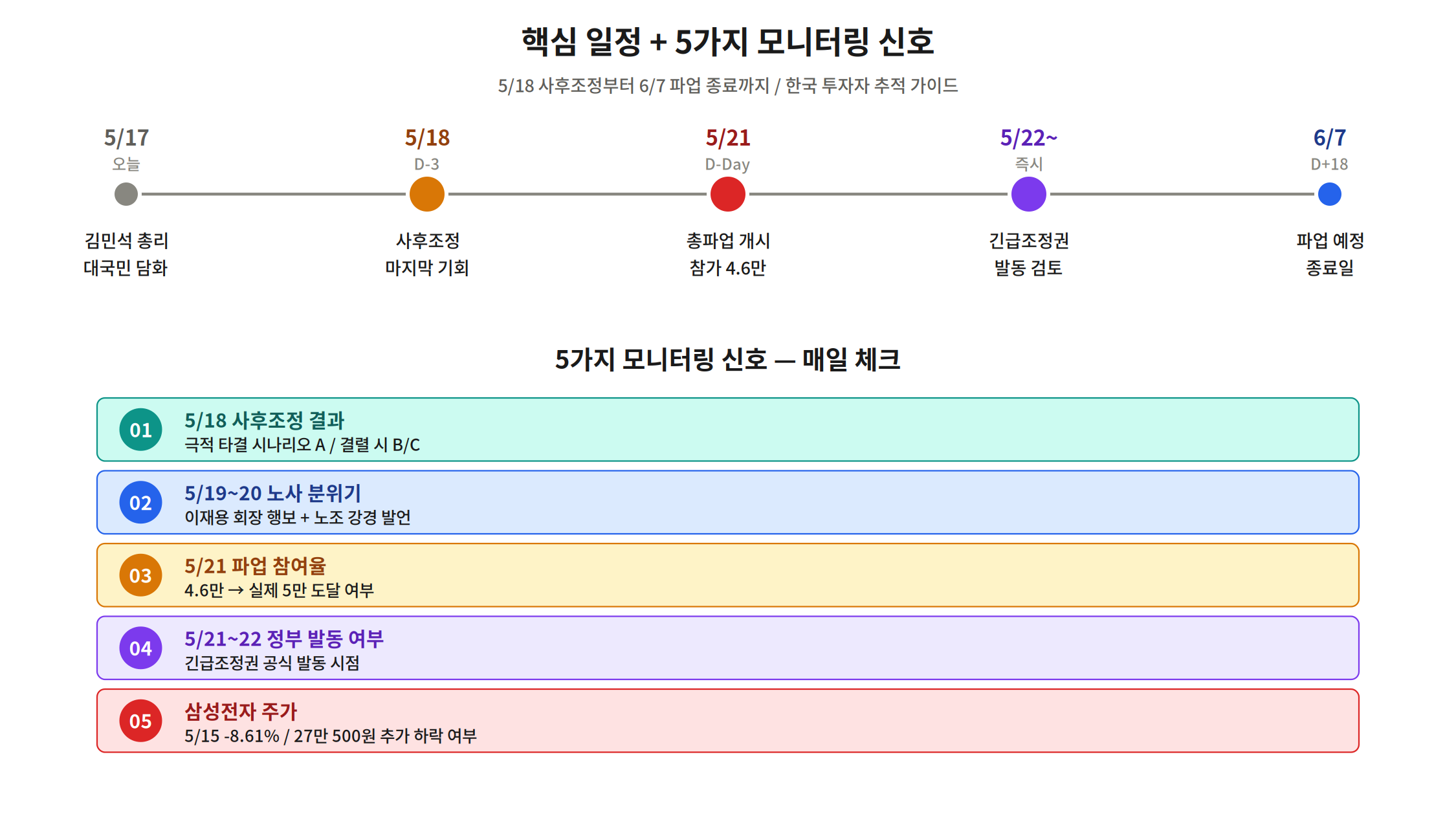
The May 18 post-conciliation session is the pivotal moment. If it collapses, the May 21 strike begins and the government faces an immediate decision on invoking the power. For investors: the window between May 18 results and May 21 open is the peak volatility zone. Samsung Electronics stock already fell 8.61% on May 15. Activation triggers a relief rally; a prolonged unresolved strike risks further downside. Prepare for both extremes.
“Samsung Electronics’ achievements belong to all of Korea. We cannot but consider every available measure, including emergency adjustment.”
— Prime Minister Kim Min-seok, national address (May 17, 2026)
The bottom line: the Samsung Electronics strike emergency adjustment power, if invoked, ends this battle — but the structural war over bonus institutionalization will persist. With scenarios A and B combining for 85% probability, a resolution within 30 days is the most likely outcome. The unresolved question is what happens in year two. Korea’s Ministry of Employment and Labor has not yet formally announced activation; the next 72 hours are decisive.