Samsung “Strike Doused but Internal Flames Grew” — Memory 600M vs Foundry 160M KRW 4x Gap·Poison Clause·Internal Revolt·Vote Uncertainty
Real-Time Issue · May 22, 2026
Samsung “Strike Doused but Internal Flames Grew” — Memory 600M vs Foundry 160M KRW 4x Gap·Poison Clause·Internal Revolt·Vote Uncertainty

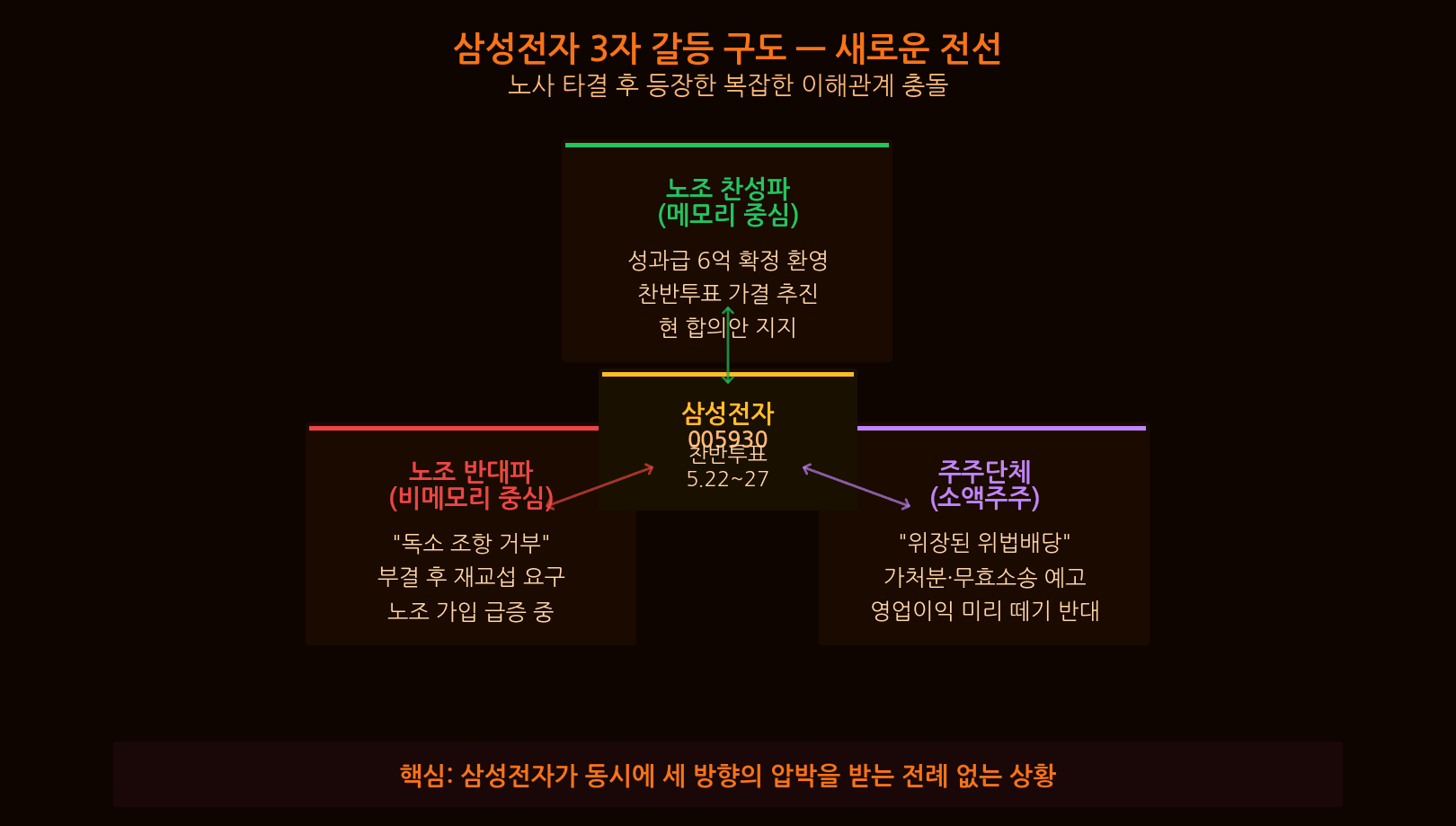
Samsung Electronics managed to extinguish last year’s strike led by the National Samsung Electronics Union (NSEU), but the embers of a deeper conflict are burning brighter inside the company. At the heart of the dispute is a staggering performance bonus gap between divisions. Reports circulating through internal channels reveal that Memory (DS semiconductor) employees receive bonuses roughly four times higher than their Foundry counterparts — igniting fierce pushback across the workforce.

Memory 600M vs Foundry 160M KRW — The Reality of a 4x Gap
According to data circulating internally, estimated combined performance bonuses (OPI + TAI) for top-tier Memory division employees reached up to 600 million KRW (~$440K USD) in 2025, while equivalent-grade Foundry employees received approximately 160 million KRW (~$117K USD). The ratio — technically 3.75x — is commonly rounded to “a 4x gap” in internal discussions.
Samsung’s bonus structure is tied directly to divisional performance. Memory rode a wave of surging HBM (High Bandwidth Memory) demand and AI semiconductor tailwinds to record profits. Foundry, meanwhile, has struggled with yield issues, customer defections, and a widening gap against TSMC — posting years of losses or negligible margins. The gap is less a policy failure than a structural outcome of diverging business results.

The Poison Clause — “Accept the Bonus, Waive Your Rights”
A secondary controversy has amplified the anger: an alleged “poison clause” buried in bonus acceptance documents. Employees claim the agreement contains language to the effect that signing means waiving the right to file grievances or pursue legal action related to the bonus. If accurate, collecting the bonus would effectively strip recipients of any future legal recourse regarding compensation disputes.
Samsung has not issued an official response, but the allegation spread rapidly through internal boards and anonymous platforms like Blind, spawning warnings urging employees to “read carefully before signing.” Several workers have reportedly asked the union to arrange a legal review of the document.

Internal Revolt — “Are We Even at the Same Company?”
Samsung’s internal community boards and Blind have been flooded with posts from Foundry employees expressing disbelief and resentment. Representative sentiments include “Same employee ID, four times the difference — how is that defensible?” and “Are Foundry workers second-class citizens here?” The emotional toll of perceived inequity is palpable.
Sources indicate that internal transfer requests to the Memory division have surged sharply. Headhunting industry insiders report a noticeable uptick in Foundry employees exploring external opportunities, raising fears of a talent exodus that could further hobble the division’s recovery efforts.

Union Membership Explosion — Strike Ended, Sign-Ups Accelerated
Paradoxically, union membership at Samsung Electronics has surged since last year’s strike concluded. Unofficial tallies suggest NSEU membership has grown by more than 30% compared to pre-strike levels. The growth is driven largely by Foundry workers who now believe that “nothing changes without collective action.”
Samsung maintained a no-union policy for decades before the NSEU was established in 2019. Since then, membership has expanded rapidly. Industry observers say the bonus gap controversy is likely to serve as a fresh accelerant for union growth in 2026.
Vote Uncertainty — The Tentative Agreement’s Dilemma
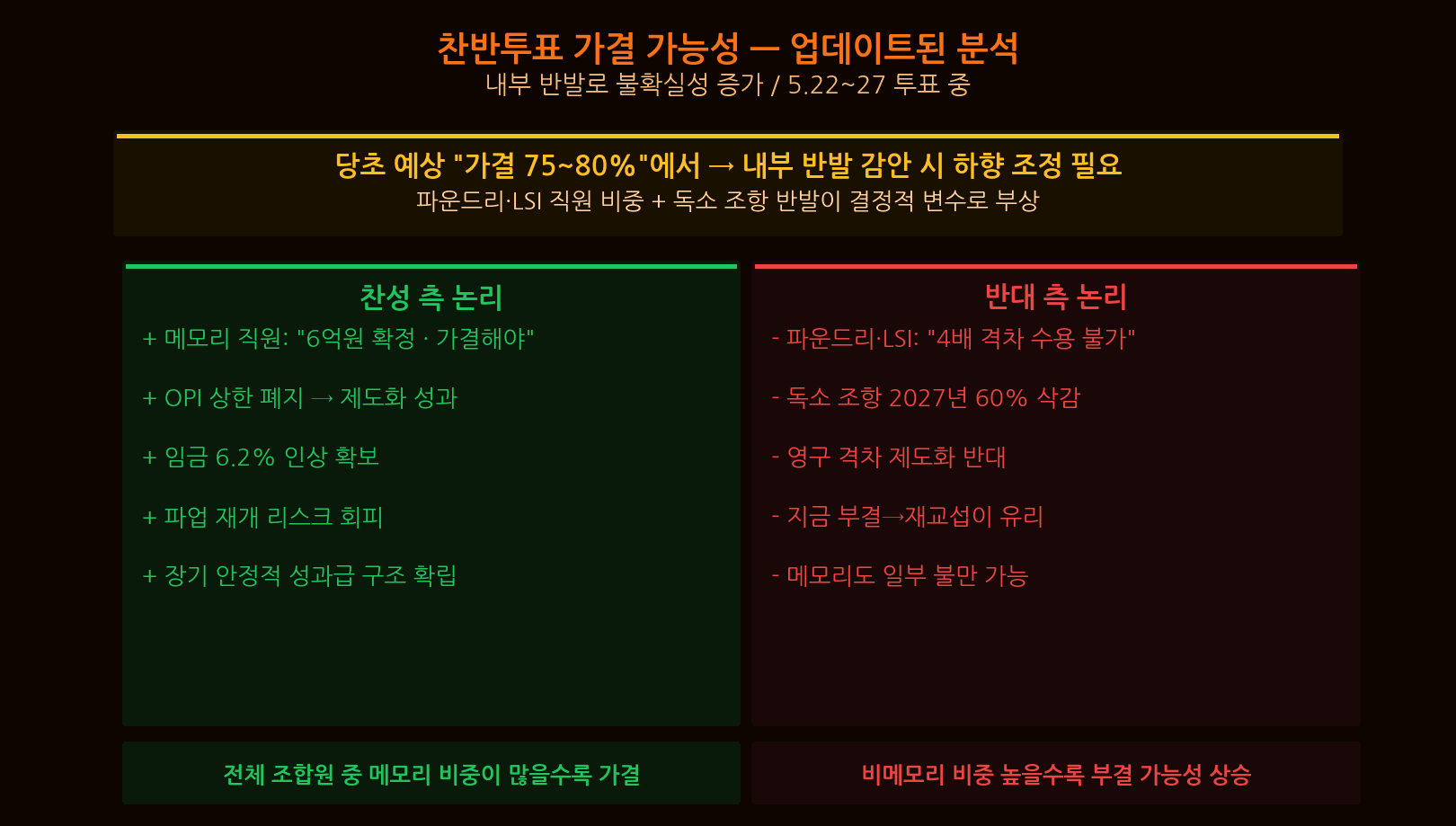
The NSEU is currently running a ratification vote on a tentative agreement with management. However, both sides acknowledge the outcome is far from certain. The deal reportedly includes base salary increases and expanded benefits, but critics argue it conspicuously omits explicit provisions to close the bonus gap or delete the poison clause.
Opposition is particularly strong among Foundry-division union members, and online threads are filling with posts declaring “this deal fixes nothing.” A failed vote would return both sides to square one — and a second strike cannot be ruled out.

Foundry’s Structural Dilemma — No Profit, No Bonus
The root problem is performance, not policy. Samsung Foundry continues to trail TSMC in market share, has lost or failed to win key contracts from Intel and Qualcomm, and faces persistent reports that its 2nm process yields remain below targets. Revenue and profitability have lagged for years.
Closing the bonus gap requires closing the performance gap — and closing the performance gap against TSMC within any short timeframe is an unrealistic expectation. This structural dilemma is precisely why resolving internal grievances quickly is so difficult.
Management’s Options — What Solutions Are Available?
Three broad paths exist for Samsung’s leadership. First, partial restructuring of the bonus formula to narrow divisional gaps — but this risks alienating high-performing Memory employees. Second, a separate Foundry compensation track designed to retain critical talent through market-rate packages. Third, maintaining the current system while focusing on Foundry performance improvement.
Industry experts broadly favor the third approach as the most realistic, but warn that if talent drain accelerates, the Foundry division may become unable to execute the turnaround needed to improve the bonuses in the first place — a vicious cycle with no easy exit.
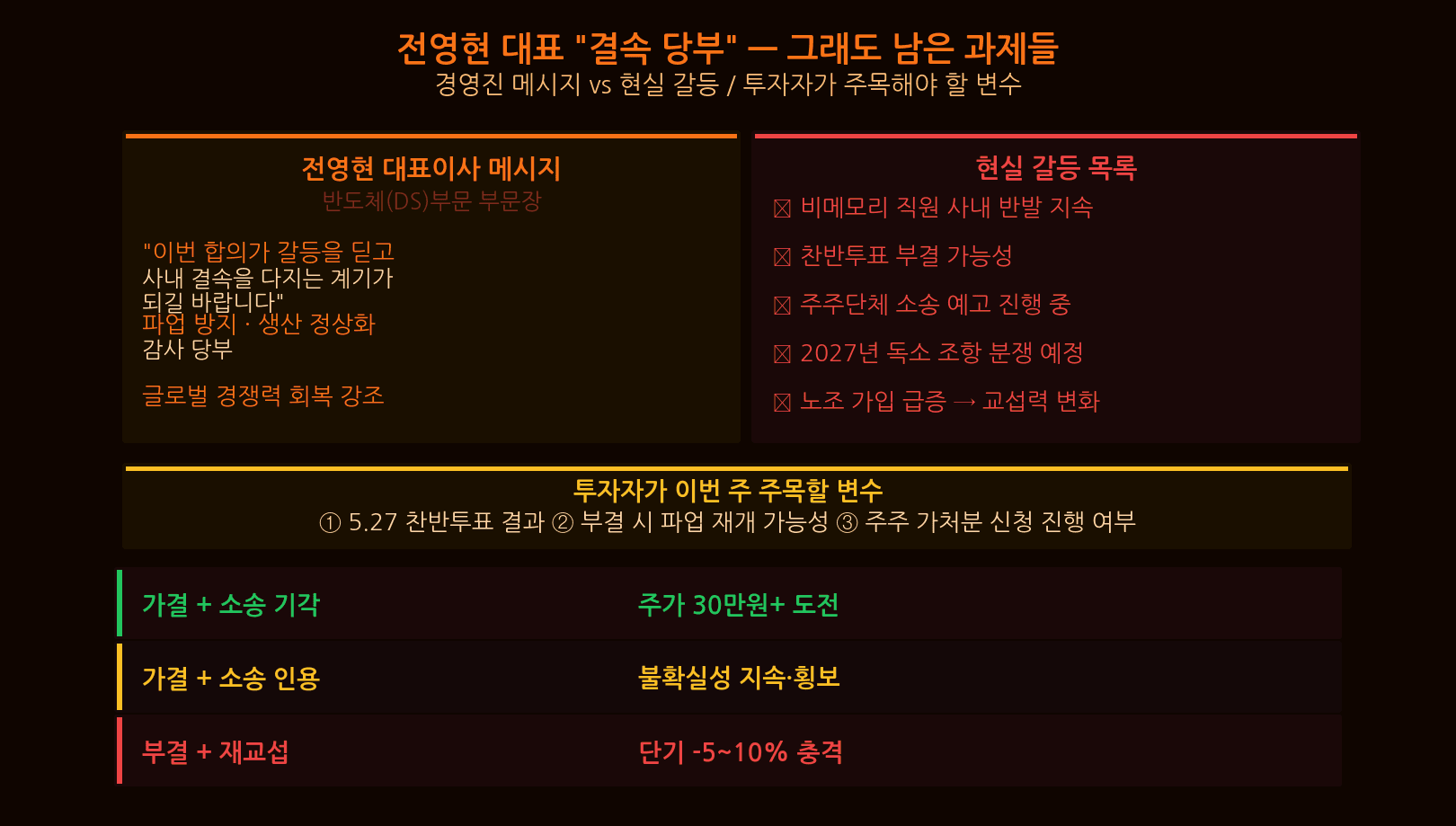
What Happens Next — Three Variables That Will Decide the Outcome
Three variables will determine whether the internal embers become a full blaze: the ratification vote result, Q2 Foundry earnings disclosures, and the H2 bonus calculation season. A failed vote could trigger a second strike before year-end; even a passed vote leaves latent discontent simmering. Maintaining internal cohesion has become as critical a challenge for Samsung as winning the external semiconductor race.

📌 More Real-Time Issues → Trending Category
💡 Learn more about getdir.app → About Page