Korea Income Tax Self-Filing Complete Guide — June 1 Deadline D-12 / Hometax 10 Minutes / 6–45% Rates / Freelancer Refund Simulation + Non-Filing Penalties
Real-Time Issue · May 20, 2026
Korea Global Income Tax Self-Filing Complete Guide — June 1 deadline D-12, Hometax Modu-Chaeum auto-fill in 10 minutes. Tax rates 6–45%, flat expense ratio, refund vs additional payment simulation for freelancers, side-job earners, and sole proprietors.
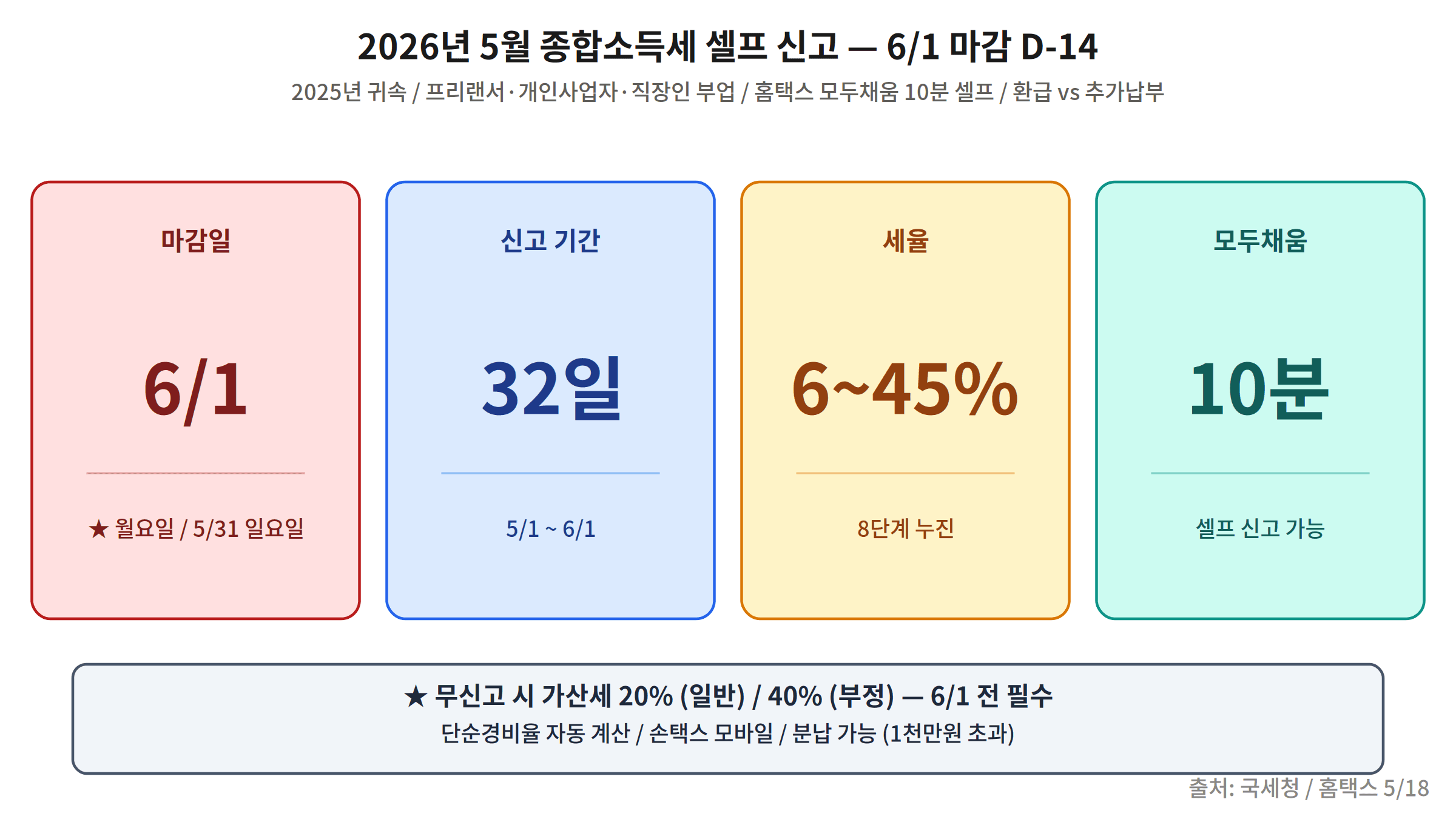
The 2025 global income tax filing deadline is June 1 (D-12). This covers 2025 income from freelance work (3.3% withholding), side jobs, and sole proprietorships — all must be reported. Using Hometax’s Modu-Chaeum (auto-fill) service, most filers can complete the process in under 10 minutes. Failure to file triggers a penalty of up to 40% of tax owed.
5 Categories of Filers — Do I Need to File?
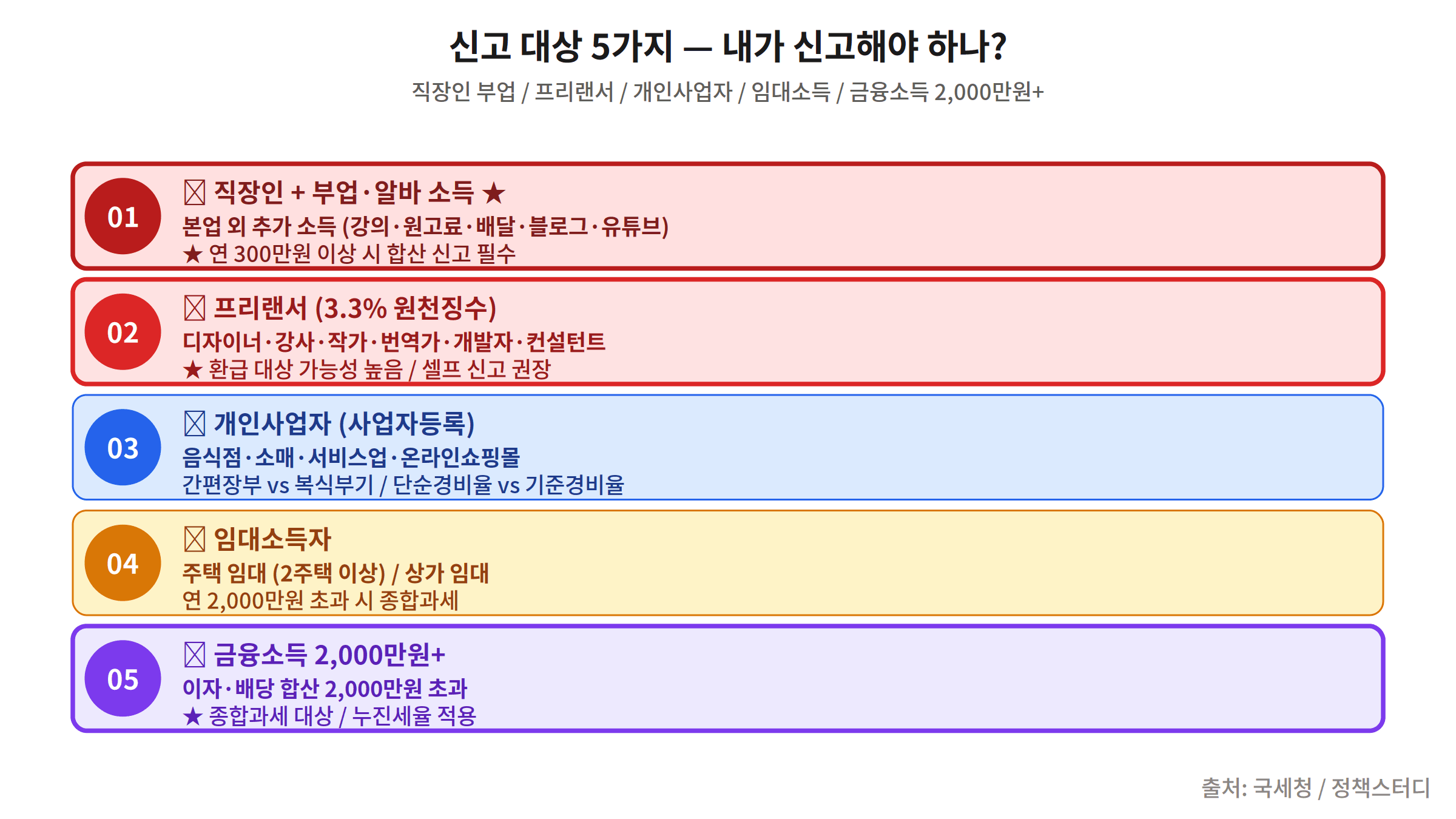
- Freelancers / personal service providers: Anyone with 3.3% withholding income — tutors, writers, designers, developers, etc.
- Salaried workers with side income: Financial, business, or miscellaneous income exceeding 3 million KRW per year beyond salary.
- Sole proprietors: All business owners with business income, regardless of industry.
- Rental income earners: Residential rental income up to 20 million KRW can choose separate taxation or aggregate filing.
- Financial income aggregate taxation: Interest and dividend income exceeding 20 million KRW annually triggers aggregate taxation.
5 Filing Methods — Modu-Chaeum Is Easiest (10 Minutes)
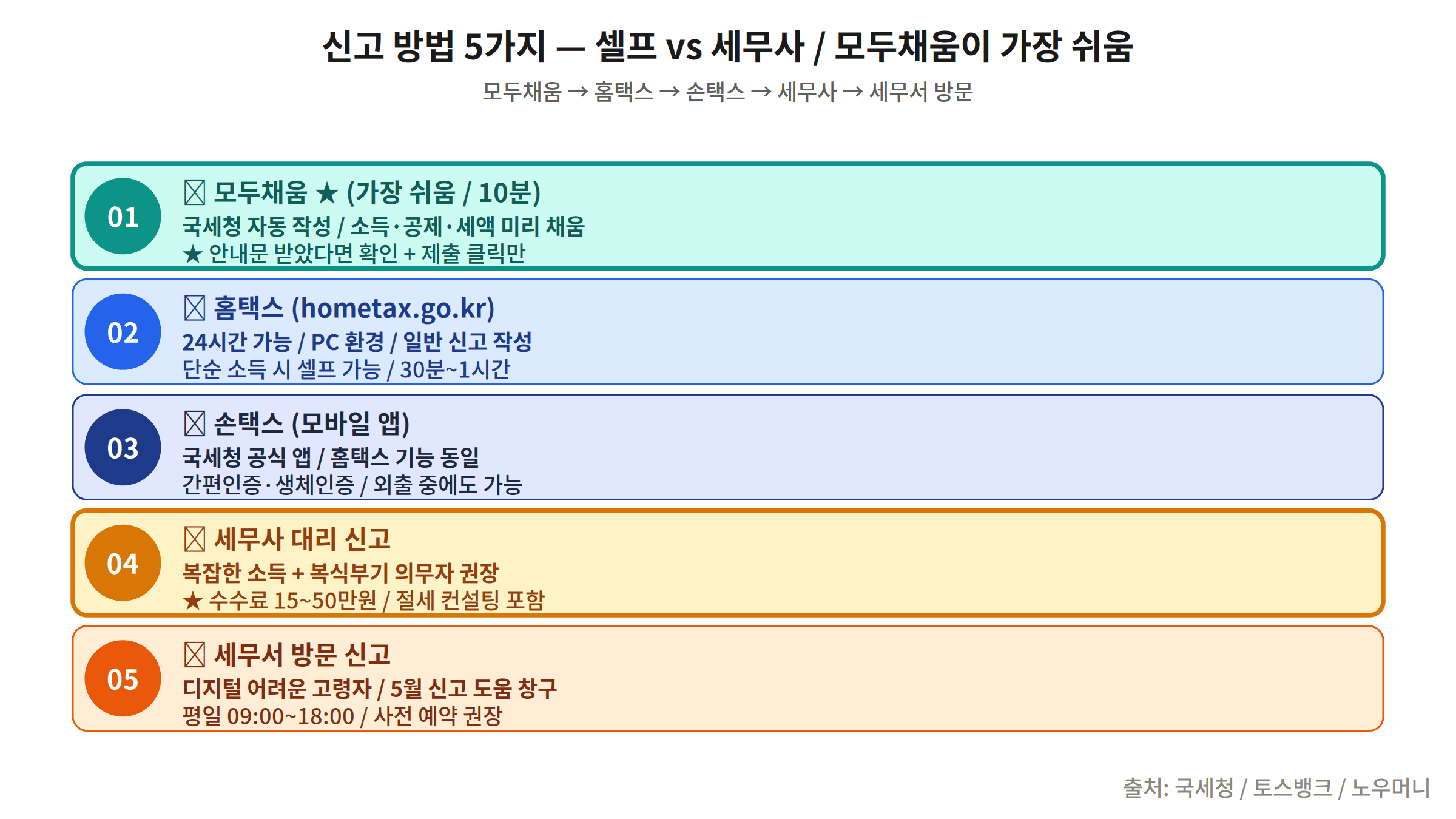
- Hometax Modu-Chaeum (recommended): hometax.go.kr → File/Pay → Income Tax → Modu-Chaeum. NTS pre-fills income and deductions. Done in 10 minutes.
- Sontax mobile app: Sontax app → Income Tax Filing. Modu-Chaeum available on mobile too.
- Hometax standard filing: Manually enter income and deductions. Best for complex business income or multiple income sources.
- Tax agent (세무사): Recommended for annual revenue over 100M KRW or complex tax situations. Fee: 200,000–500,000 KRW.
- Tax apps (Samsam33, Toss): Specialized for 3.3% refund recovery. Suitable for simple freelancer filing. Fee: 10–20% of refund amount.
2025 Tax Rate Table — 8-Tier Progressive Rates (6–45%)
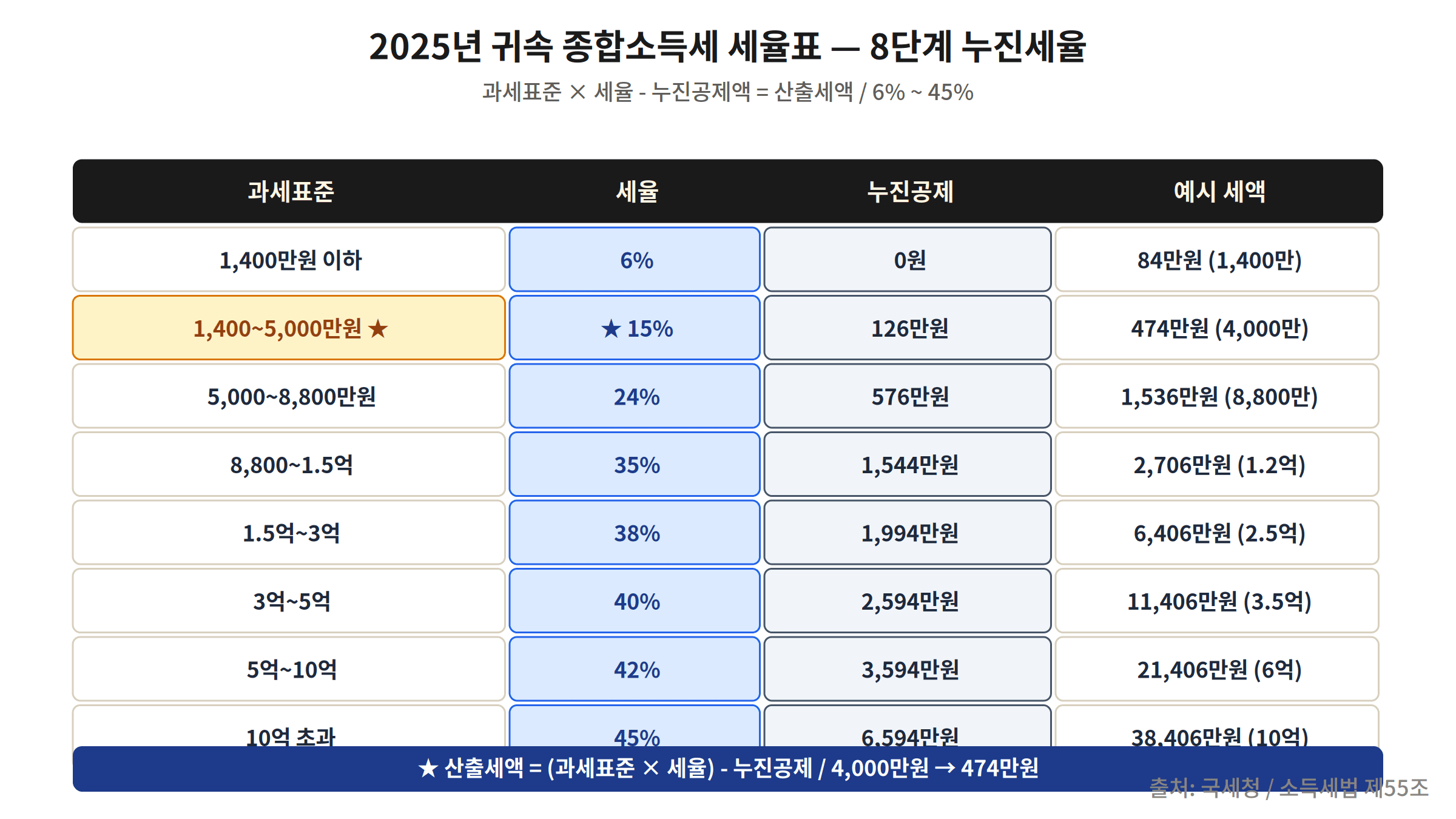
The 2025 progressive income tax rates range from 6% to 45% across 8 tiers. Taxable income up to 14 million KRW: 6% → up to 50 million: 15% → up to 88 million: 24% → up to 150 million: 35% → up to 300 million: 38% → up to 500 million: 40% → up to 1 billion: 42% → over 1 billion: 45%. Rates apply progressively by bracket — at 50 million KRW income, only the amount above 14 million is taxed at 15%, not the full amount.
Flat Expense Ratio vs Standard Expense Ratio — Key for Business Owners
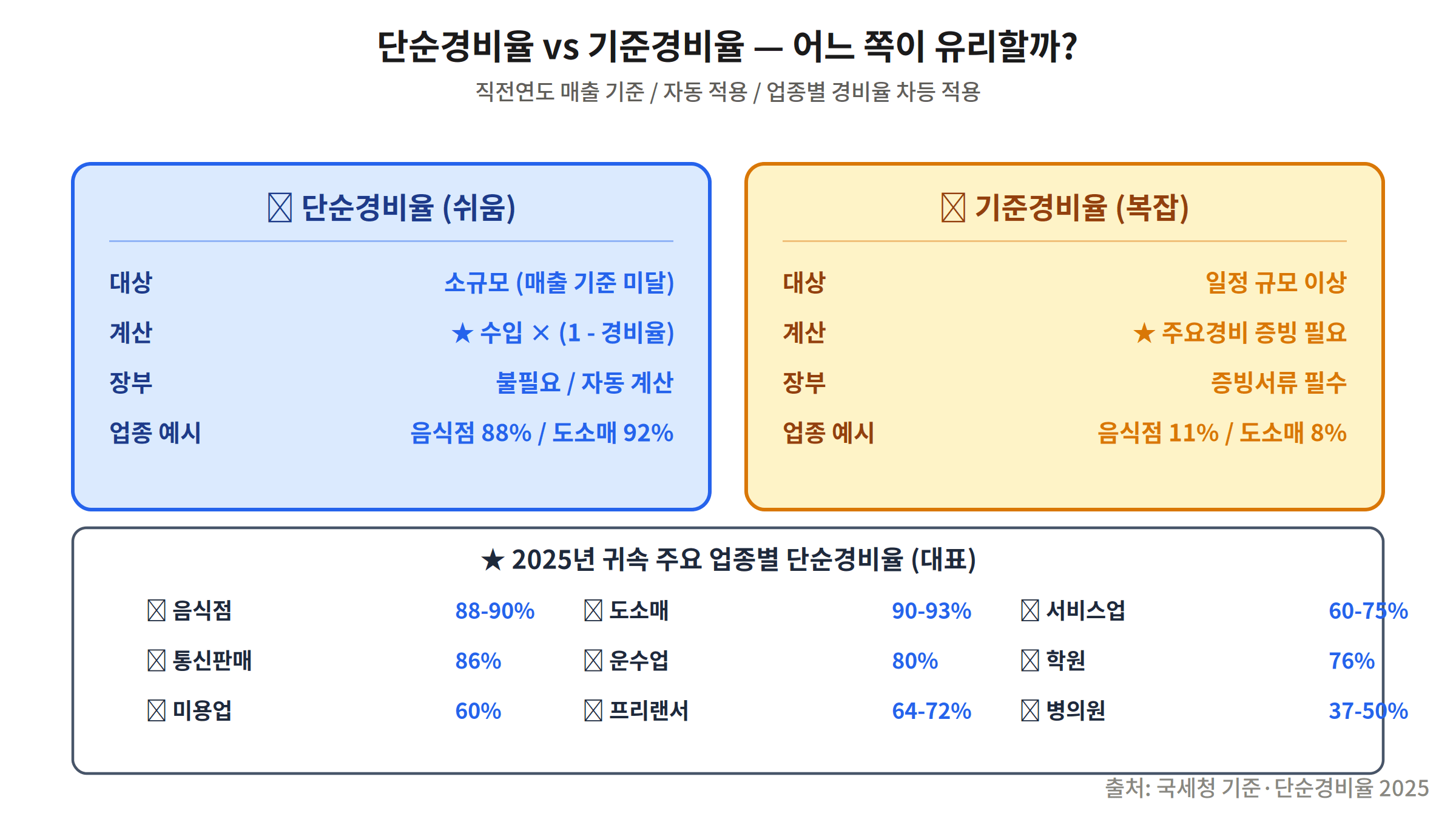
Business owners without bookkeeping use expense ratios to estimate income. Flat expense ratio (단순경비율): applies to new businesses or small-scale operators below revenue thresholds. Industry-specific rate (40–90%) applied to gross revenue → taxable income = revenue × (1 – flat rate). Standard expense ratio (기준경비율): applies to higher-revenue businesses. Major expenses (purchases, wages, rent) deducted with receipts; the remainder uses the standard rate. The flat rate is often more tax-efficient — confirm eligibility first.
Hometax Self-Filing: 7-Step Guide to Finish in 10 Minutes
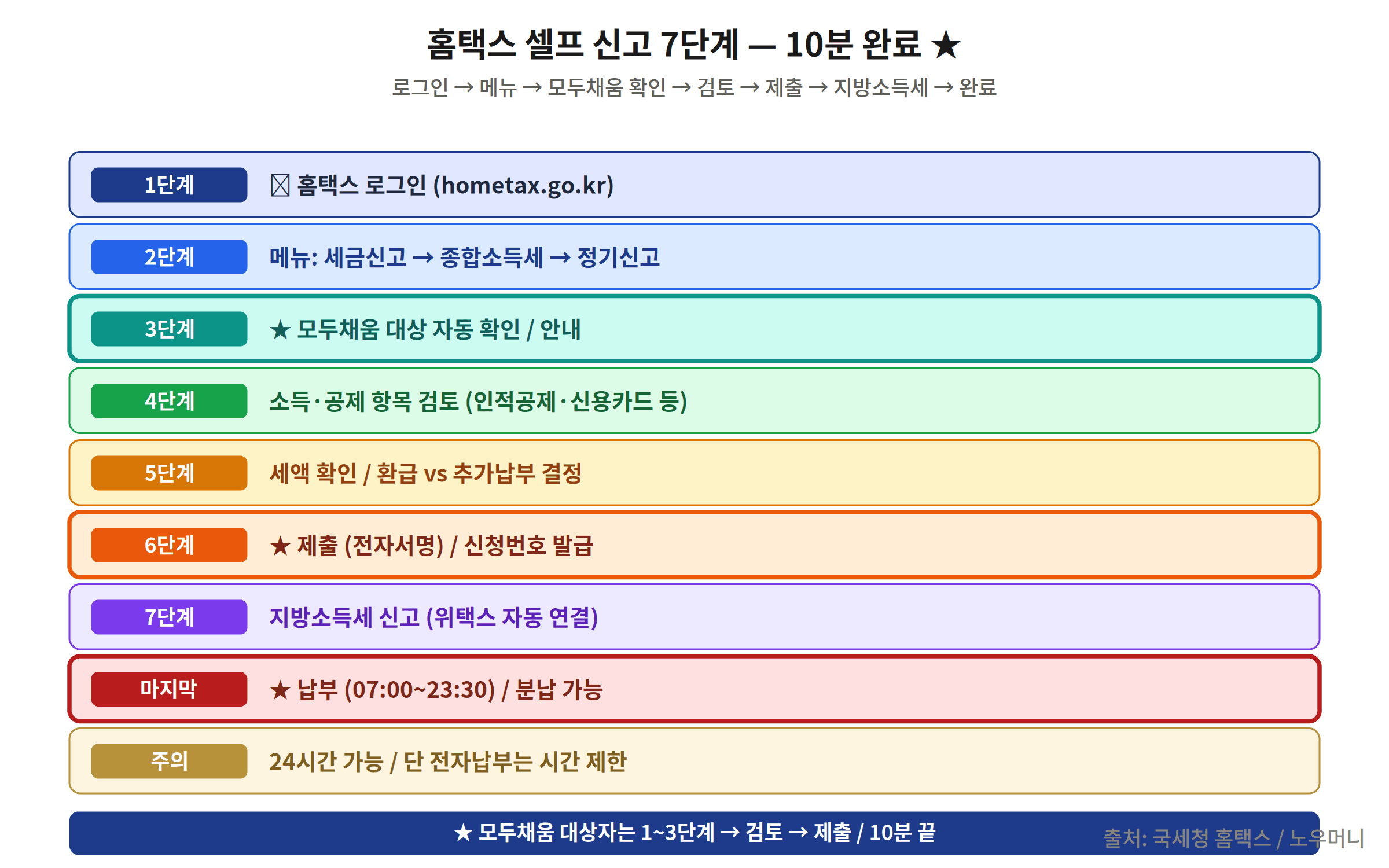
- Go to hometax.go.kr → log in with certificate or easy authentication
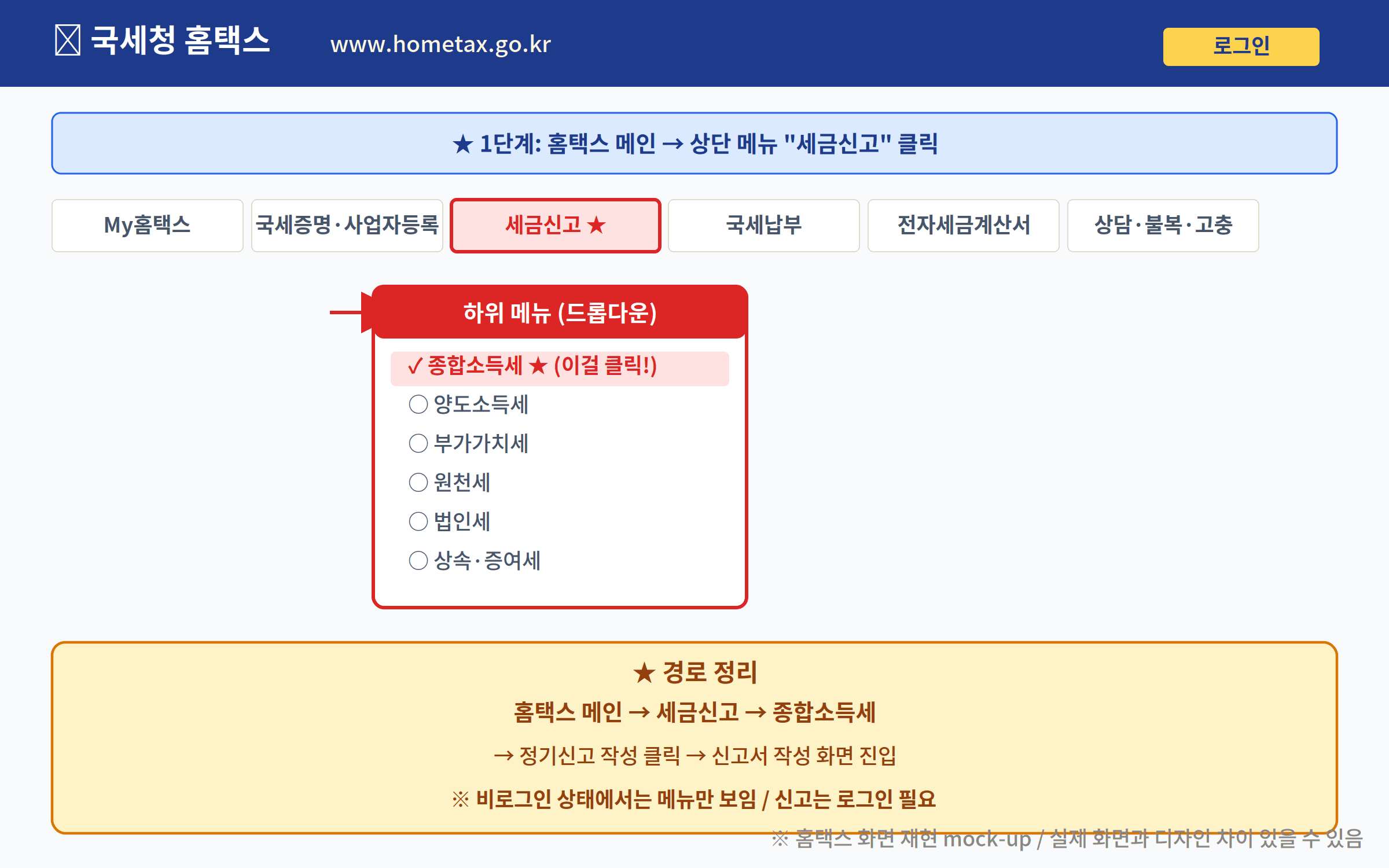
- File/Pay → Tax Filing → Income Tax → Modu-Chaeum Filing
- Review auto-filled income (employment, business, miscellaneous income auto-retrieved)
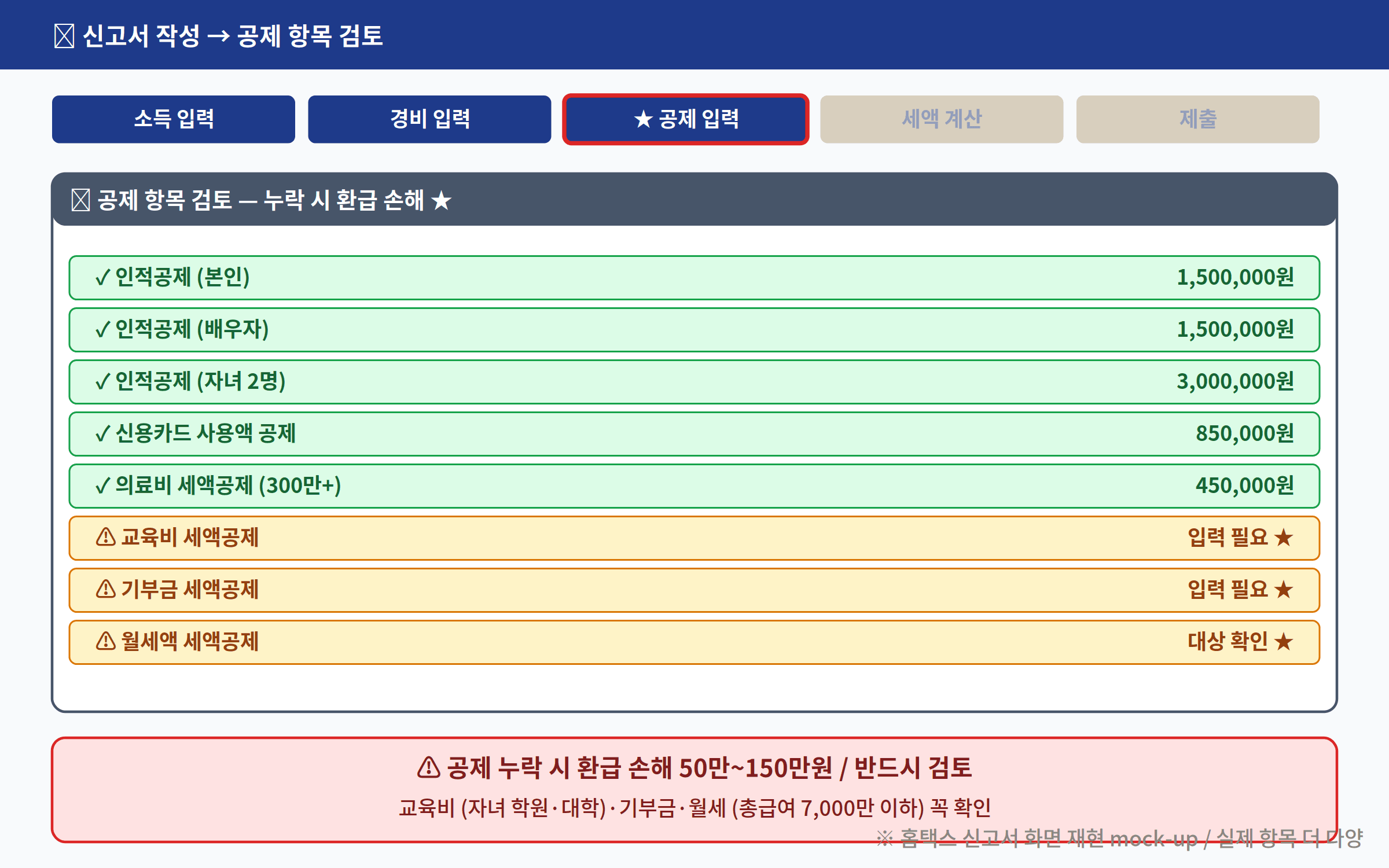
- Confirm and add deductions (dependents, insurance, medical, education, donations)
- Review calculated tax → confirm refund amount or additional tax owed
- Submit return → save receipt
- If additional tax owed: pay by June 1 via virtual account, credit card, or internet banking
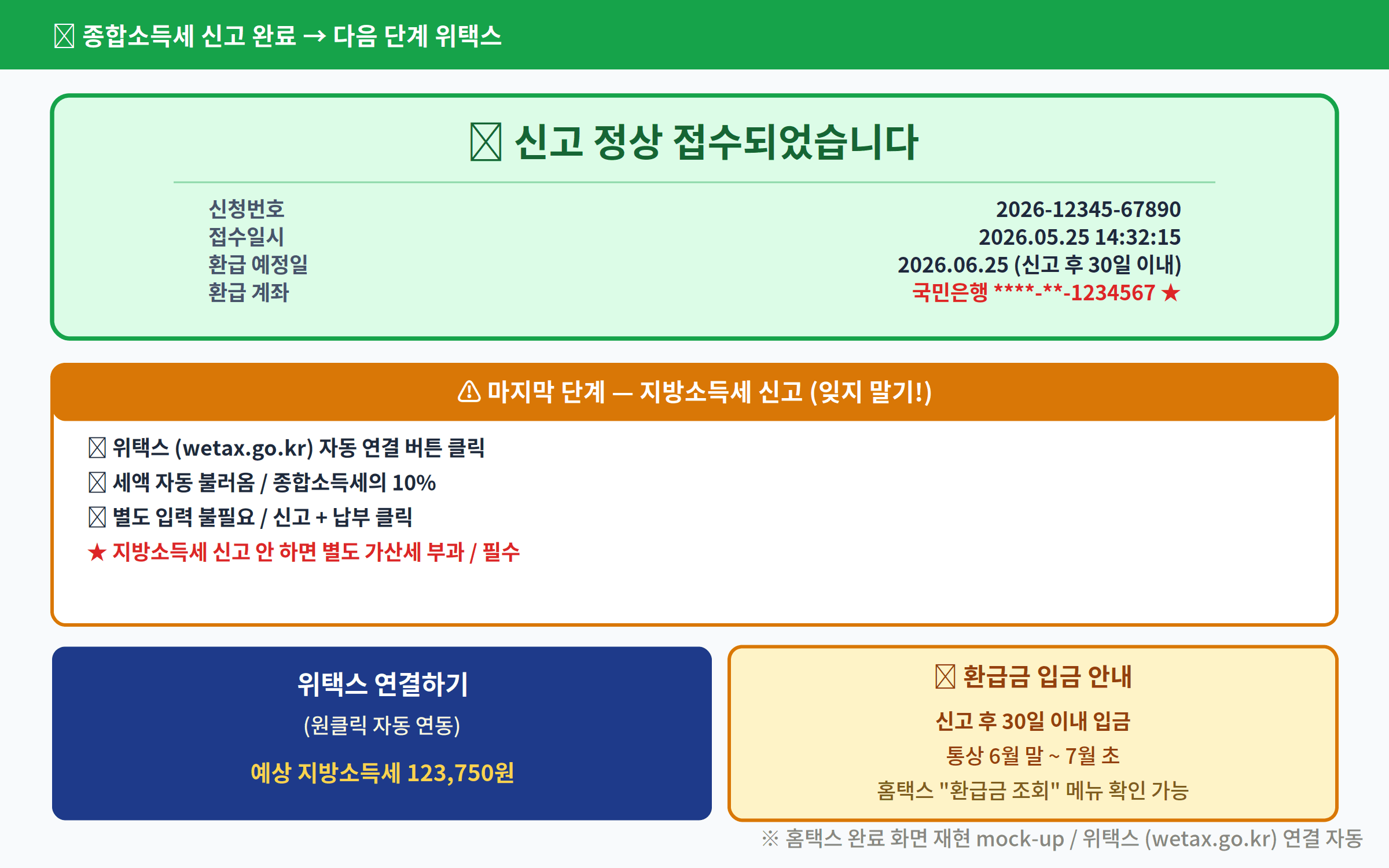
Hometax Screen Walkthrough
Refund vs Additional Payment Simulation — 4 Case Studies
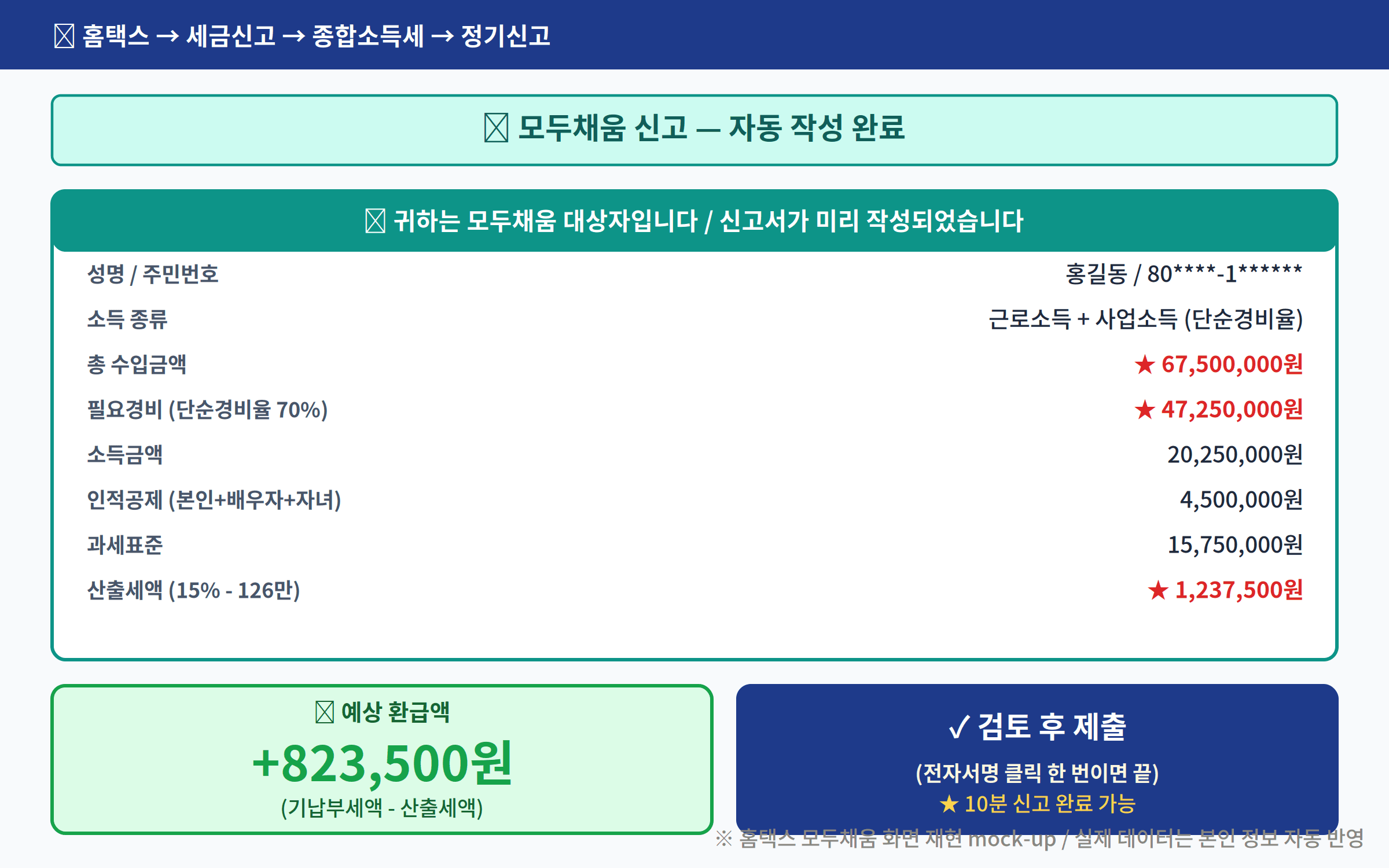
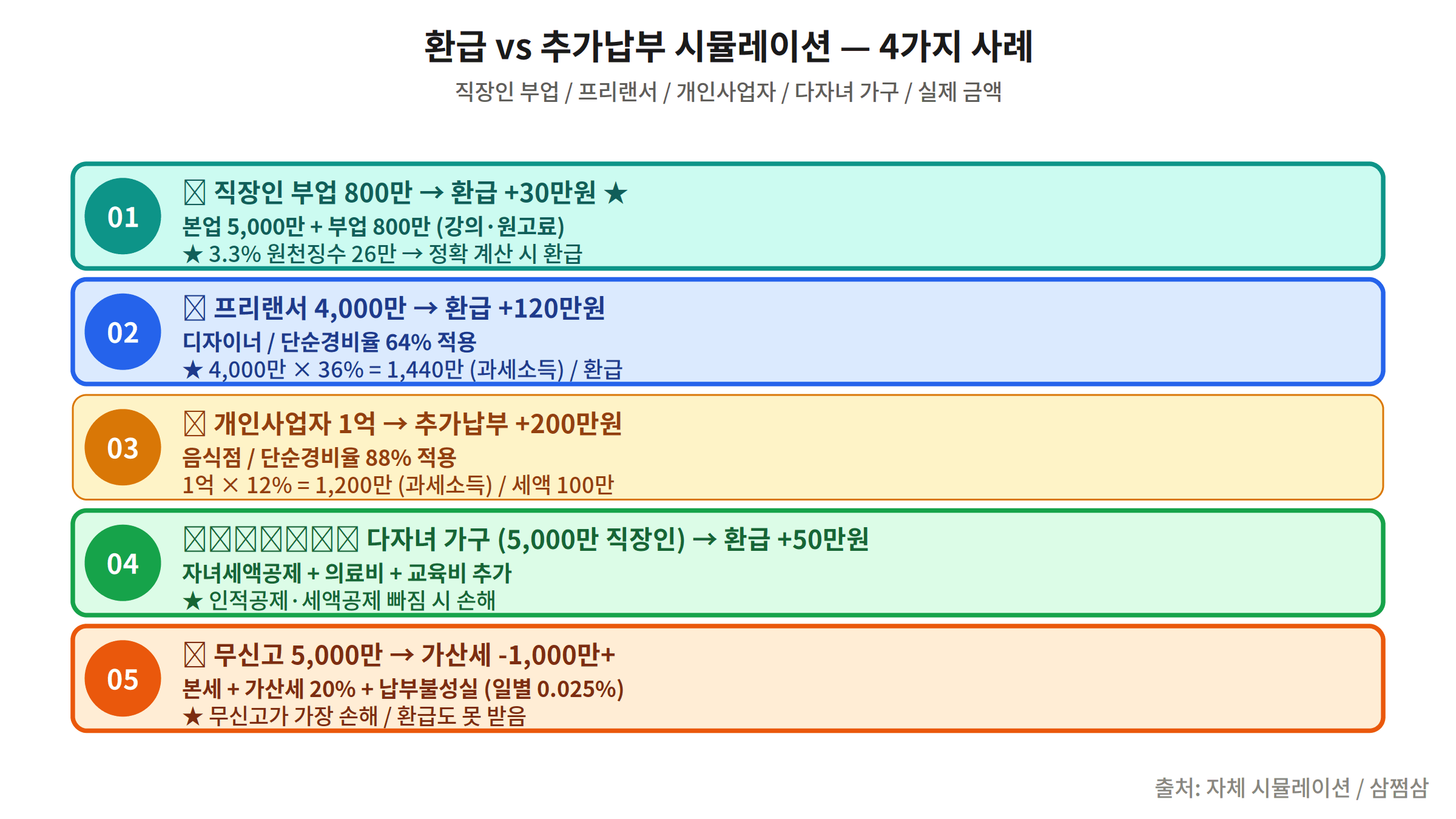
Case 1 — Freelancer earning 30M KRW (3.3% withheld): Tax withheld 990,000 KRW; with flat expense ratio, taxable income ~10M KRW, tax owed ~600,000 KRW → refund ~390,000 KRW. Case 2 — Salaried worker with 5M KRW side income: Separate taxation at 20% = 1,000,000 KRW; aggregate with salary depends on marginal rate — may result in refund or additional payment. Case 3 — Sole proprietor with 100M KRW revenue (standard ratio): Taxable income ~40M KRW, tax ~4,500,000 KRW → after provisional tax credit, may owe or receive refund. Case 4 — Rental income 15M KRW: Separate tax (14%) = 2,100,000 KRW vs aggregate — separate rate preferable with no other income.
5 Penalties for Non-Filing — Surcharges + Lost Refunds
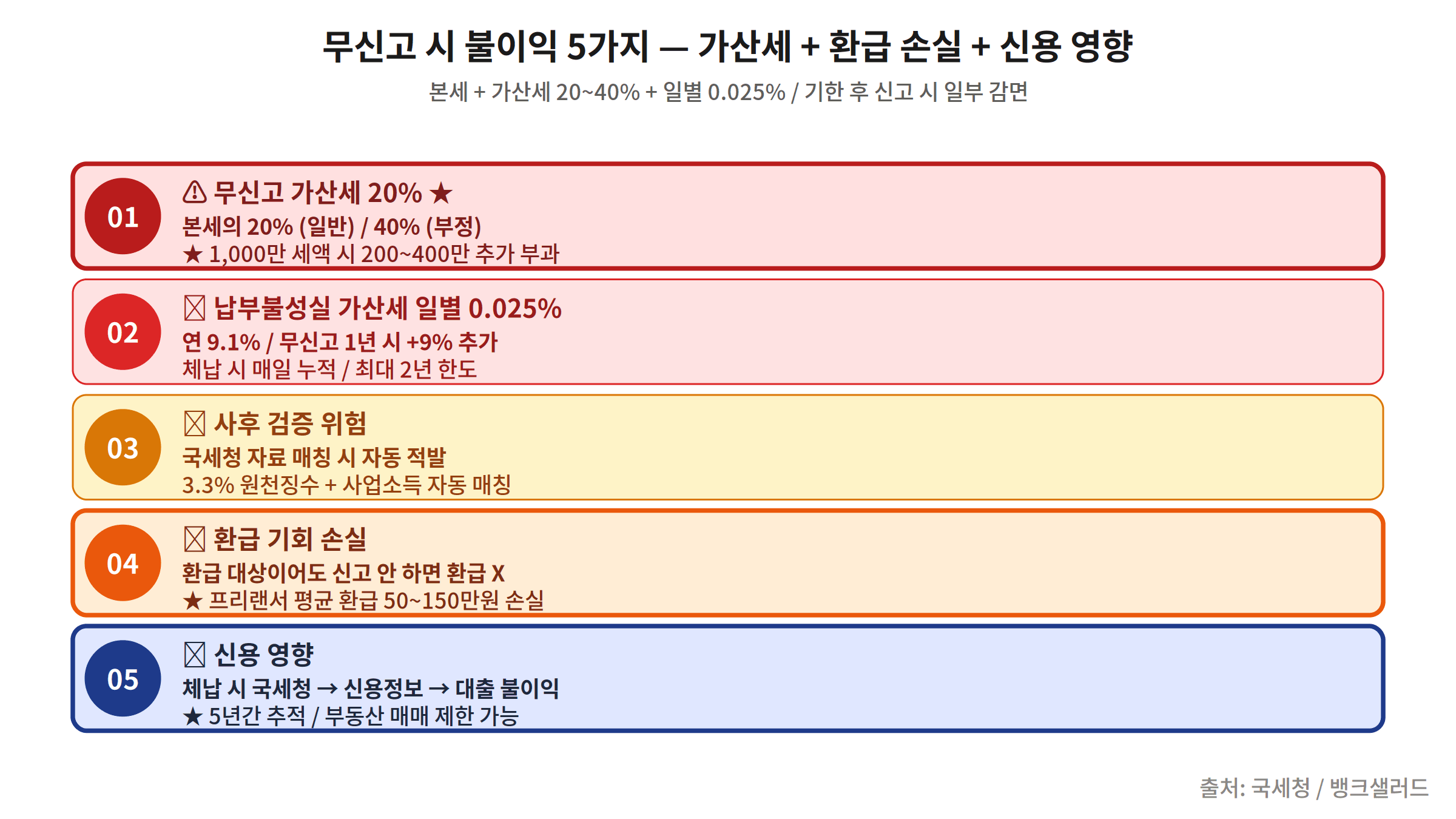
- Non-filing surcharge: 20% of tax owed (40% for fraudulent non-filing)
- Late payment surcharge: 0.022% per day × days unpaid (approx. 8% annually)
- Forfeited refund: No refund without filing — though an amended return within 5 years is possible, it’s cumbersome
- Tax audit risk: Non-filing history increases likelihood of being selected for future tax audits
- Financial/administrative disadvantages: No income proof → restricted loan approval and government benefit eligibility
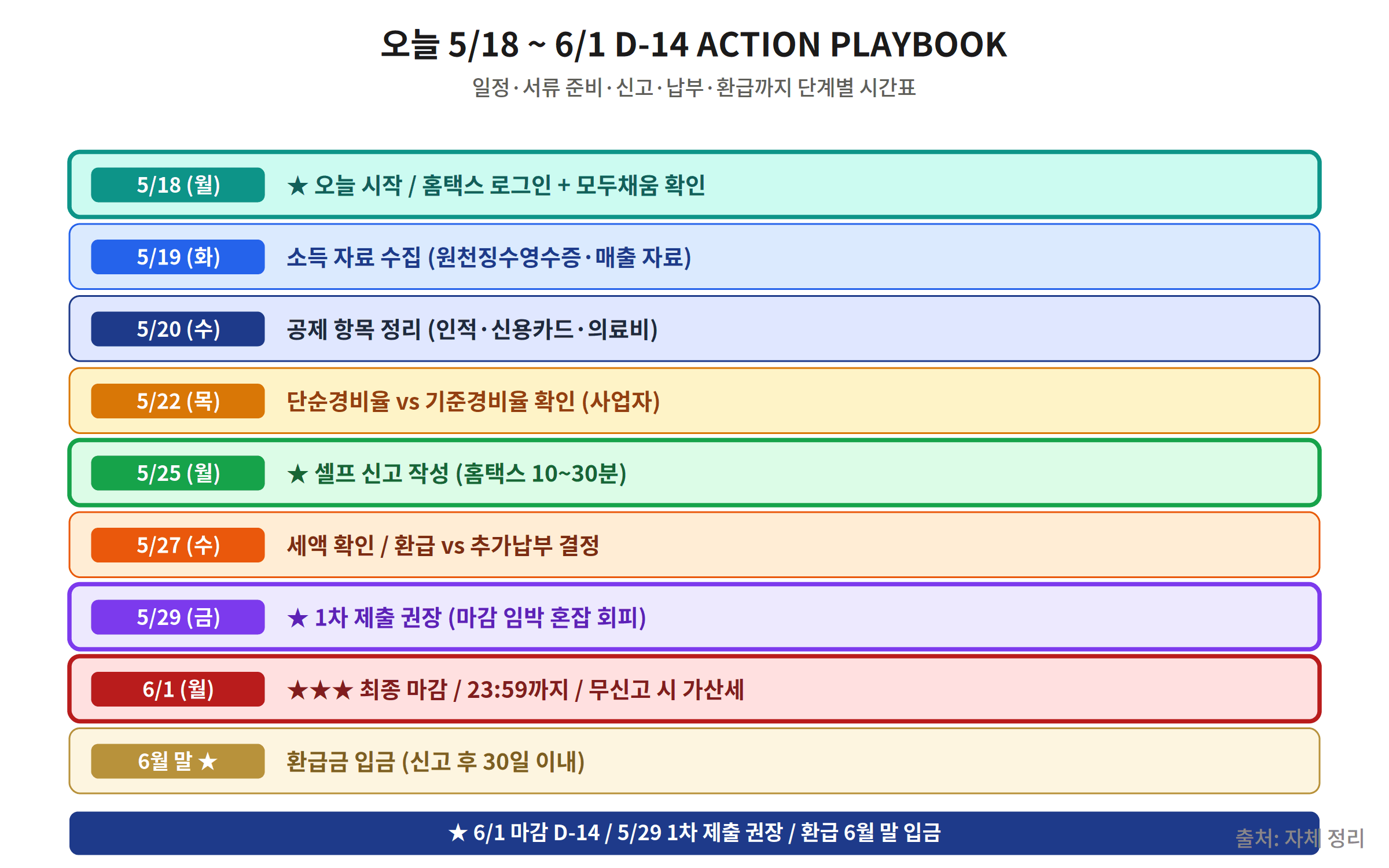
June 1 Deadline D-12 Action Playbook
- Today: Log in to hometax.go.kr → open Modu-Chaeum filing → confirm eligibility (5 minutes)
- If Modu-Chaeum eligible: Review income and deductions → submit immediately if refund → refund arrives in 3–4 weeks
- If standard filing required: Organize expense receipts → check flat vs standard ratio benefit → file
- If tax agent needed: Decide by May 28 (agents are fully booked near the deadline)
- June 1 payment: Refunds deposit automatically after filing / additional tax must be paid before midnight June 1