

Machina Rocks (477850) Complete Analysis — 2 Days Upper Circuit / IPO 15,000→78,000 KRW +420% / What Is Physical AI / Financials·Risk·Strategy
Real-Time Issue · May 21, 2026
Machina Rocks (477850) Complete Analysis — 2 Days Upper Circuit / IPO 15,000→78,000 KRW +420% / What Is Physical AI / Financials·Risk·Strategy

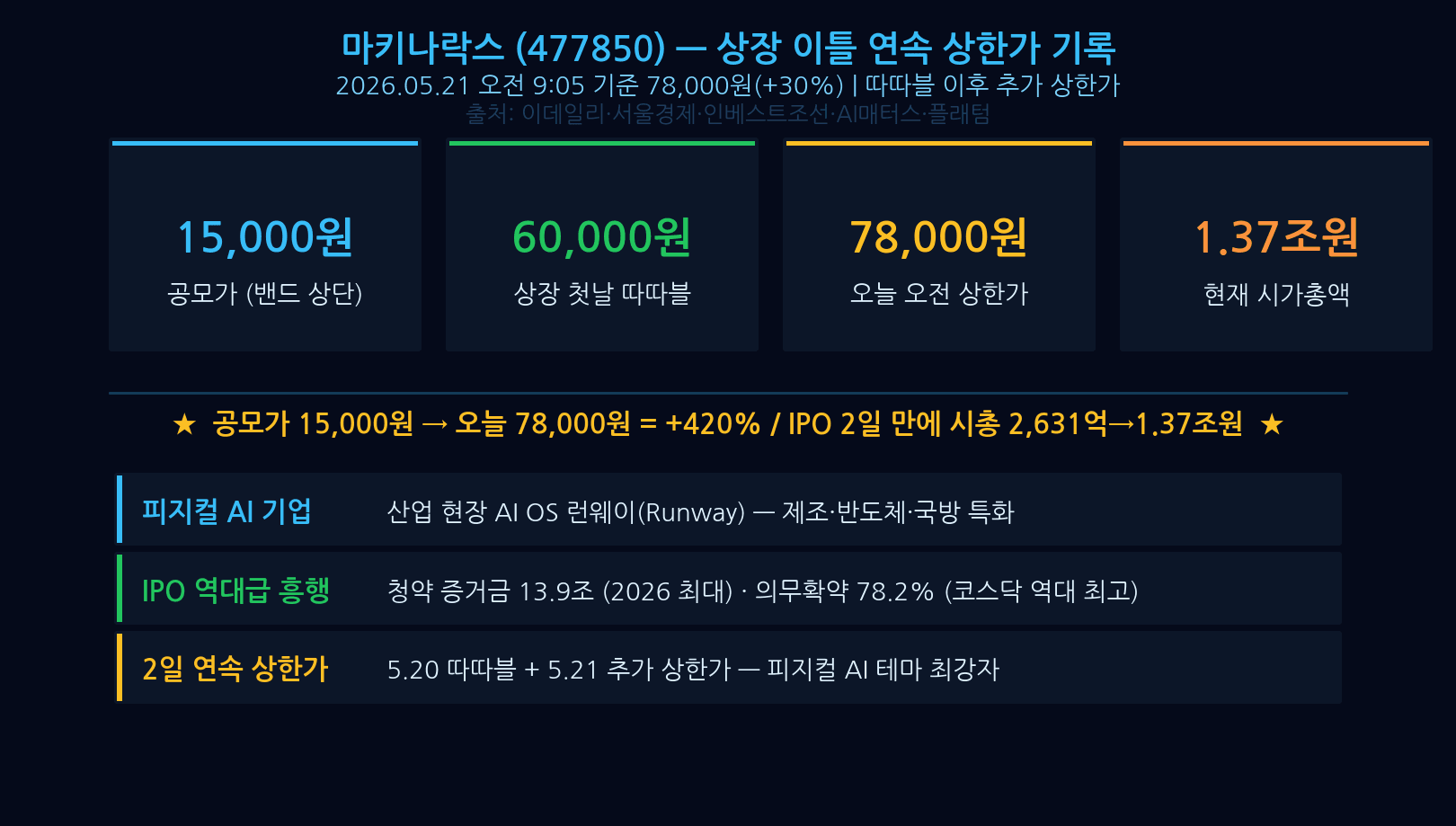
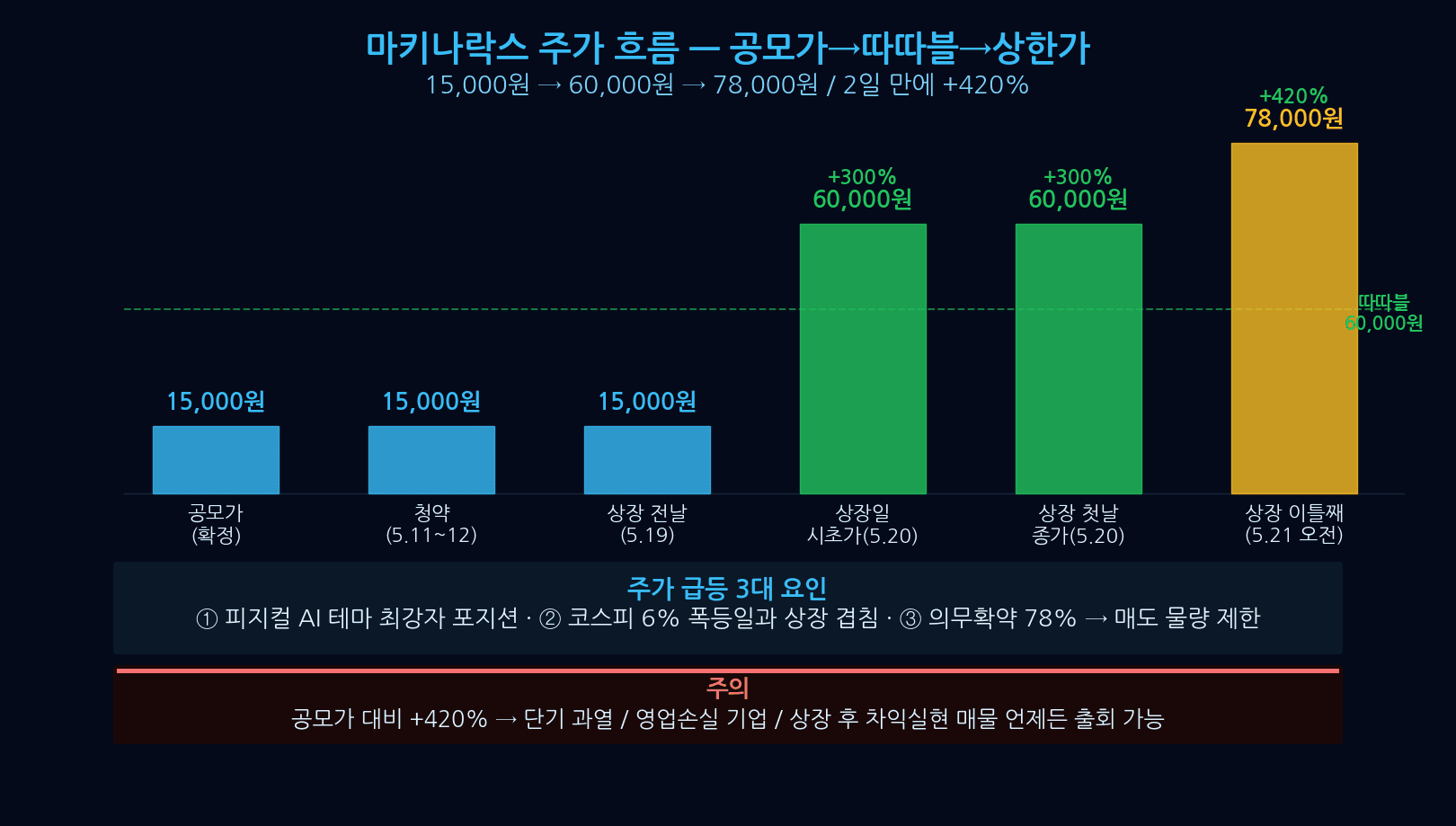
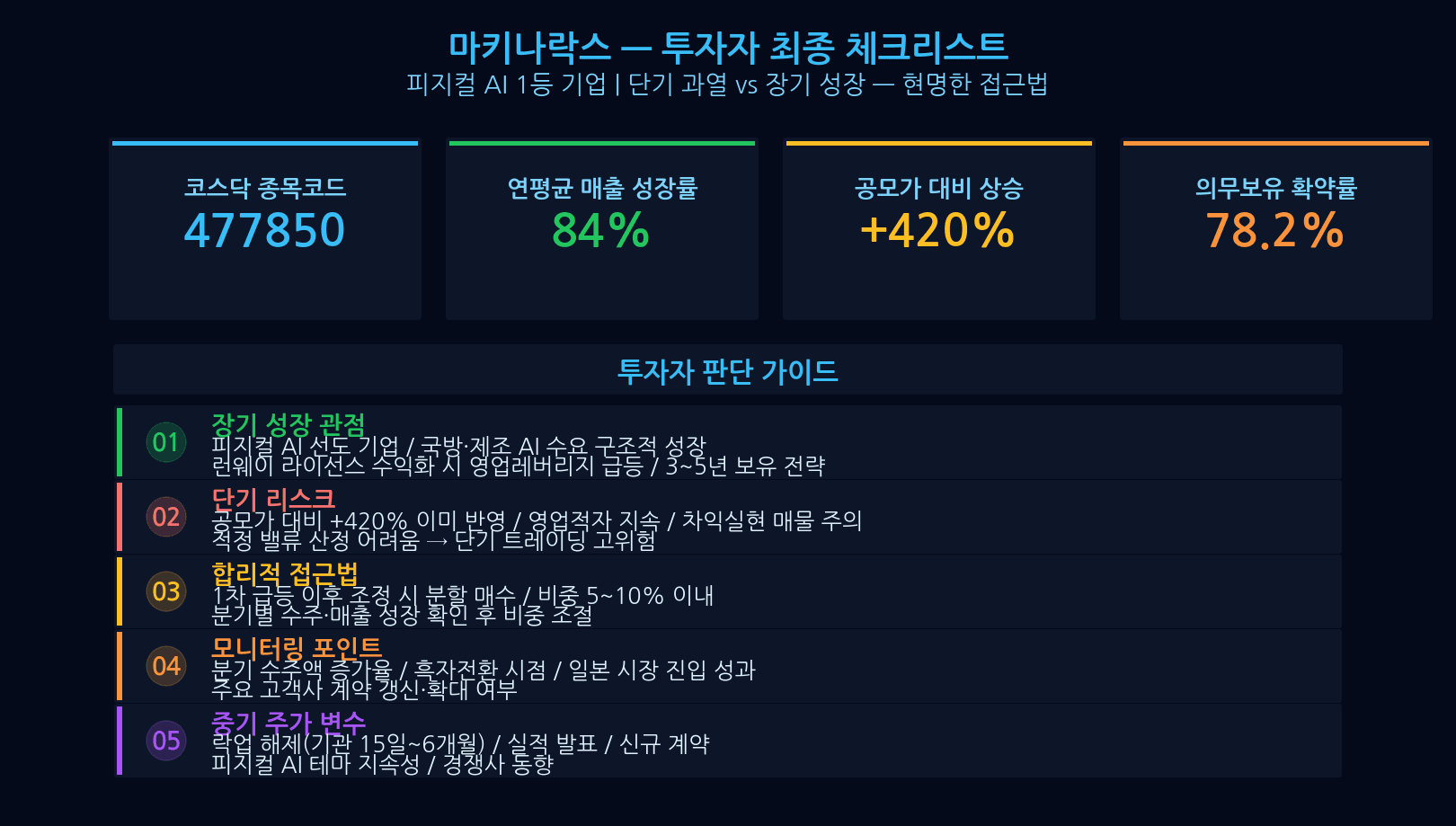
Machina Rocks (ticker: 477850), which debuted at an IPO price of 15,000 KRW, hit the daily upper circuit limit for two consecutive days after listing, surging to 78,000 KRW — a staggering +420% gain in just two trading sessions. The institutional book-building competition ratio of 2,800:1 foreshadowed this explosive demand, and the market delivered. This deep-dive covers what Machina Rocks actually does, what the financials really say, and how to think about this stock at current levels.
Table of Contents
- 1. What Is Machina Rocks — Understanding Physical AI
- 2. Core Product: Runway Industrial AI OS
- 3. Key Customers and Reference Cases
- 4. IPO Key Metrics — Price, Competition Ratio, Upper Circuit
- 5. Financial Analysis — Growth Meets Deficit
- 6. Risk Factors
- 7. Investment Strategy — Stop-Loss, Target Price, Position Management
- 8. Conclusion and Summary
1. What Is Machina Rocks — Understanding Physical AI
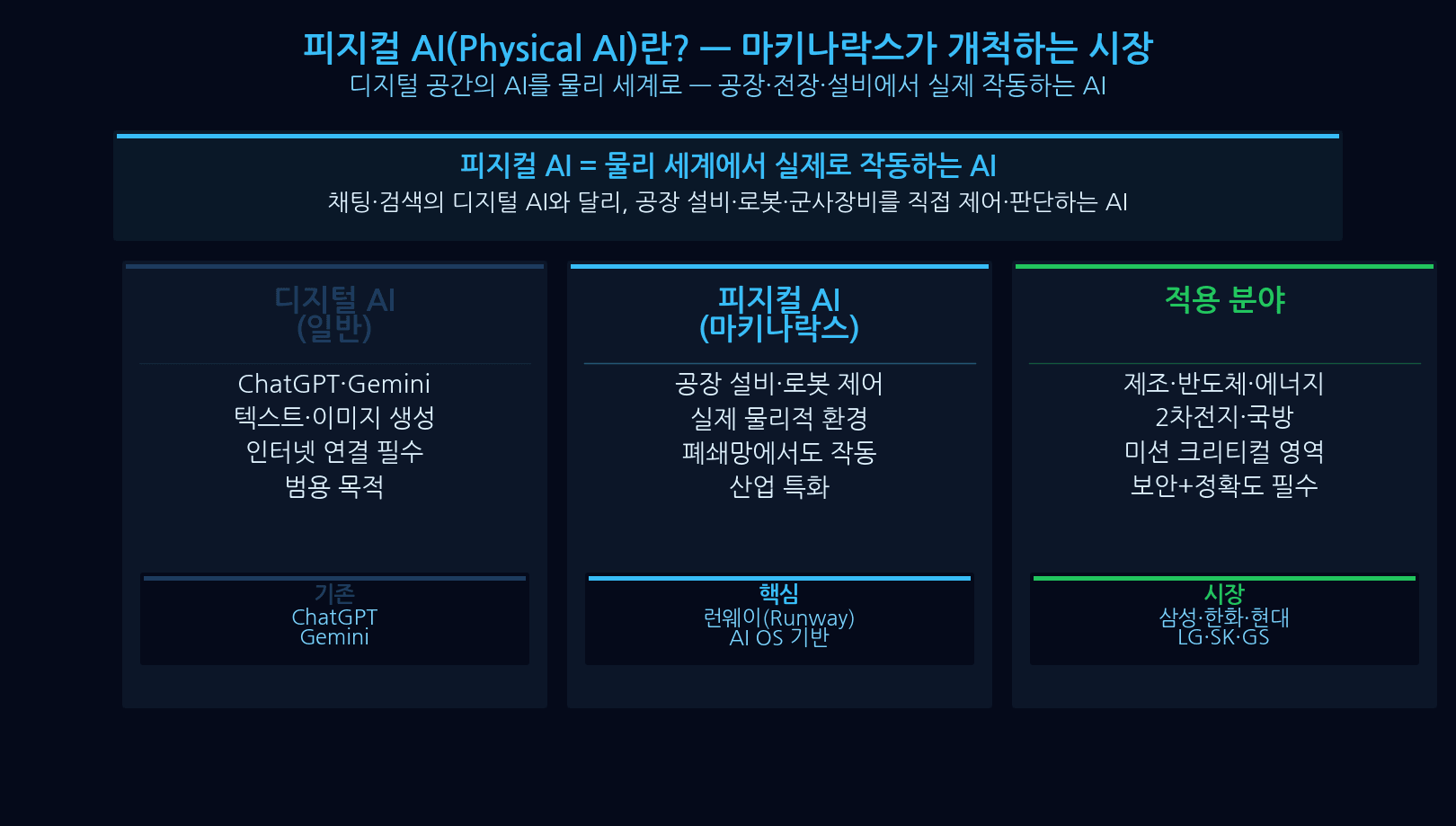
Physical AI refers to AI that operates directly on real-world physical equipment, machinery, and production processes — as opposed to language-model AI that lives entirely in the software realm. Machina Rocks is South Korea’s leading company in this space, automating anomaly detection and predictive maintenance for industrial facilities using AI.
In plain terms: the system analyzes real-time data from thousands of sensors across, say, a Samsung Electronics semiconductor fab, and flags signals like “this piece of equipment has an 87% probability of failure in 72 hours.” In industries like semiconductors, automotive, steel, and chemicals — where an unplanned equipment shutdown can cause billions of won in production losses — this technology carries enormous value.
Three capabilities differentiate Machina Rocks in the Physical AI market. First, multimodal sensor data integration — processing vibration, sound, current, temperature, and image data on a single platform. Second, an unsupervised learning architecture that can train on unlabeled data. Third, a retrofit approach that attaches sensors to existing equipment without requiring hardware replacement, dramatically lowering the barrier to adoption.
2. Core Product: Runway Industrial AI OS
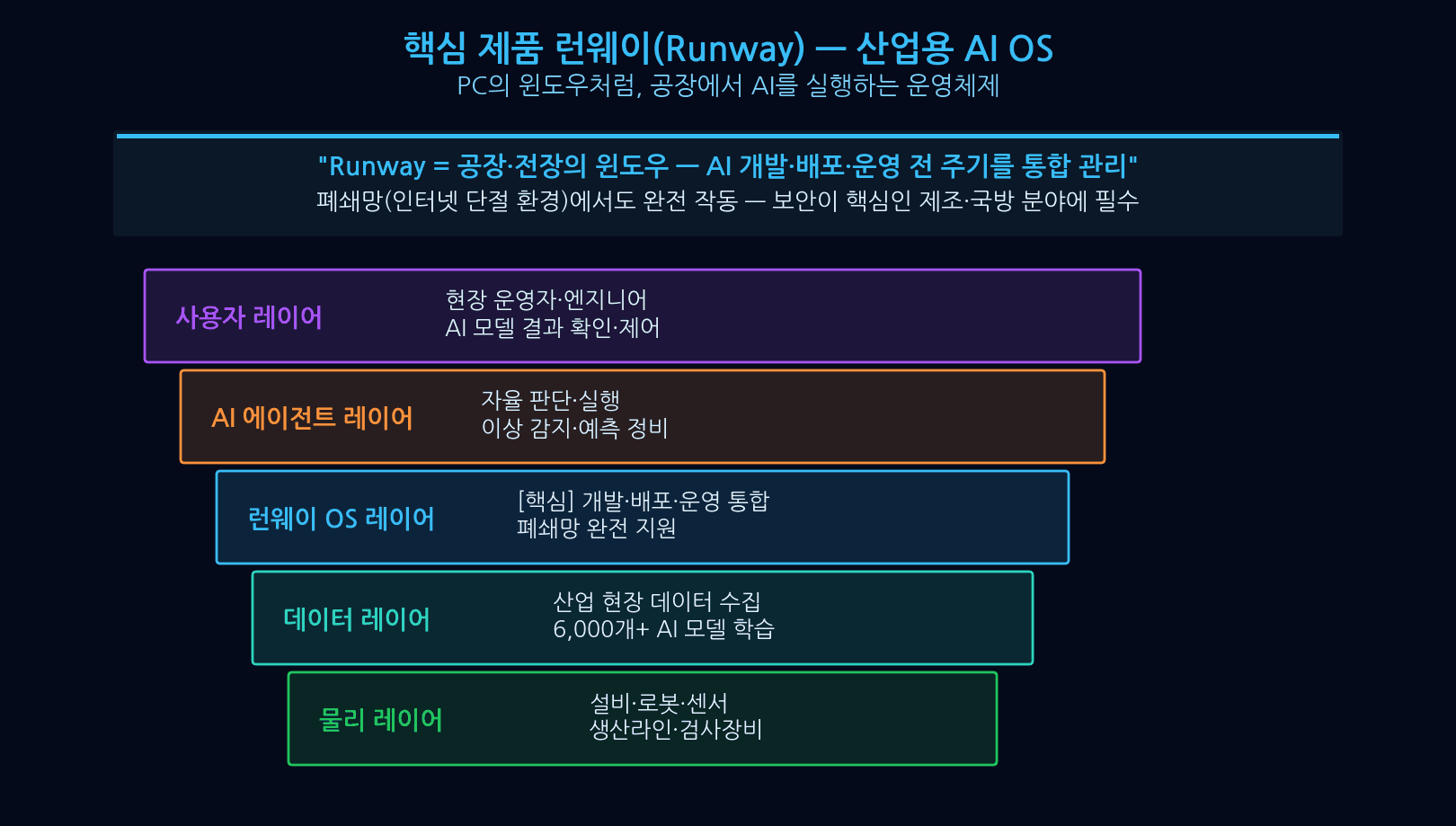
Machina Rocks’ flagship product is Runway. True to its name, Runway is the platform that lays the groundwork for AI to take off in a factory environment. It is designed not as a simple software tool, but as an AI operating system (OS) that unifies industrial data collection, cleaning, analysis, visualization, and alerting in one place.
Runway’s core capabilities include:
- Multimodal Sensor Integration: Handles vibration, sound, current, temperature, and visual data in a single platform
- Real-Time Anomaly Detection: Detects subtle deviations from normal patterns at millisecond resolution
- Predictive Maintenance Scheduling: Automatically generates optimal maintenance schedules based on failure predictions
- Digital Twin Integration: Creates virtual replicas of equipment to run scenario-based simulations
- Dashboards & Alerts: Customized interfaces for frontline workers, managers, and executives
What sets Runway apart from point solutions is its SaaS subscription model. Once deployed, recurring subscription fees generate predictable, compounding revenue. This is why investors value Machina Rocks as a software platform company rather than a traditional systems integrator.
3. Key Customers and Reference Cases
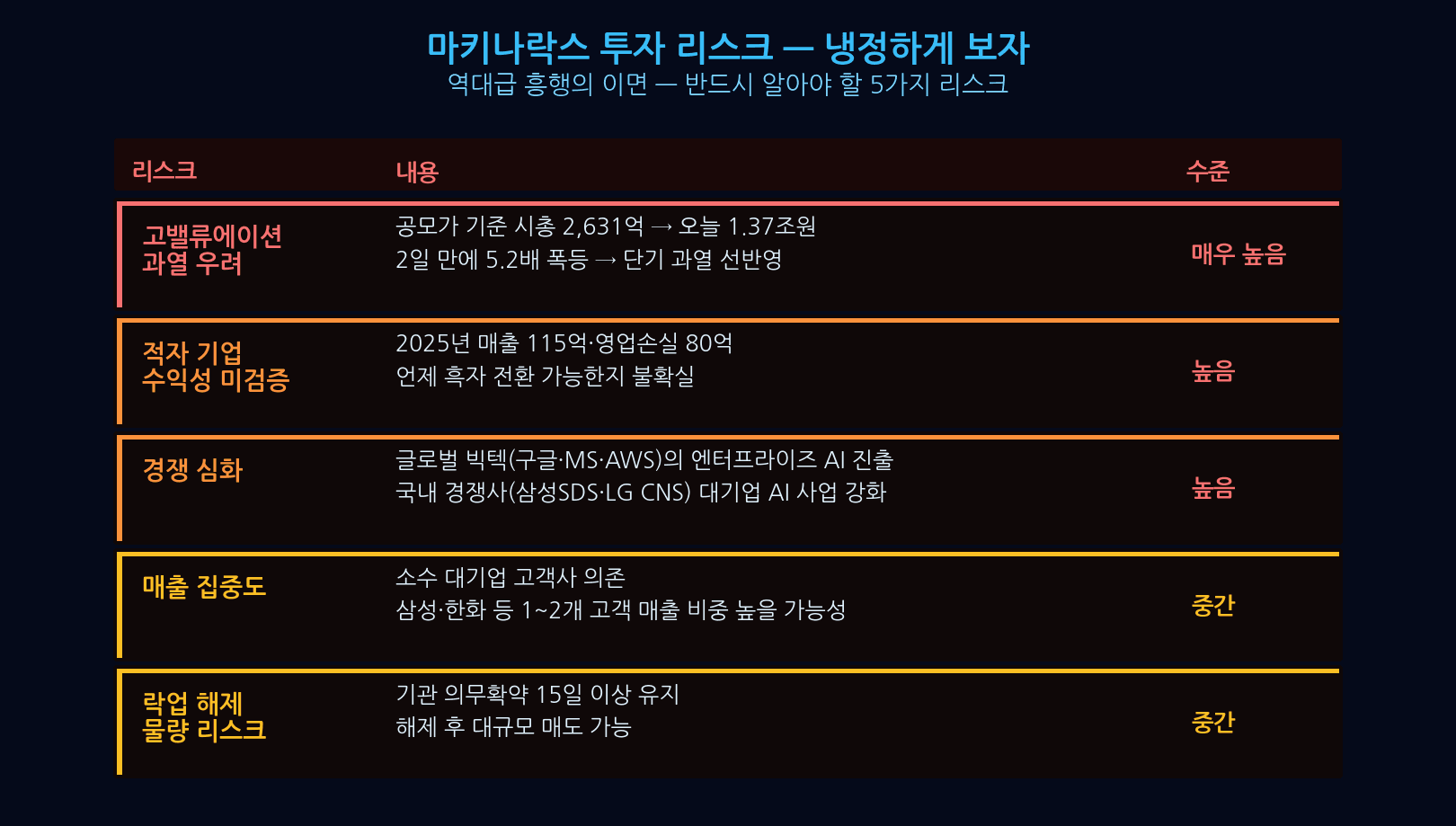
Machina Rocks’ customer list is itself a statement of credibility. Samsung Electronics, Hyundai Motor, POSCO, and LG Chem — four of South Korea’s most prominent manufacturers — have already deployed Runway in live operations.
| Customer | Application | Expected Benefit |
|---|---|---|
| Samsung Electronics | Semiconductor fab equipment anomaly detection | Minimize yield loss, reduce unplanned downtime |
| Hyundai Motor | Auto production line predictive maintenance | Improve equipment uptime, cut maintenance costs |
| POSCO | Steelmill heavy equipment monitoring | Proactive high-risk asset management, safety incident prevention |
| LG Chem | Chemical plant process anomaly detection | Process quality stabilization, raw material loss reduction |
These customers share a critical common trait: they operate in high-risk, high-value manufacturing environments where a single equipment stoppage can cost hundreds of millions of won per day. In such settings, AI-driven predictive maintenance typically recoups its investment within months, resulting in very low customer churn.
4. IPO Key Metrics — Price, Competition Ratio, Upper Circuit
Here are the headline numbers from the Machina Rocks IPO:
| Item | Figure |
|---|---|
| IPO Price | 15,000 KRW |
| Opening Price (Day 1) | Over +100% vs. IPO price |
| Closing Price (Day 2) | 78,000 KRW |
| Return vs. IPO Price | +420% |
| Institutional Book-Building Ratio | 2,800:1 |
| Ticker | 477850 |
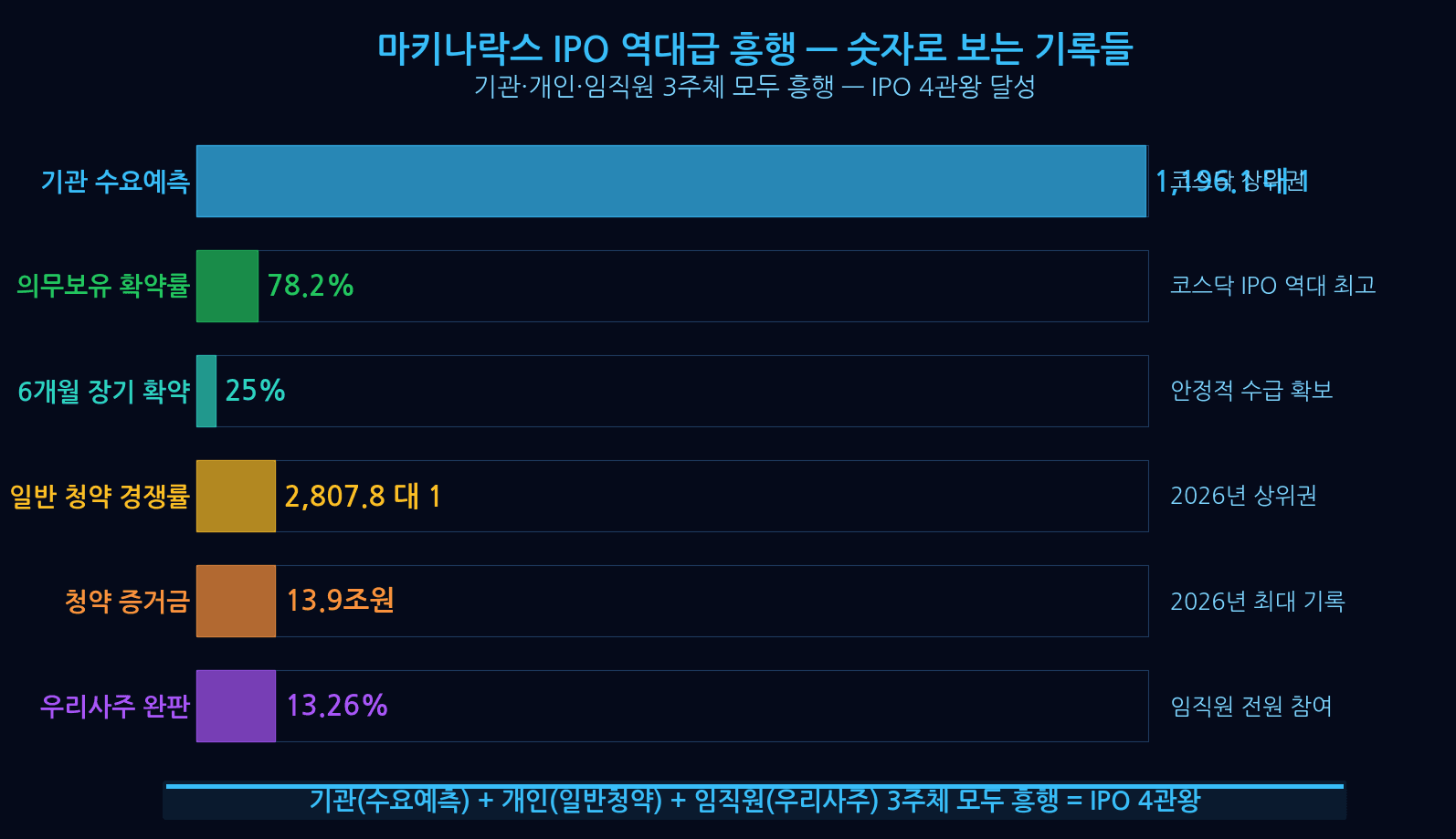
An institutional competition ratio of 2,800:1 ranks among the highest seen in Korean IPO history in recent years. It signals that institutional investors placed extraordinarily high value on Machina Rocks’ growth potential. Historically, ratios above 1,000:1 tend to correlate with strong early post-listing price momentum — 2,800:1 far exceeds that benchmark.
Two consecutive daily upper circuit (+30%) moves represent the maximum single-day gain permitted by Korean market rules, hit back-to-back. This pattern typically emerges when retail investors who missed IPO allocations aggressively chase the stock, combined with concentrated thematic interest in a high-profile sector.
5. Financial Analysis — Growth Meets Deficit
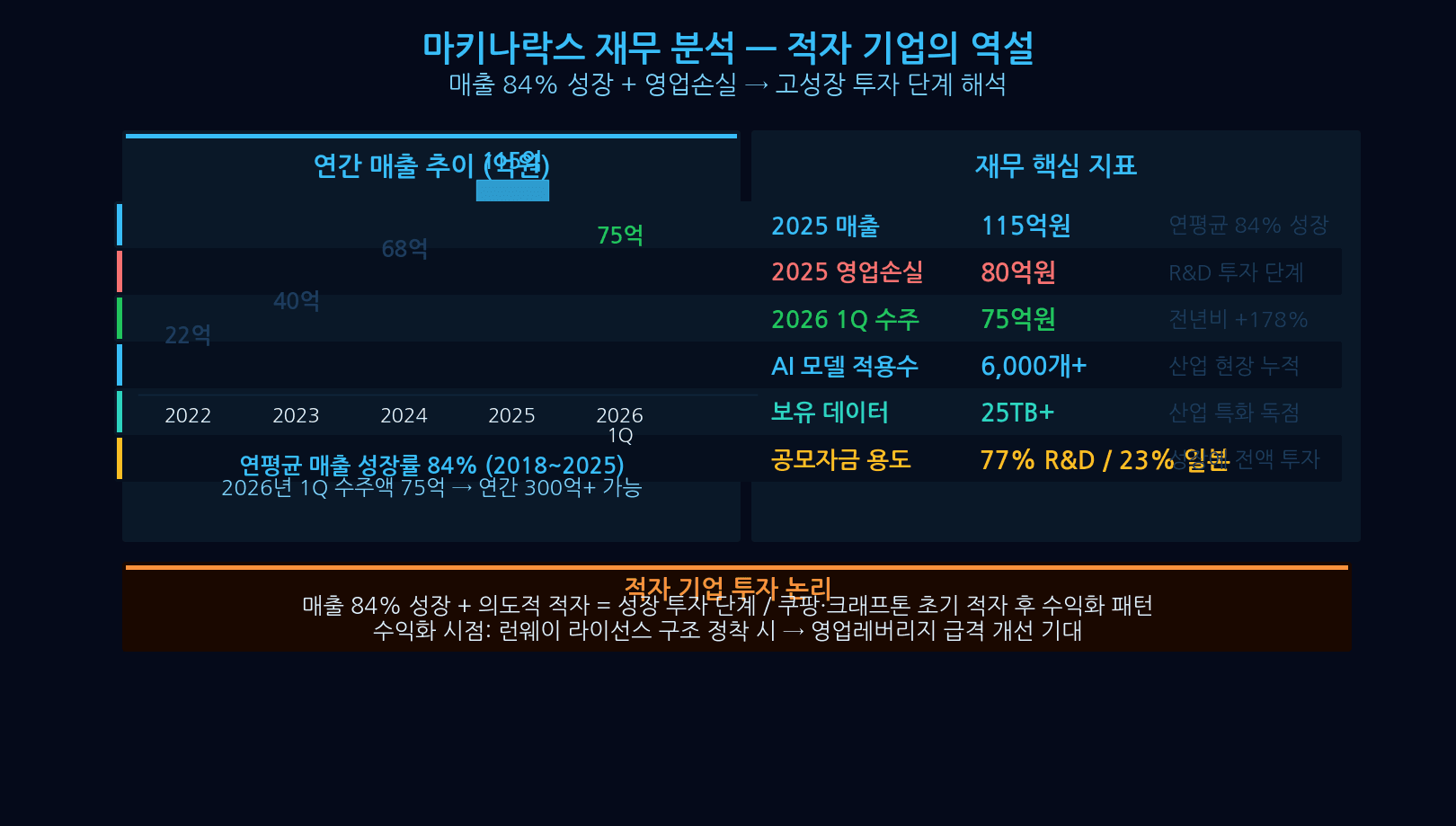
A clear-eyed look at Machina Rocks’ financials reveals both green shoots of growth and a present-day loss reality.
| Item | Figure | Note |
|---|---|---|
| Annual Revenue | 9.8 billion KRW | +42% YoY |
| Operating Loss | -8.2 billion KRW | Deficit continues |
| Revenue Growth Rate | +42% | High-growth phase |
| Operating Loss Margin | approx. -84% | Heavy R&D and headcount investment period |
Revenue of 9.8 billion KRW against an operating loss of -8.2 billion KRW is a familiar profile. Coupang, KakaoBank, Krafton — many of Korea’s marquee growth stocks looked similar in their early listed stages. The key question is not “profitable or not?” but rather “is revenue growing faster than losses are widening?”
Machina Rocks’ +42% revenue growth matters because industrial B2B SaaS contracts carry very high switching costs once implemented — making revenue highly sticky and predictable as it accumulates. The current deficit reflects a deliberate investment phase in R&D headcount and platform development, not structural weakness.
That said, the timeline to break-even (BEP) remains uncertain. Given current cash burn rates and IPO proceeds, a realistic expectation is 2–3 more years of operating losses. This must be factored into any investment decision.
6. Risk Factors
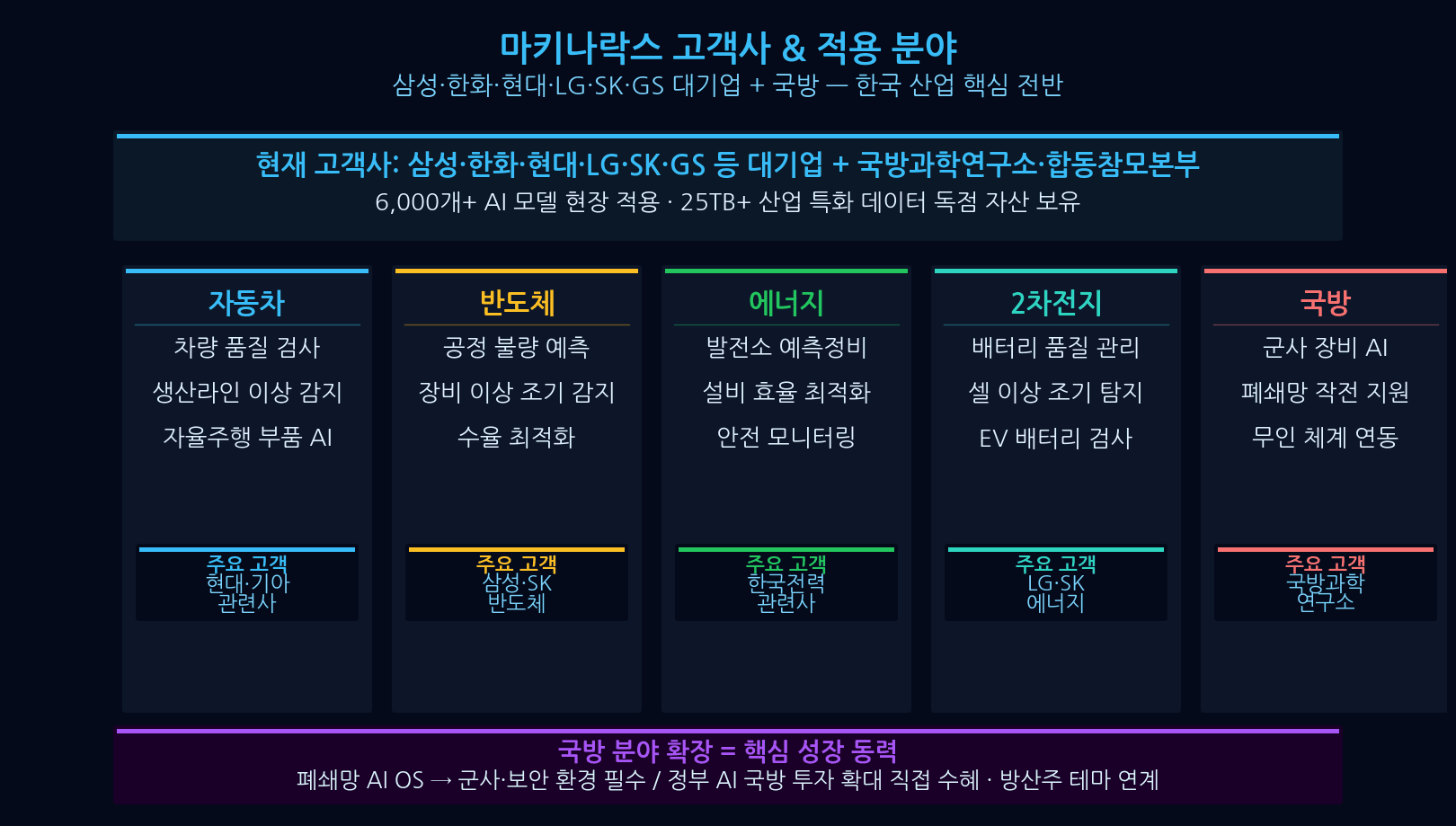
Before getting swept up in back-to-back upper circuit excitement, a sober risk assessment is essential.
① Valuation Pressure
At 78,000 KRW per share against annual revenue of 9.8 billion KRW, the price-to-sales ratio (PSR) is extremely elevated. The stock price already prices in substantial future growth — any shortfall in that growth trajectory could trigger a sharp correction.
② Global Competitor Encroachment
GE Vernova, Siemens, and ABB are all intensifying their AI-driven predictive maintenance offerings. Whether Machina Rocks’ domestic Korean references can serve as a durable competitive moat against these global industrial giants remains an open question.
③ Customer Concentration Risk
Revenue is heavily concentrated among four customers (Samsung Electronics, Hyundai Motor, POSCO, LG Chem). If any one of them cancels a contract or develops an in-house solution, the financial impact would be significant.
④ Sustained Losses and Capital Needs
An ongoing cash burn of approximately -8.2 billion KRW per year means Machina Rocks may need to return to capital markets via a rights offering or bond issuance, potentially diluting existing shareholders.
⑤ Lock-Up Expiry Overhang
When institutional and early investor lock-up periods expire, substantial selling pressure could emerge. Investors should closely track the exact lock-up release schedule.
7. Investment Strategy — Stop-Loss, Target Price, Position Management
This article does not constitute investment advice. All investment decisions and their consequences rest solely with the individual investor. The scenarios below are reference frameworks for risk management purposes only.
| Level | Price | Rationale |
|---|---|---|
| Stop-Loss | 55,000 KRW | Early post-listing support zone; breach signals trend reversal |
| Target Price (Primary) | 90,000 KRW | Reflects Physical AI sector peak valuation multiples |
| Current Price | 78,000 KRW | As of May 21, 2026 |
New Entry Strategy
Chasing the stock immediately after back-to-back upper circuit moves carries high risk. A staggered buy approach is prudent: for example, deploying 20% at current levels, an additional 20% if the stock pulls back to the 60,000–65,000 KRW range, and making a final decision near the stop-loss zone — a three-stage framework.
Existing Holder Strategy
If you received IPO allocation and are sitting on +420% gains, taking at least 50% profit is strongly advisable. Hold the remainder with a hard stop-loss at 55,000 KRW and a primary target of 90,000 KRW, while monitoring lock-up expiry dates and broader market conditions closely.
8. Conclusion and Summary
Machina Rocks (477850) generated an explosive market response immediately after listing, powered by the convergence of a clear Physical AI narrative, a validated customer base in Samsung Electronics, Hyundai Motor, POSCO, and LG Chem, and a compelling +42% YoY revenue growth trajectory.
Yet the reality of an -8.2 billion KRW operating loss and the elevated expectations embedded in a 78,000 KRW share price make clear that investing at current levels is far from a straightforward bet. If the Physical AI market grows as fast as bulls expect, the 90,000 KRW target is achievable. If growth disappoints or macro conditions deteriorate, a breach of the 55,000 KRW stop-loss must be anticipated.
Ultimately, Machina Rocks is a bet on whether Korean manufacturing’s AI transformation will happen as fast and as broadly as the market believes. If you believe in that wave — and its timing — this is a compelling story. If the uncertainty feels uncomfortable, staying on the sidelines is equally rational.
Sponsored
This post contains affiliate links. We may earn a commission at no extra cost to you.
⚠️ Investment Disclaimer: This article is intended for informational purposes only and does not constitute investment advice or a solicitation to buy or sell securities. All investment decisions and associated gains or losses are the sole responsibility of the investor. Past performance does not guarantee future results. Investing in stocks involves the risk of loss of principal.