Quantum Computing Stocks Surge — US Government’s $2B Bet Ignites Rally
Real-Time Issue · May 22, 2026
Quantum Computing Stocks Surge — US Government’s $2B Bet Ignites Rally
Dream Security · Woori Ro · KCS Lead Korea / IonQ & IBM Analysis / 5 Investment Strategies

![[비비PICK] 리에티 LUNO RT 4056 선글라스](https://img5a.coupangcdn.com/image/affiliate/banner/8f965ee3220144b9189234e8256f5677@2x.jpg)
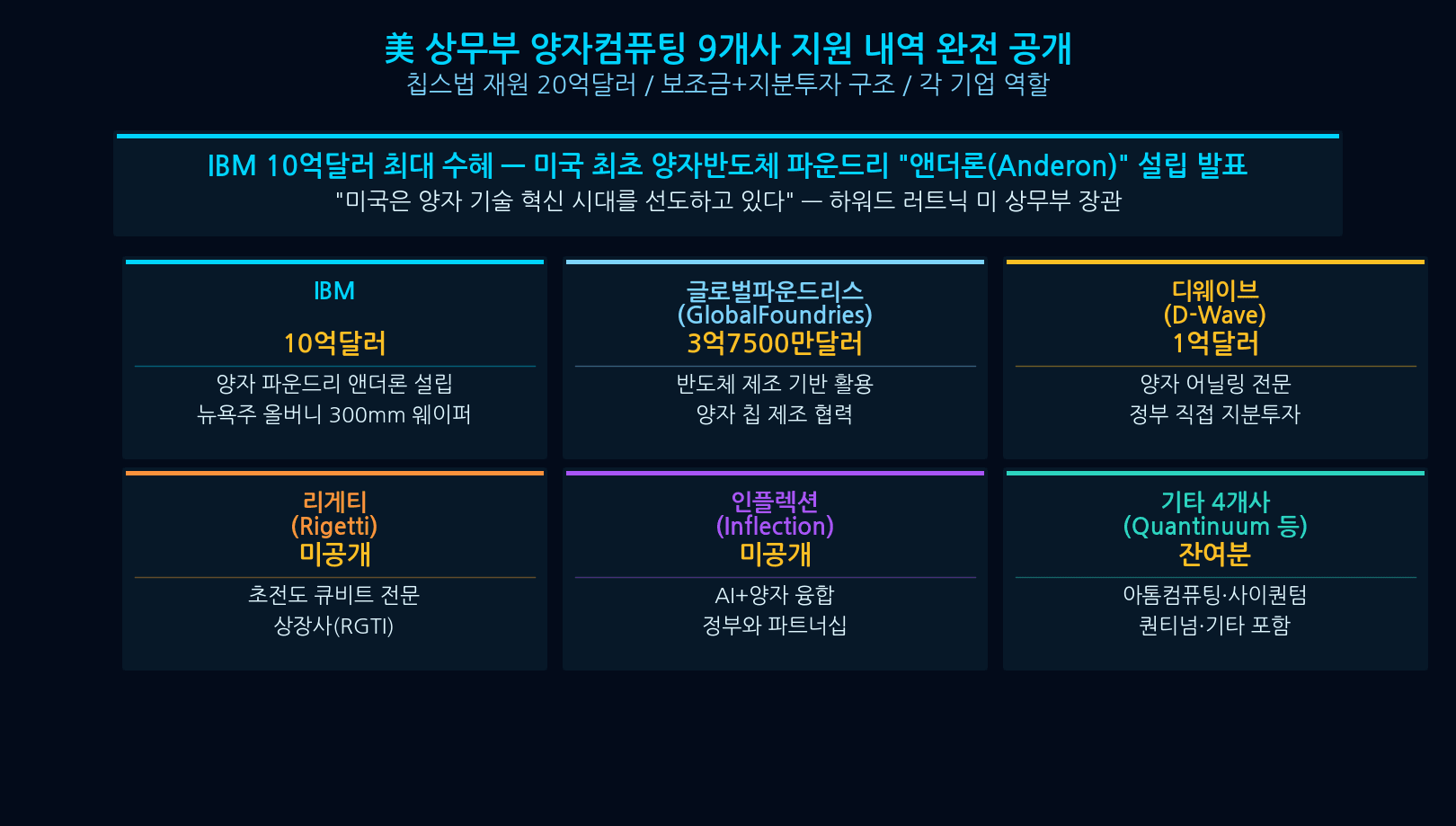
US Commerce Dept. Backs 9 Quantum Firms — Full $2B Structure Revealed
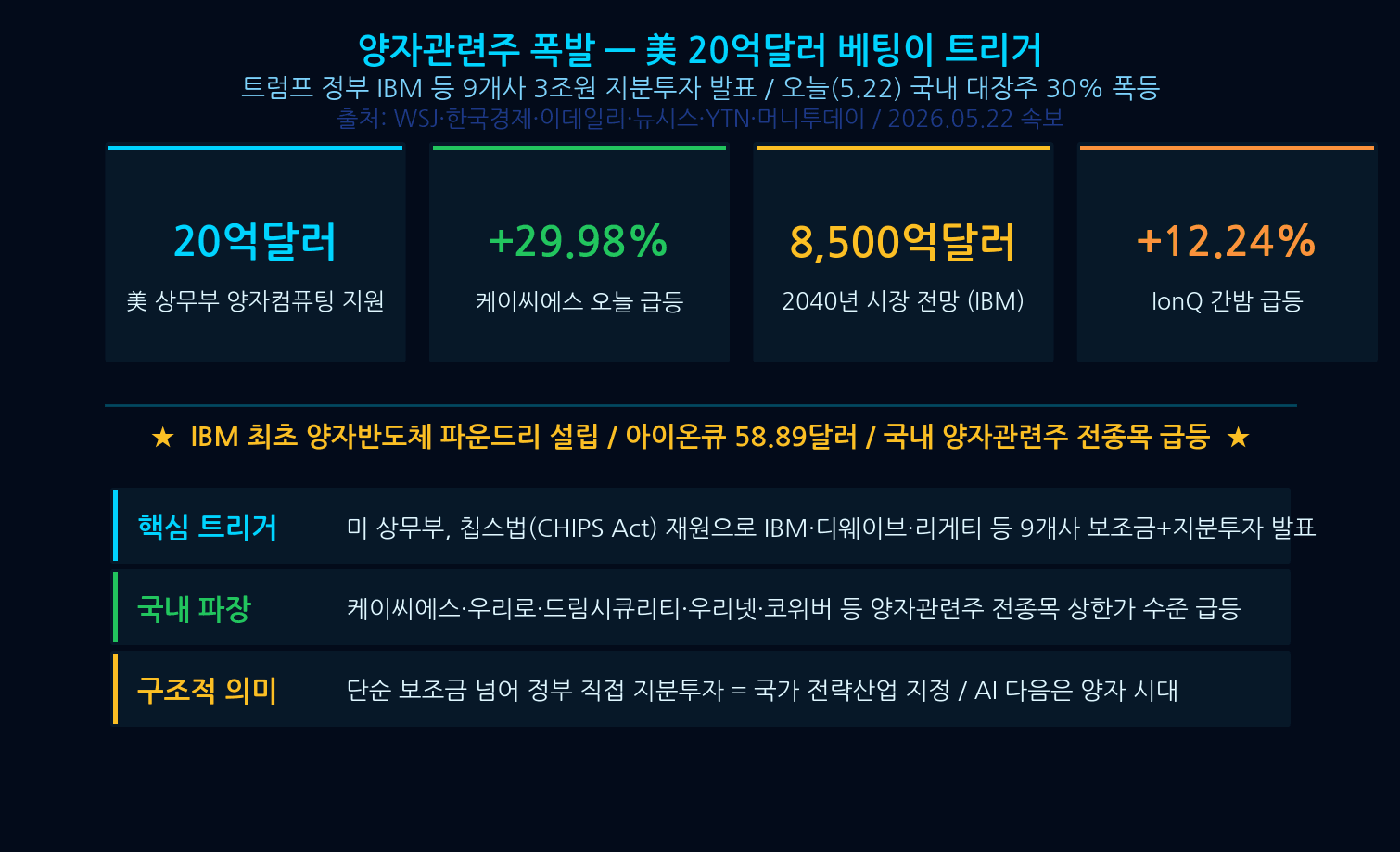
On May 22, 2026, quantum computing stocks exploded globally. The US Commerce Department announced on May 21 (local time) that it will provide a total of $2 billion in grants to nine quantum computing companies — including IBM, GlobalFoundries, D-Wave, and Rigetti — while also acquiring minority equity stakes in each. This is not a simple subsidy; the government is becoming a direct shareholder, effectively declaring quantum computing a national strategic industry. IBM surged +12.43% overnight; IonQ, the leading quantum pure-play, broke above $58 with a +12.24% gain.
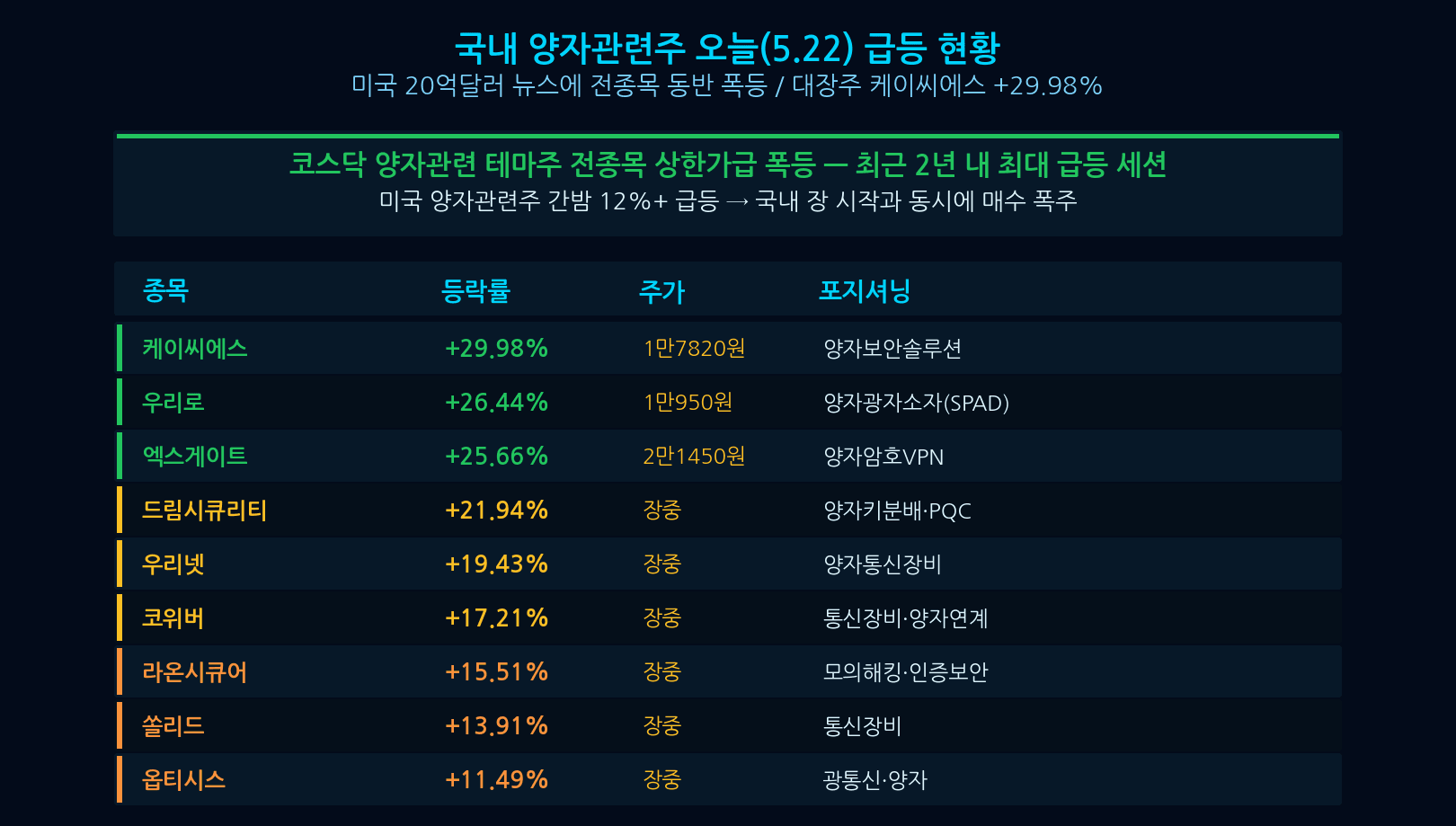
Korea Quantum Stocks Surge Today — Who Led?
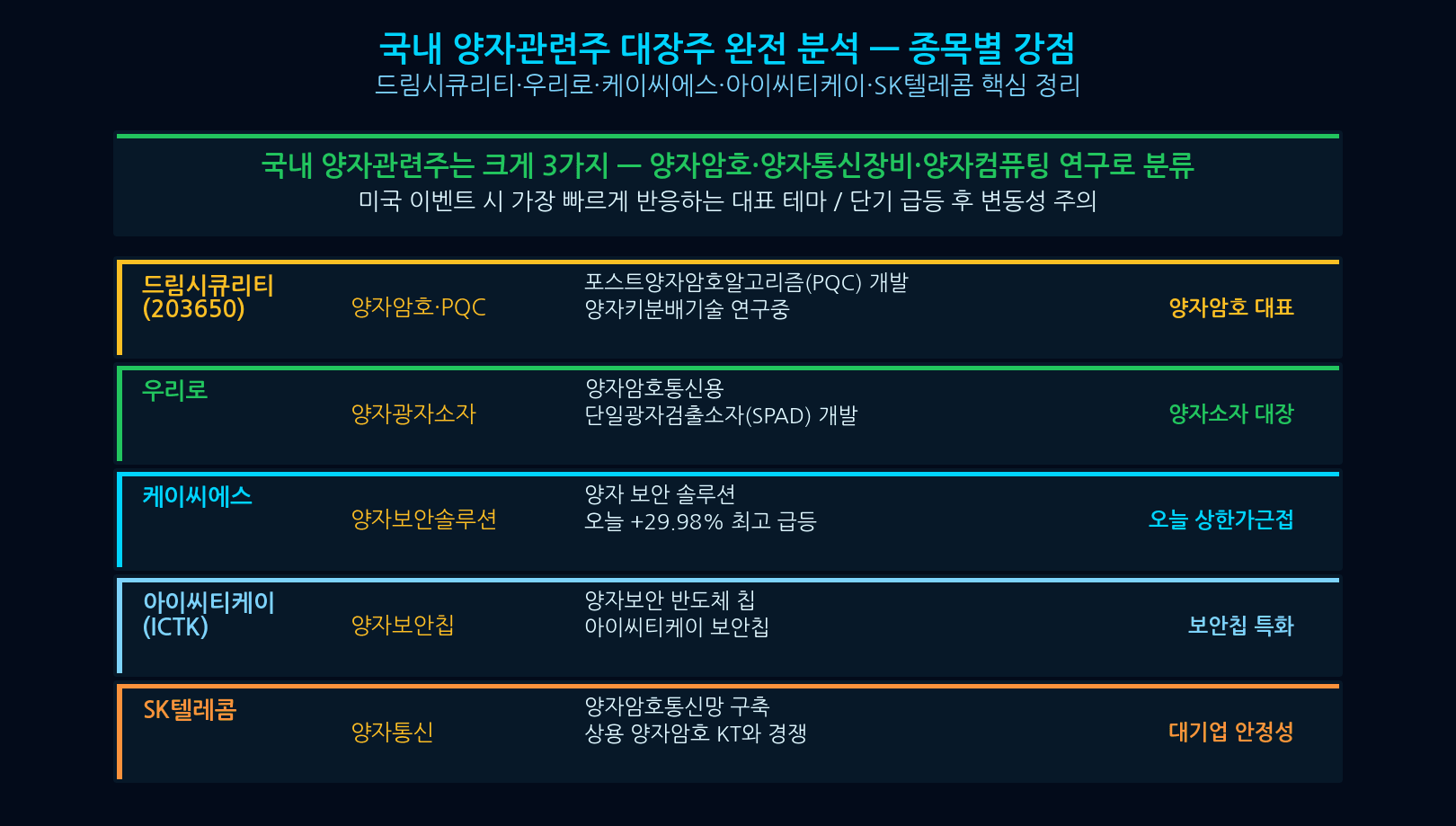
Korean quantum-related stocks opened the session with across-the-board gains. KCS +29.98%, Woori Ro +26.44%, X-Gate +25.66%, Dream Security +21.94%, Woori Net +19.43%, Kowiver +17.21%, Raon Secure +15.51%, Solid +13.91%. US Commerce Secretary Howard Lutnick stated: “This investment will create thousands of high-wage jobs and strengthen America’s quantum capabilities.” The announcement triggered the broadest quantum rally Korea has seen.
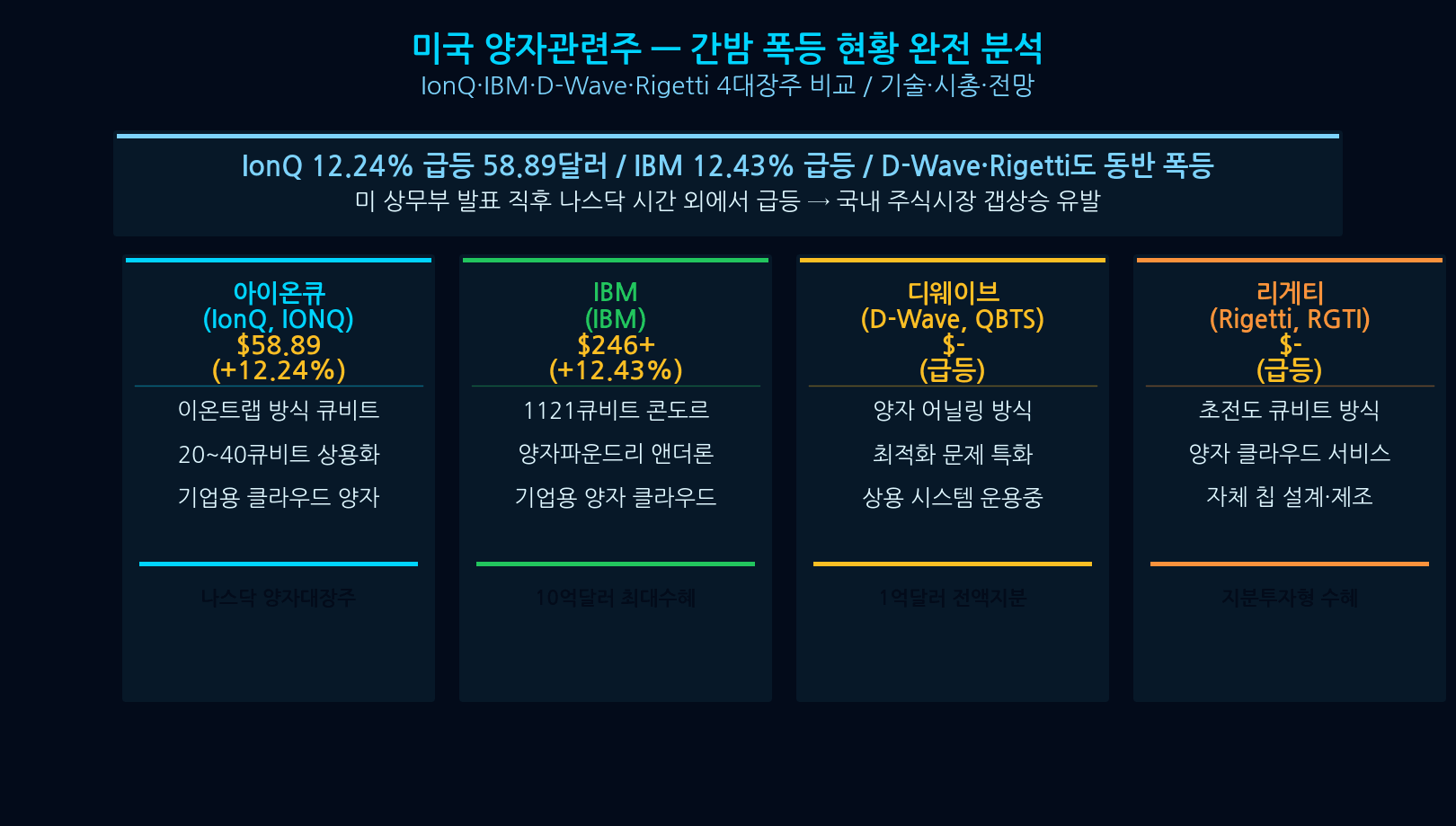
US Quantum Stocks — 4 Major Players Analyzed
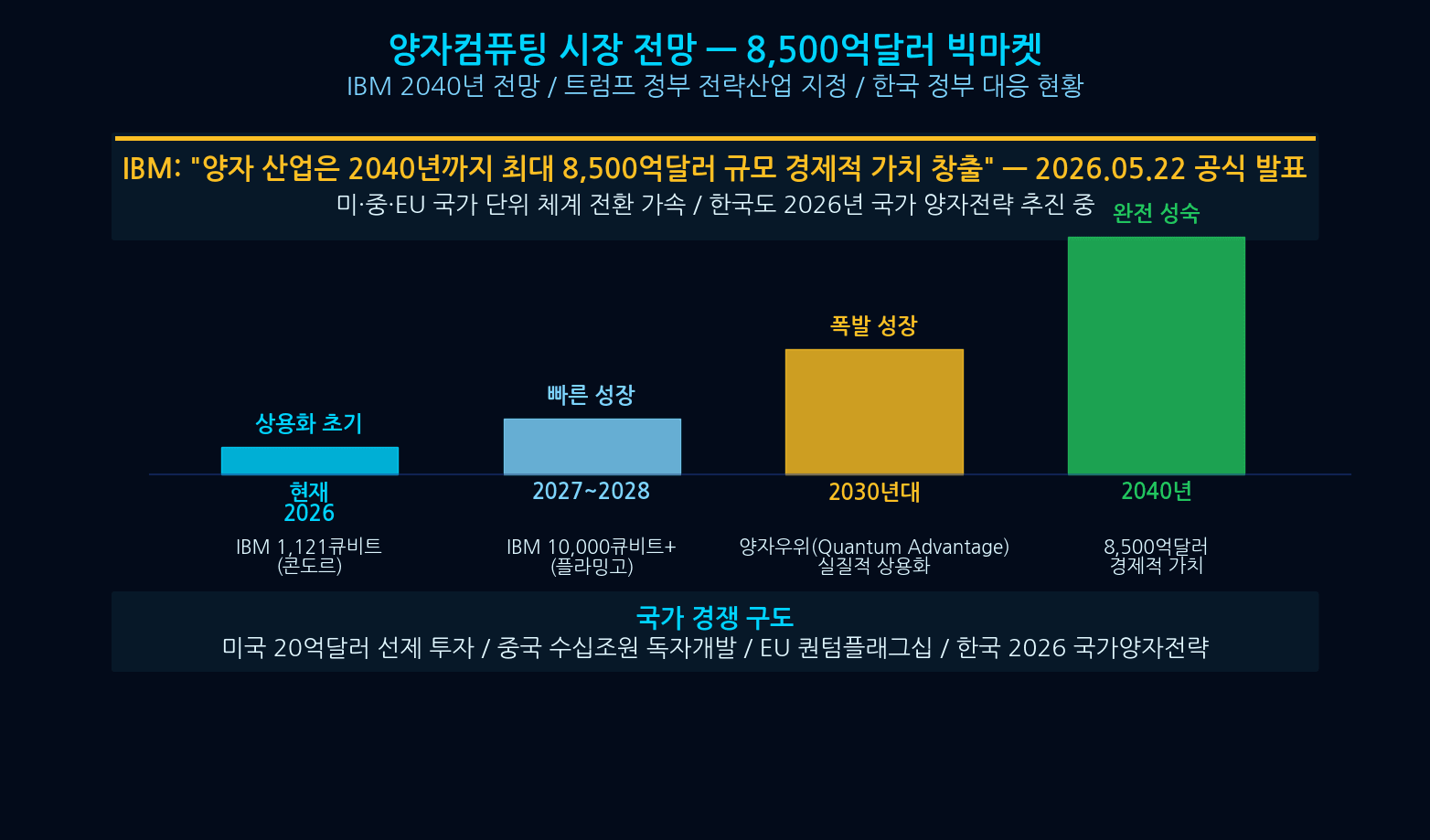
The four flagship US quantum computing stocks each take a different technical approach. IonQ (IONQ) uses trapped-ion technology and is the leading Nasdaq quantum pure-play. IBM uses superconducting qubits, holds 1,121 qubits, and is building the Anderon quantum foundry in Albany, NY. D-Wave (QBTS) specializes in quantum annealing for optimization problems and received direct equity investment. Rigetti (RGTI) designs and manufactures its own superconducting chips and also received equity investment. IBM official statement: “The quantum industry could generate up to $850 billion in economic value by 2040.”
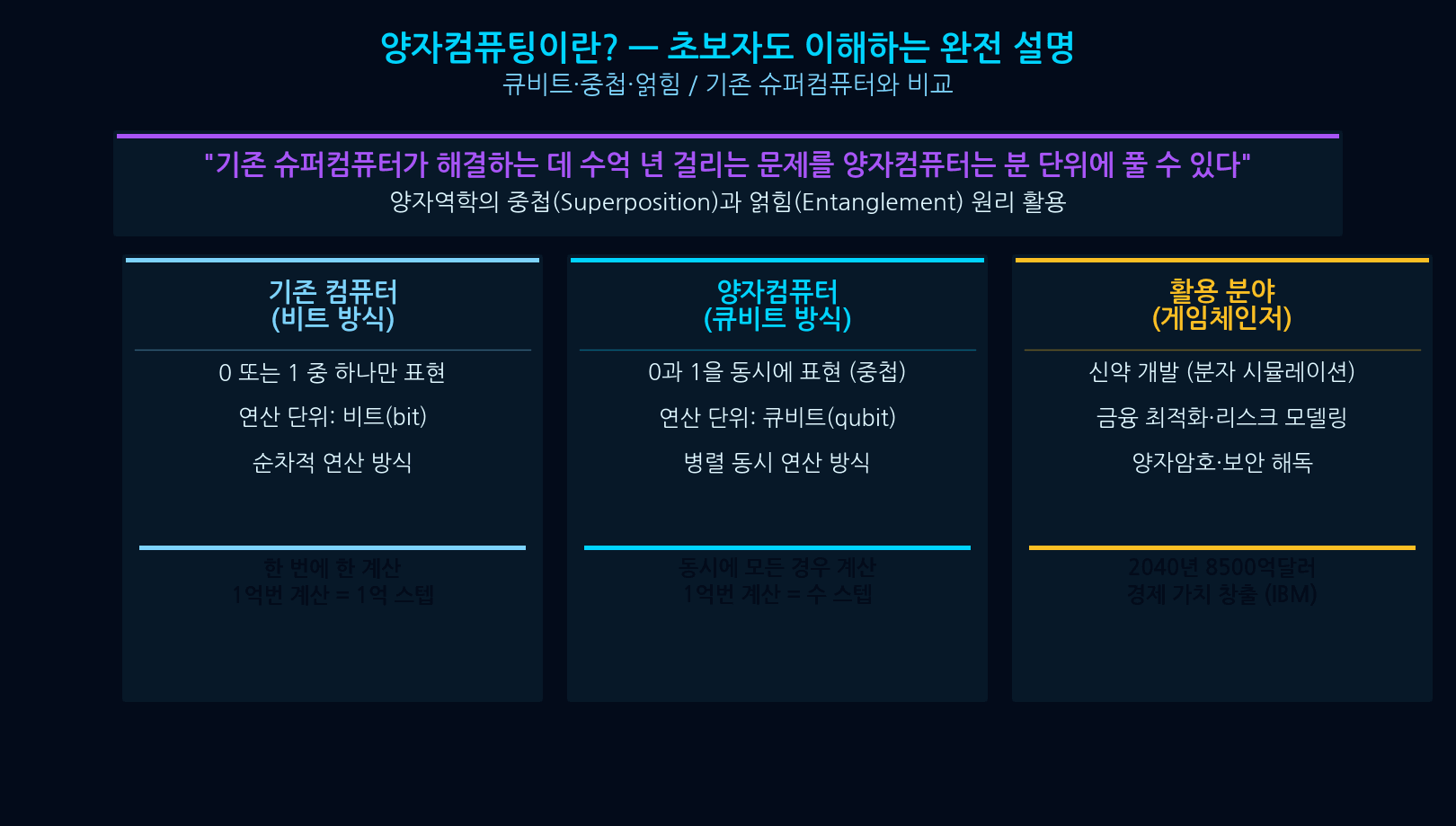
How Quantum Computing Works — Beginner’s Complete Guide
Classical computers process bits (0 or 1) sequentially. Quantum computers use qubits, which exploit superposition (existing as 0 and 1 simultaneously) and entanglement to process certain problems millions to billions of times faster. IBM’s current leading system holds 1,121 qubits. Key application areas include drug discovery, financial portfolio optimization, cryptography, AI training acceleration, and military technology. The market is expected to reach $850B by 2040 according to IBM’s official forecast.
Quantum Computing Market Outlook — $850B by 2040
IBM has officially projected that the quantum industry could create up to $850 billion in economic value by 2040. The US government’s direct equity investment model mirrors the CHIPS Act for semiconductors — a structural shift, not a one-time subsidy. Just as the CHIPS Act catalyzed a global wave of semiconductor investment benefiting Samsung and SK Hynix, this quantum initiative is expected to drive structural changes across the global quantum computing ecosystem over the coming decade.
Korea Quantum Leaders — Real Fundamentals vs. Hype
Dream Security (203650) is Korea’s leading post-quantum cryptography (PQC) stock, primarily R&D-focused with limited near-term revenue. Woori Ro produces single-photon avalanche diodes (SPAD) and is entering the mass production phase. ICTK is preparing to mass-produce quantum security chips. SK Telecom (017670) already operates commercial quantum cryptography networks and offers the stability of a blue-chip carrier. X-Gate has commercialized quantum-encrypted VPNs but faces sharp post-surge correction risk.
Investment Risks — The Two Sides of a Theme Stock
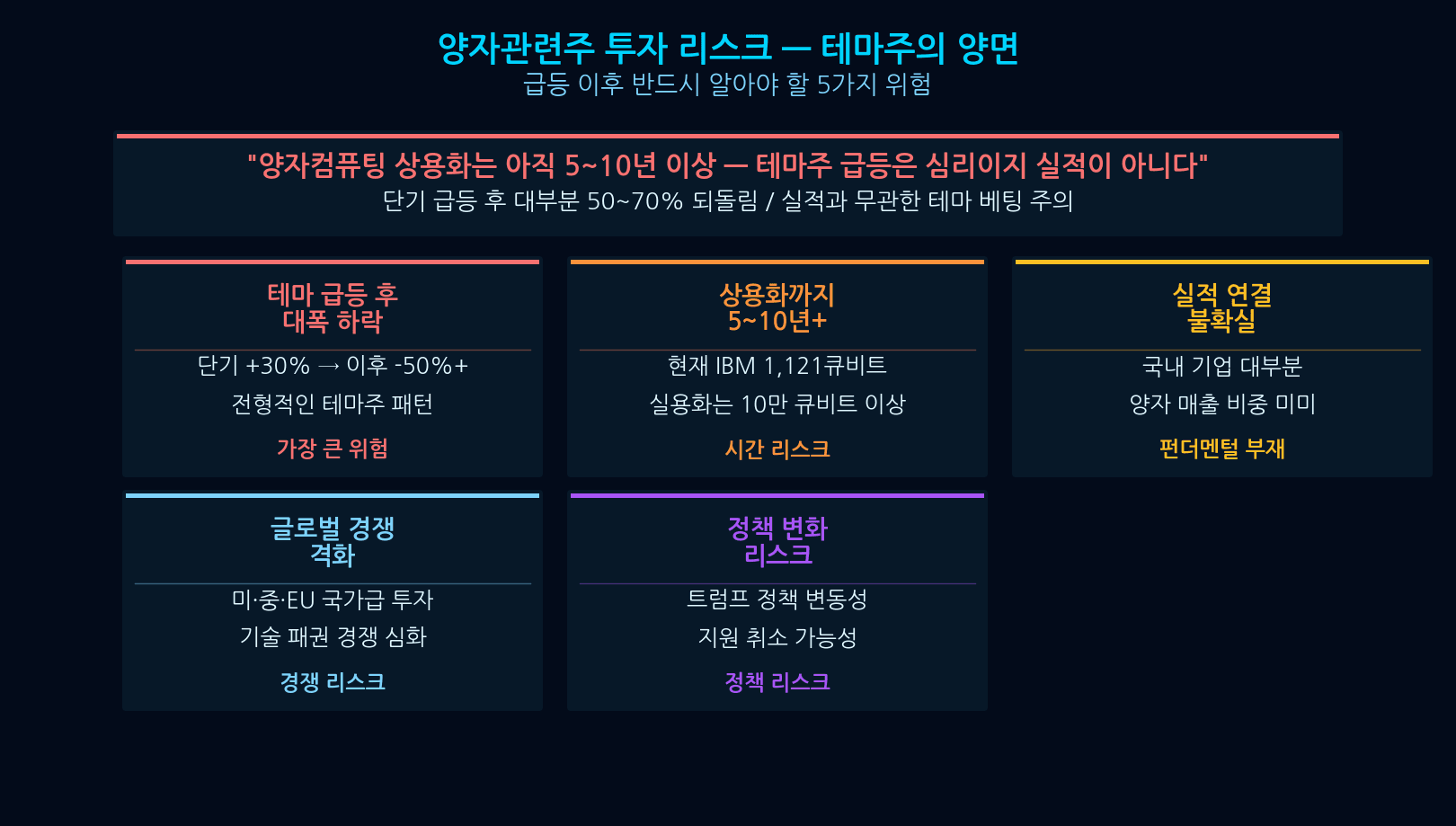
Quantum computing stocks follow a classic theme-stock pattern. After surging 30%+, most give back 50%+ in the correction that follows. Actual commercial-scale quantum computing is still 5–10+ years away. Korean companies have virtually no quantum revenue today — today’s surge is pure expectation pricing. Woori Ro has a history of surging 584% before collapsing; Dream Security repeatedly spikes and retreats around security-related news. When the catalyst fades, theme stocks typically return to their starting point.
5 Strategies for Korean Investors — With Ticker Codes and Stop-Loss Levels
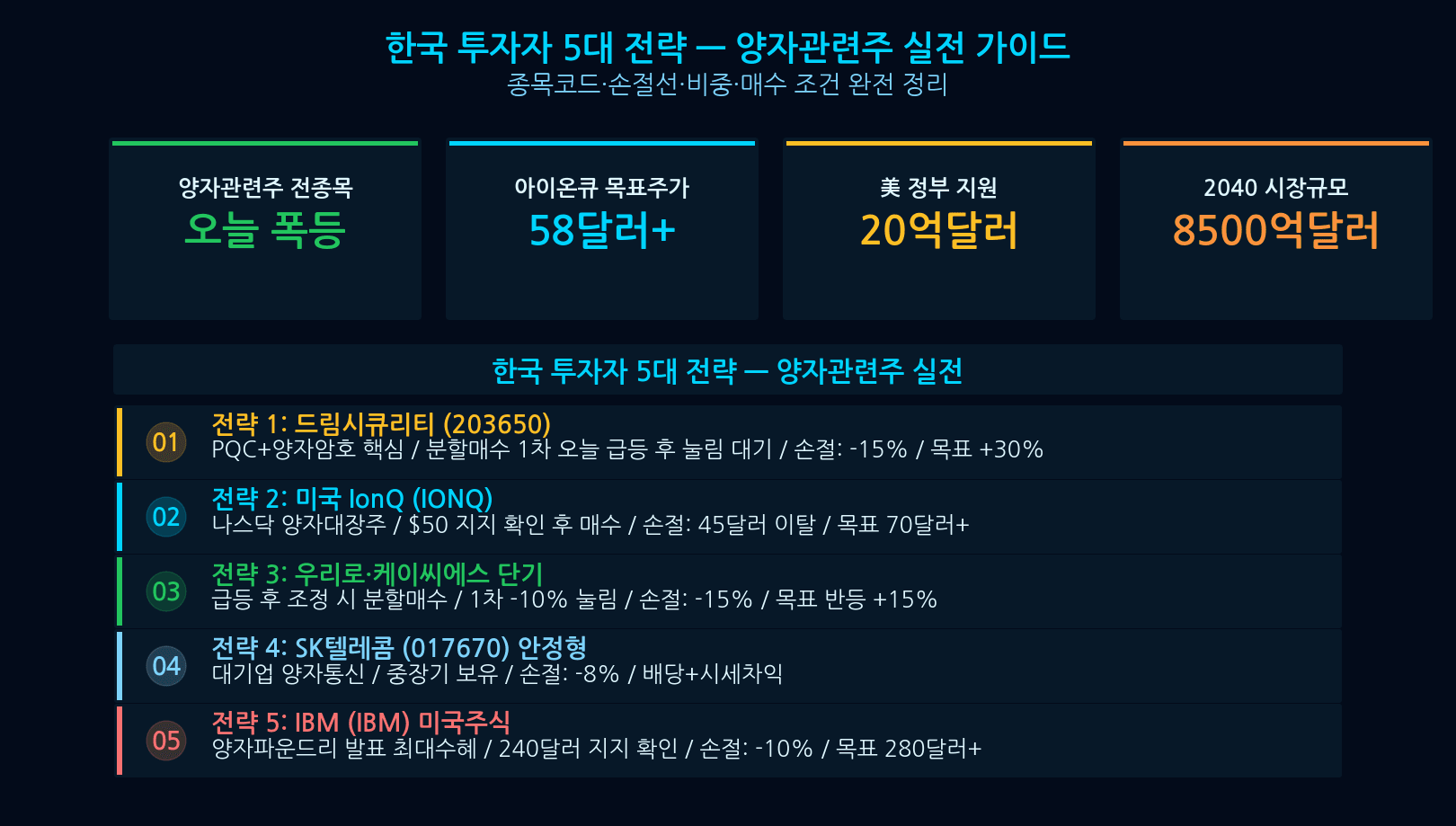
Five actionable strategies for navigating the quantum computing stocks surge: ① Dream Security (203650) — buy the -10–15% pullback after today’s spike; stop-loss at -15%; weight 10–15%. ② IonQ (IONQ) — enter after confirming $50 support; exit below $45. ③ Woori Ro / KCS — buy the first -10% pullback; stop-loss at -15%; weight 5%. ④ SK Telecom (017670) — dollar-cost average now for long-term quantum exposure; stop-loss at -8%. ⑤ IBM — enter after confirming $240 support; stop-loss at -10%; weight 5–10%.
Conclusion — Dawn of the Quantum Era or Theme Stock Bubble?
The US government’s $2B quantum computing commitment is not just a subsidy — it is a declaration that quantum computing is a national strategic industry. Just as the CHIPS Act triggered a global semiconductor investment boom, this move signals structural change across the quantum ecosystem. However, near-term corrections in Korean quantum stocks are inevitable given their theme-stock nature. Final checklist: ① No chasing — buy pullbacks only ② Dream Security (203650) on correction ③ SK Telecom (017670) for long-term ④ IonQ (IONQ) above $50 support ⑤ Total quantum allocation under 20% of portfolio.
Sources: WSJ Reuters Korea JoongAng Daily
Quantum Computing Stocks Outlook — Beyond the Day-One Surge
Quantum computing stocks have entered a new phase: government endorsement, institutional capital deployment, and clear market structure. The next 12 months for quantum computing stocks will be defined by three milestones — IBM’s Anderon foundry construction progress, IonQ commercial revenue traction, and Korean leaders converting R&D into actual product revenue. Investors holding quantum computing stocks should distinguish between the theme-trade window (next 1–3 months) and the structural-investment window (next 3–5 years).