

Bezos Says Zero Tax for Bottom 50% — The Truth Behind the Paradox
Real-Time Issue · May 22, 2026
Bezos Says Zero Tax for Bottom 50% — The Truth Behind the Paradox
US Wealth Tax Debate / Full Analysis of Arguments / Comparison with Korea / Investment Strategy

![[비비PICK] 리에티 LUNO RT 4056 선글라스](https://img1a.coupangcdn.com/image/affiliate/banner/8f965ee3220144b9189234e8256f5677@2x.jpg)
US Federal Income Tax Structure — Who Pays What
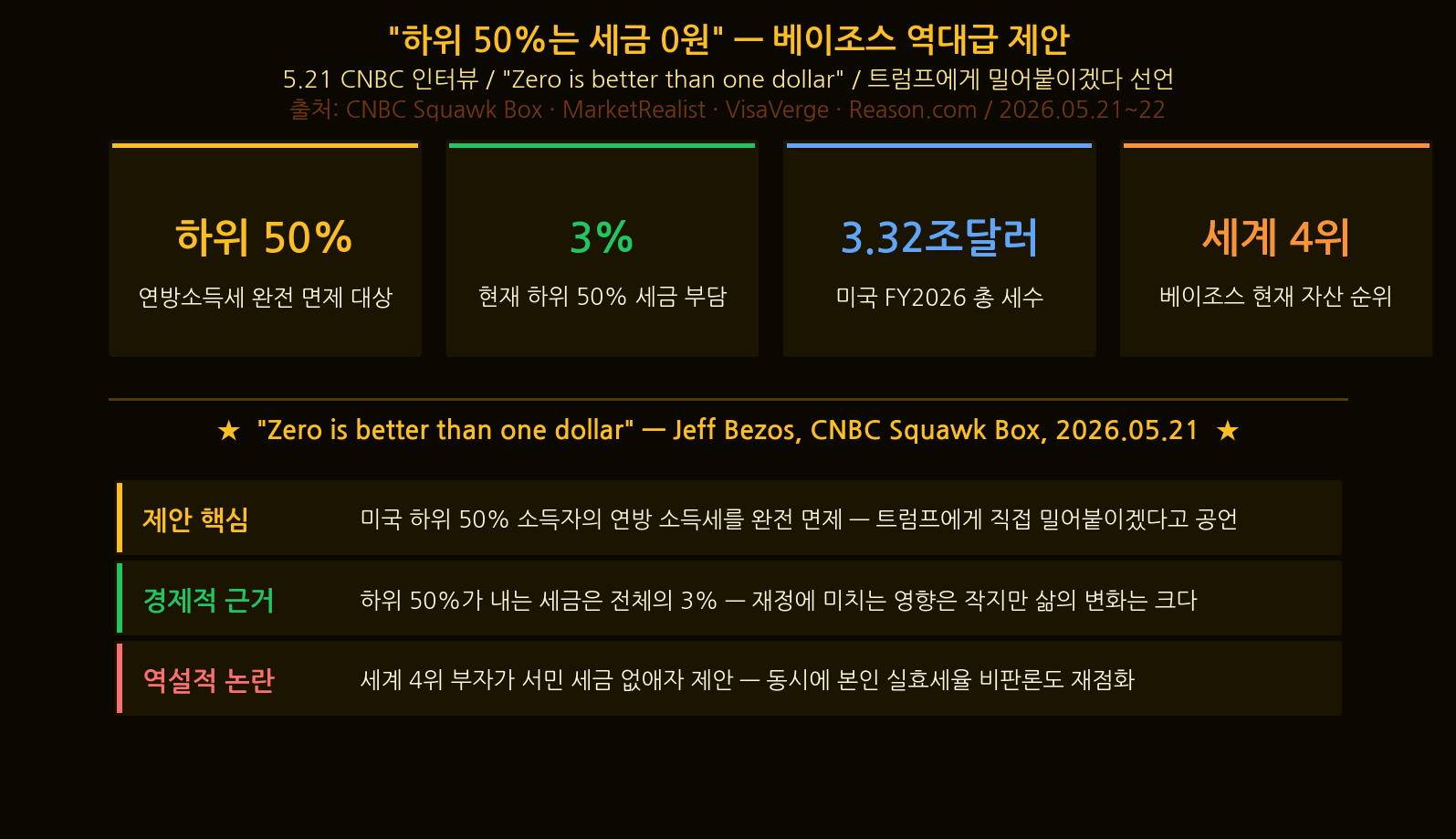
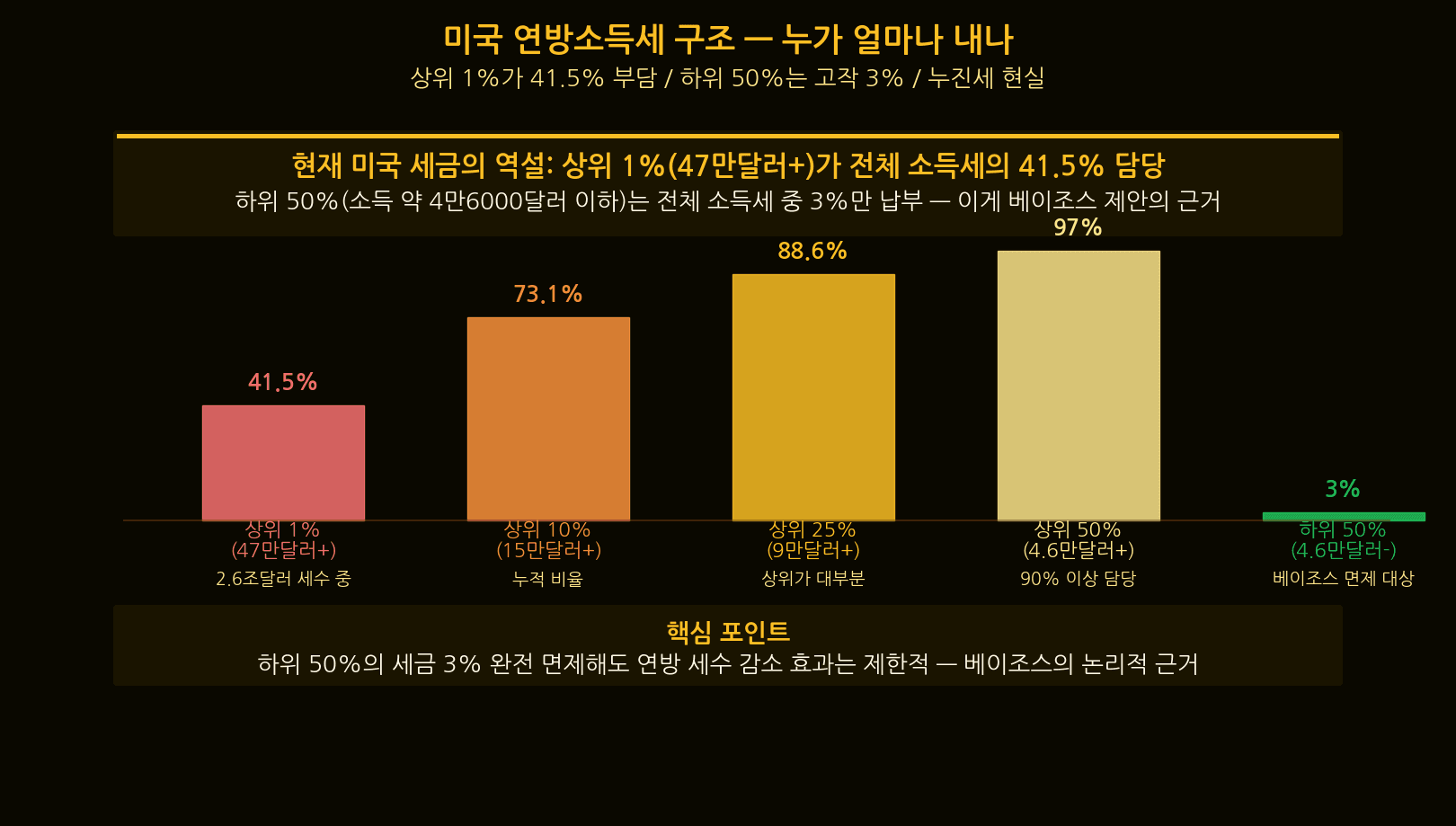
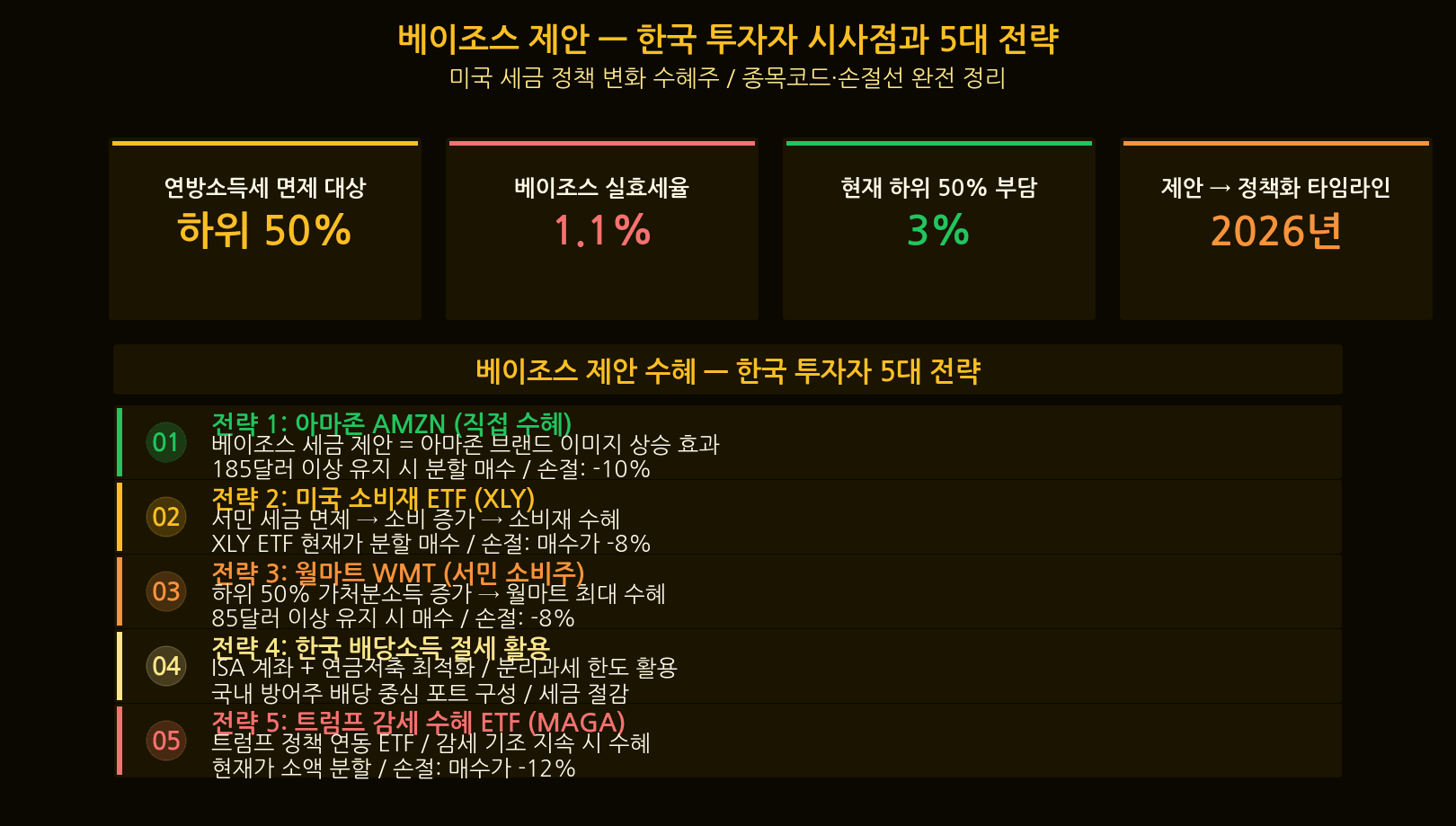
On May 21, 2026, Amazon founder Jeff Bezos appeared on CNBC Squawk Box and declared that the bottom 50% of US income earners should pay zero federal income tax — and that he would personally push the idea with President Trump. Today, the top 1% (earning $470K+) pays 41.5% of all federal income taxes, while the bottom 50% (earning under $46K) pays just 3%. “Zero is a better number than one dollar,” he said. The statement sent Google Trends surging +600%.
The Case For and Against — Economists Clash
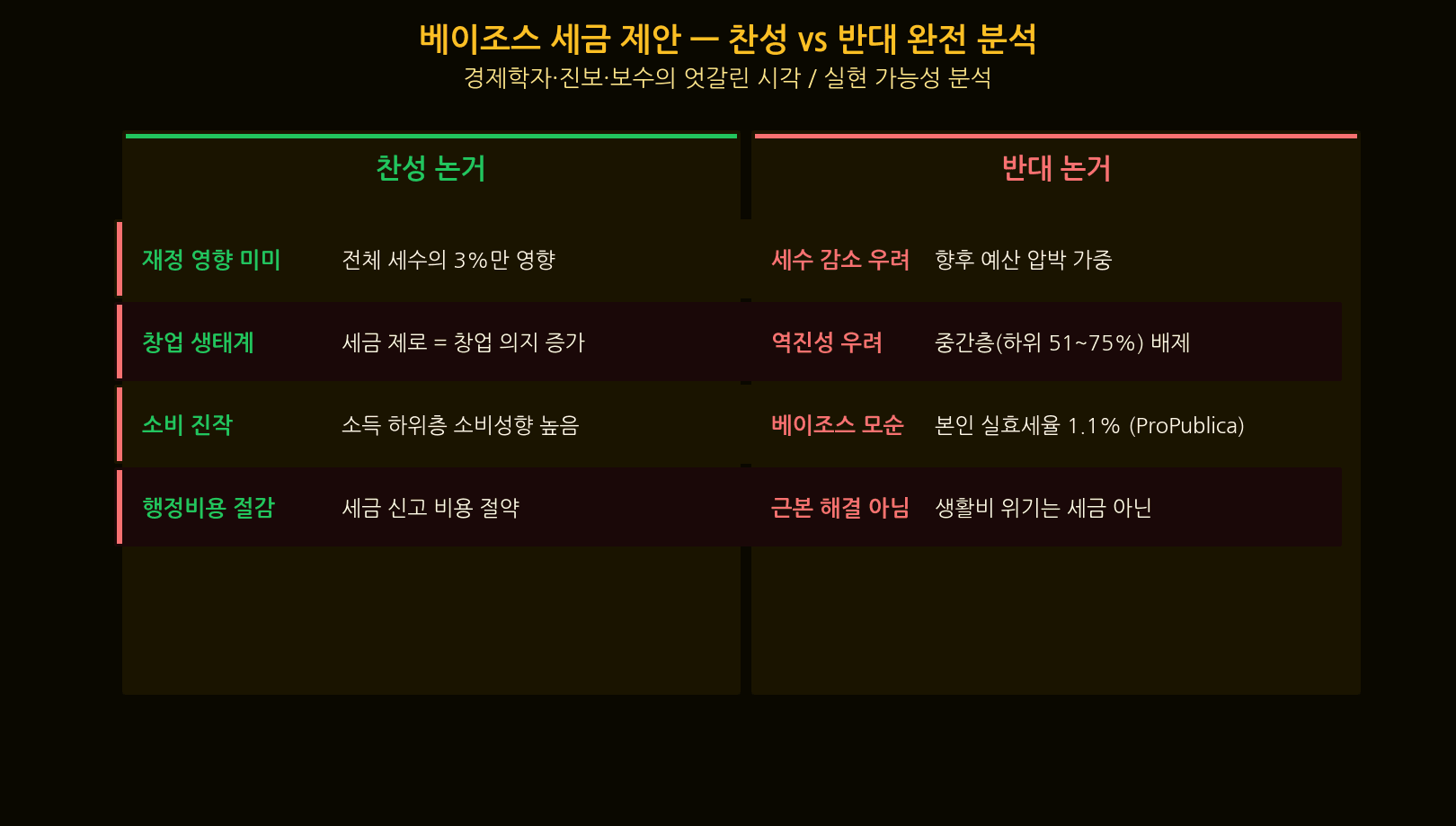
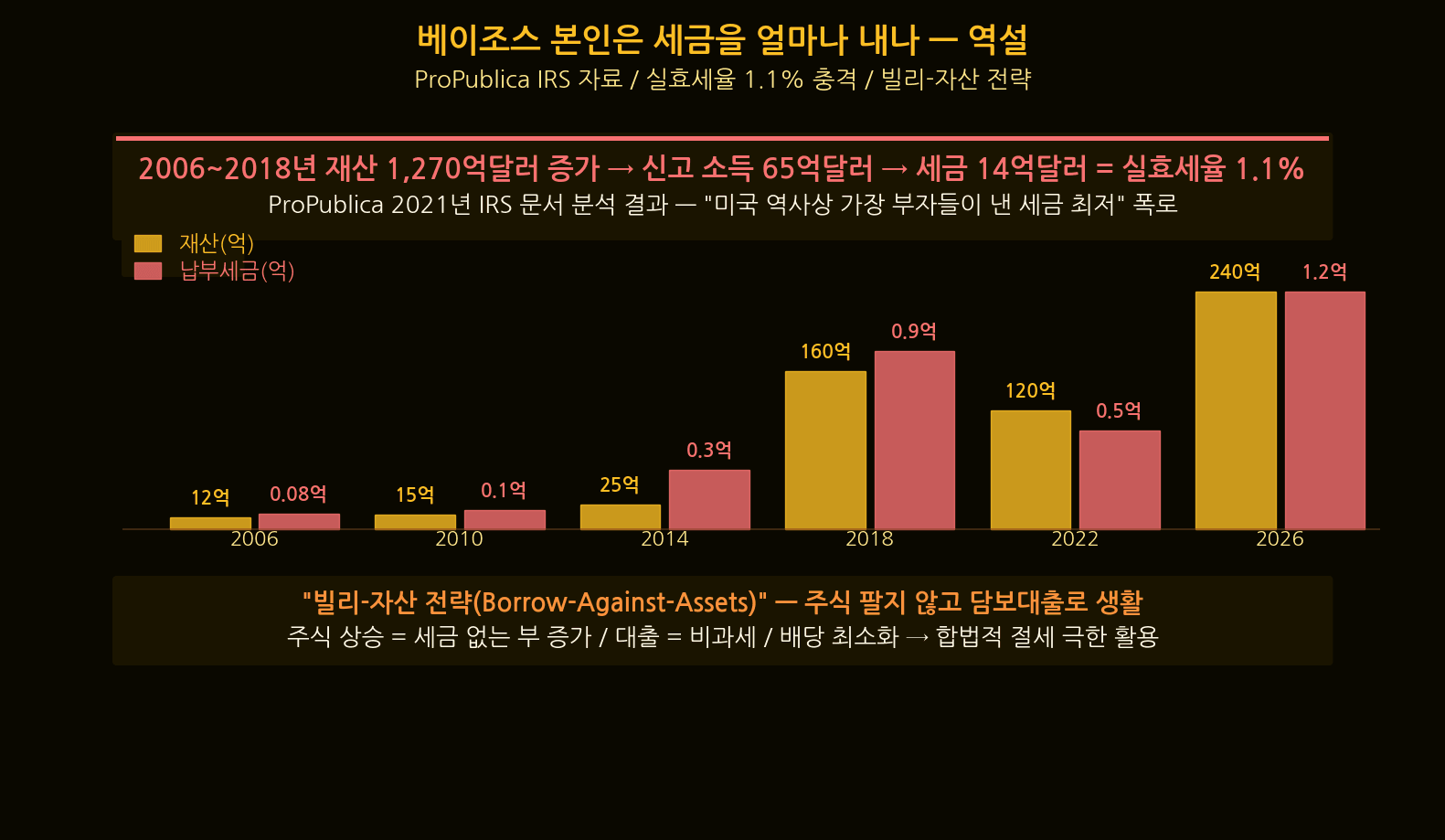
Supporters argue the revenue impact is a manageable 0.4% of GDP, and that zero income tax for the bottom half would boost entrepreneurship and consumer spending. Critics point to the risk of eroding the social safety net — and to the glaring fact that Bezos himself pays an effective tax rate of just 1.1%, according to ProPublica’s analysis of IRS documents. Bezos’s paradoxical logic: “Doubling my taxes won’t help the teacher in Queens.” He may have a point on marginal math — but a man paying 1.1% in taxes telling others theirs should be zero raises obvious moral questions.
Global Wealth Tax Debate — Which Way Is the World Going?
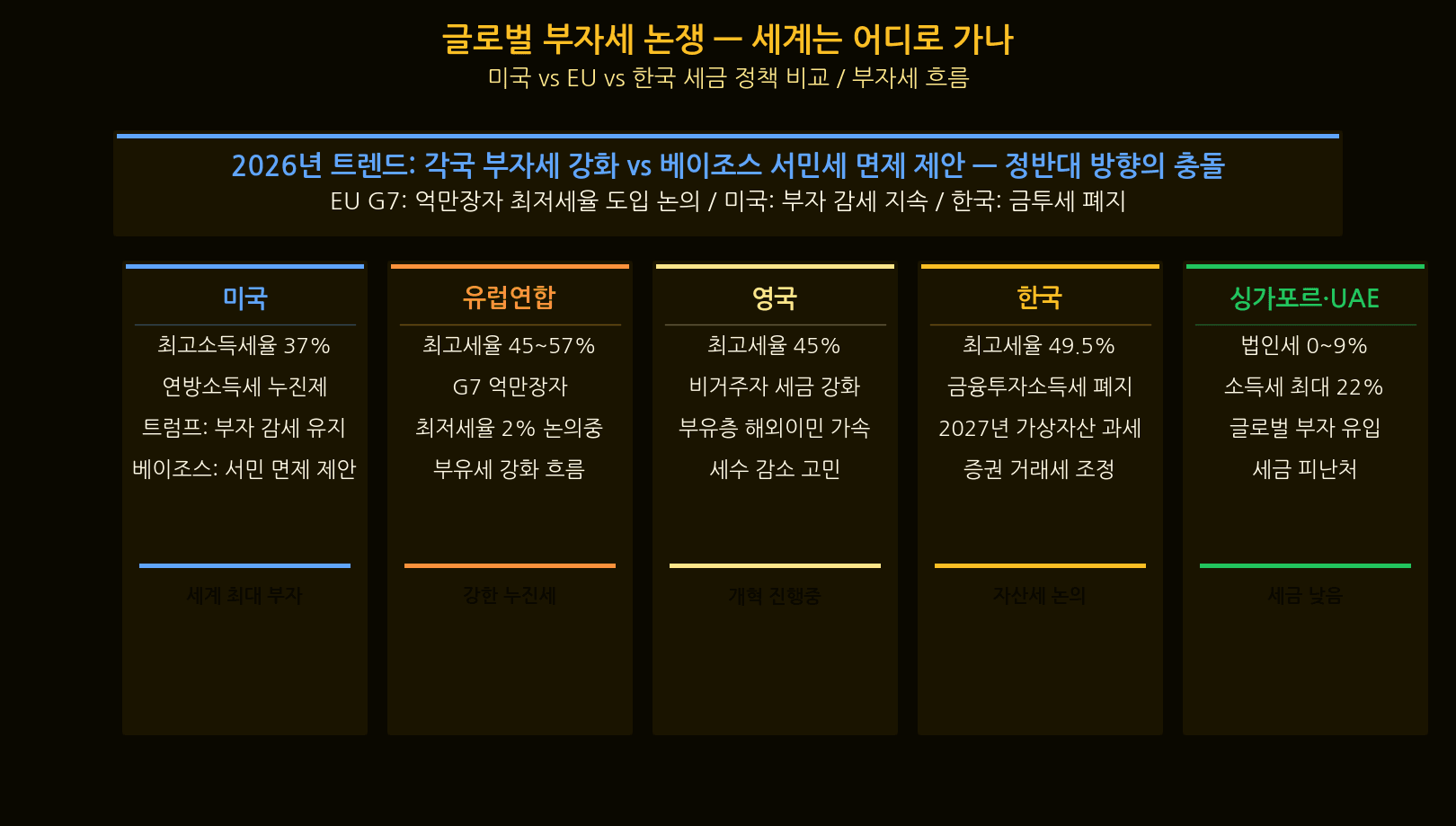
The US (37% top rate) is moving toward further cuts under Trump. The EU (45–57%) is actively debating billionaire minimum tax proposals — the opposite direction. Singapore and the UAE (0–22%) compete to attract the ultra-wealthy. Korea (49.5%) is navigating a mix of capital gains tax rollbacks and new crypto taxation. Bezos’s proposal aligns with the Trump tax-cut playbook but runs counter to the global trend among developed economies.
What Does Bezos Actually Pay? — The Core Paradox
ProPublica’s analysis of IRS documents reveals Bezos’s effective federal tax rate is approximately 1.1%. The mechanism is well-known among the ultra-wealthy: hold stock, never sell, borrow against it to fund your lifestyle. No realized gain means no income tax. A man who has engineered near-zero personal taxation is now calling for the bottom half of America to also pay zero — without touching the structural tax advantages that make his own 1.1% rate possible. That tension is the heart of the controversy.
Comparing with Korea’s Tax Structure
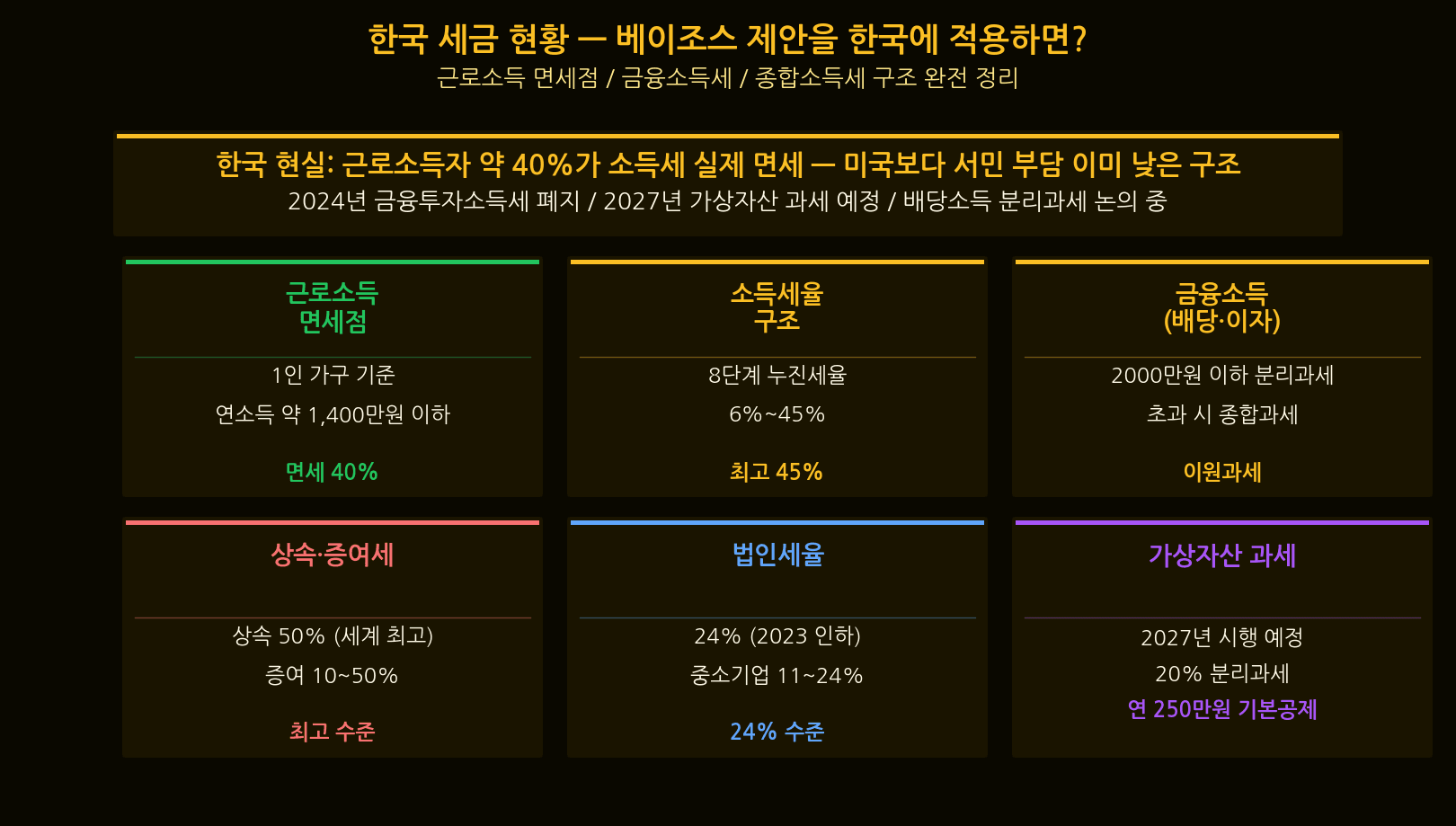
Korea’s bottom 50% earners (roughly under ₩30M annual income) already pay very little — effective rates of 1–3% after deductions. Meanwhile, Korea’s top marginal rate of 49.5% (45% income tax + 4.5% local) is among the world’s highest. The Bezos proposal emerged from US political dynamics, but it directly echoes Korea’s ongoing “tax cut vs. tax hike” debate — particularly around the capital gains tax rollback and discussions of ISA expansion.
Feasibility — Will Trump Embrace It?
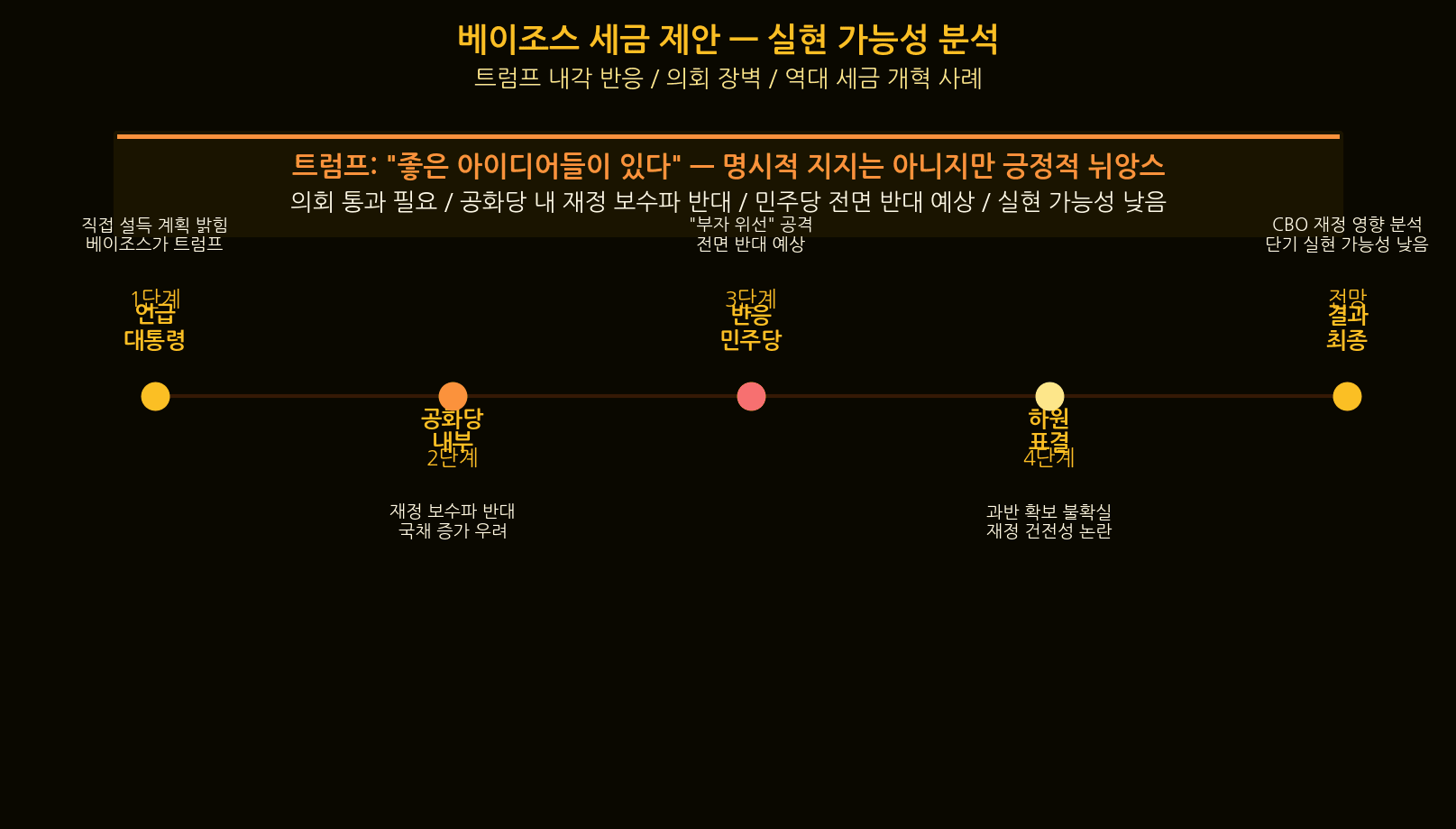
The proposal aligns with Trump’s tax-cut instincts, but the ~$100B annual revenue loss would add to an already-strained federal budget. Even within the Republican Party, fiscal hawks are likely to push back. Whether Bezos can actually move Trump on this is unclear, but the debate itself will almost certainly shape the 2026–2028 US tax reform agenda. Markets will be watching for any legislative signals.
History of US Wealth Tax Debates — A Repeating Cycle
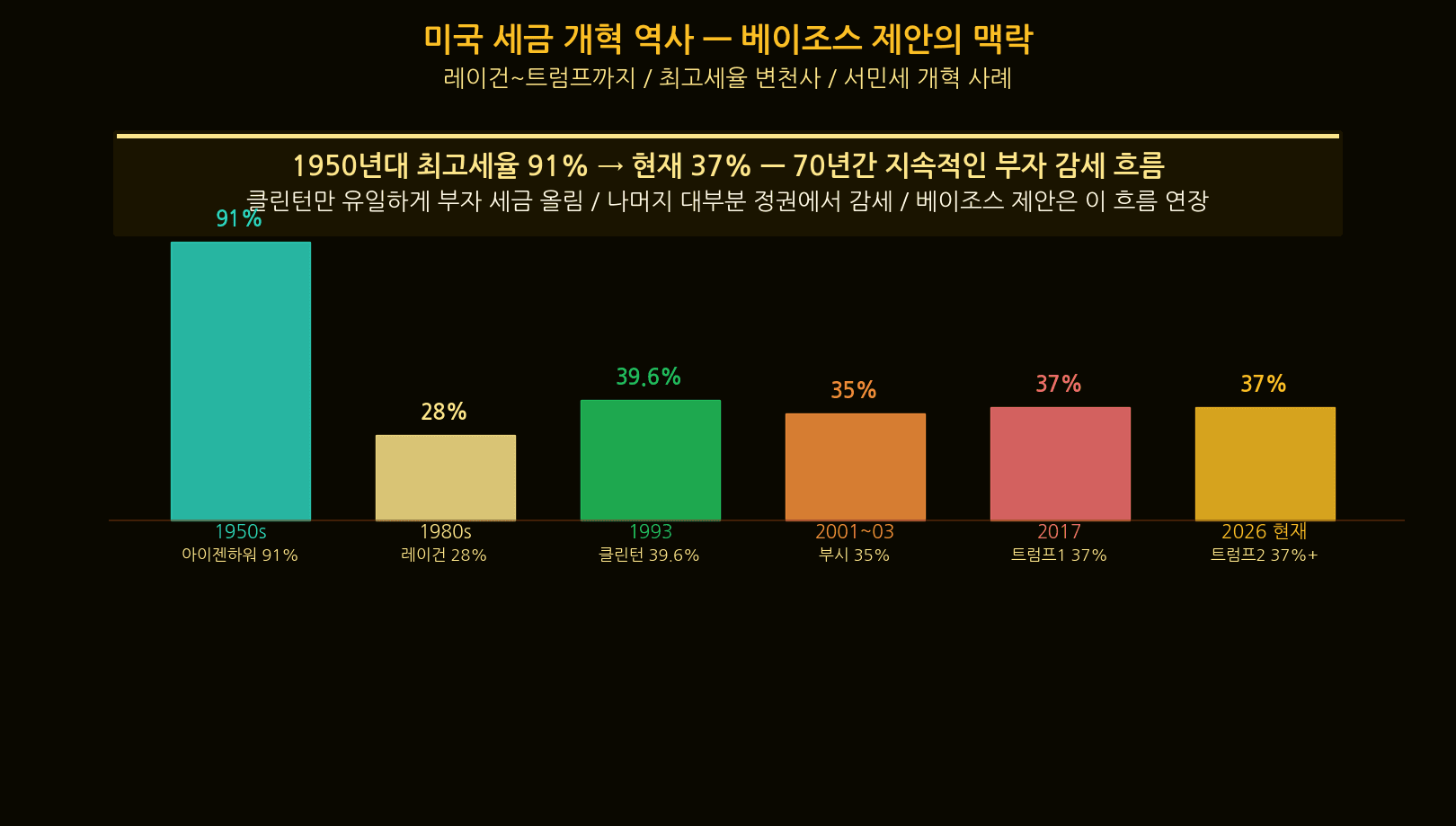
America’s wealth tax pendulum has swung for nearly a century. FDR’s 94% top rate in the 1930s, Reagan’s supply-side revolution cutting it from 70% to 28%, Clinton’s moderate increase, Bush’s cuts, Obama’s modest hike, Trump’s Tax Cuts and Jobs Act — the cycle repeats with each political generation. Bezos’s statement may be the opening move in the next phase of this perennial debate, now amplified by the visibility of extreme wealth concentration.
5 Investment Strategies for Korean Investors
If the Bezos proposal gains traction and drives US tax reform expectations, consumer and small-cap stocks stand to benefit. Five strategies: ① Amazon (AMZN) — indirect beneficiary if Bezos’s policy influence grows; enter on support confirmation. ② US Consumer ETF (XLY) — consumer spending booster if bottom-50% tax is cut. ③ Samsung Electronics (005930) — export blue-chip benefiting from global tax-cut tailwinds. ④ KB Financial (105560) — benefits if Korea mirrors US tax reform direction. ⑤ Hold cash — US deficit expansion raises rate uncertainty; hedge with cash.
Conclusion — Why Did Bezos Say This?
Three readings of Bezos’s statement: ① Sincerity — the son of Cuban immigrants who genuinely wants to preserve the American Dream for the next generation. ② Political positioning — repairing his relationship with Trump and softening Amazon’s regulatory exposure. ③ Narrative management — reframing the conversation away from his own 1.1% effective tax rate. Whichever reading is correct, the fundamental question remains: whether you cut taxes for the rich or the poor, someone has to fill the gap. Asking who that someone is — that’s the real debate.
Bezos Tax Proposal — What Happens Next in Washington
The Bezos tax proposal will face its first real political test as fiscal hawks within both parties examine the ~$100B annual revenue impact. Trump’s response to the Bezos tax proposal will determine whether the conversation moves into legislation or remains a viral CNBC moment. Even if the Bezos tax proposal stalls in Washington, it has reframed the wealth tax debate by making concrete numbers — 41.5%, 1.1%, $46K threshold — part of the mainstream conversation. Watch for opposition from the EU and progressive economists in the coming weeks.