

Single-Stock Leverage ETF Complete Guide — Historic First Listing·2x Mechanism·FSS Warning·Compounding Loss Trap·Should You Buy?
Real-Time Issue · May 22, 2026

① Historic First Listing — Samsung & SK Hynix 2x ETFs
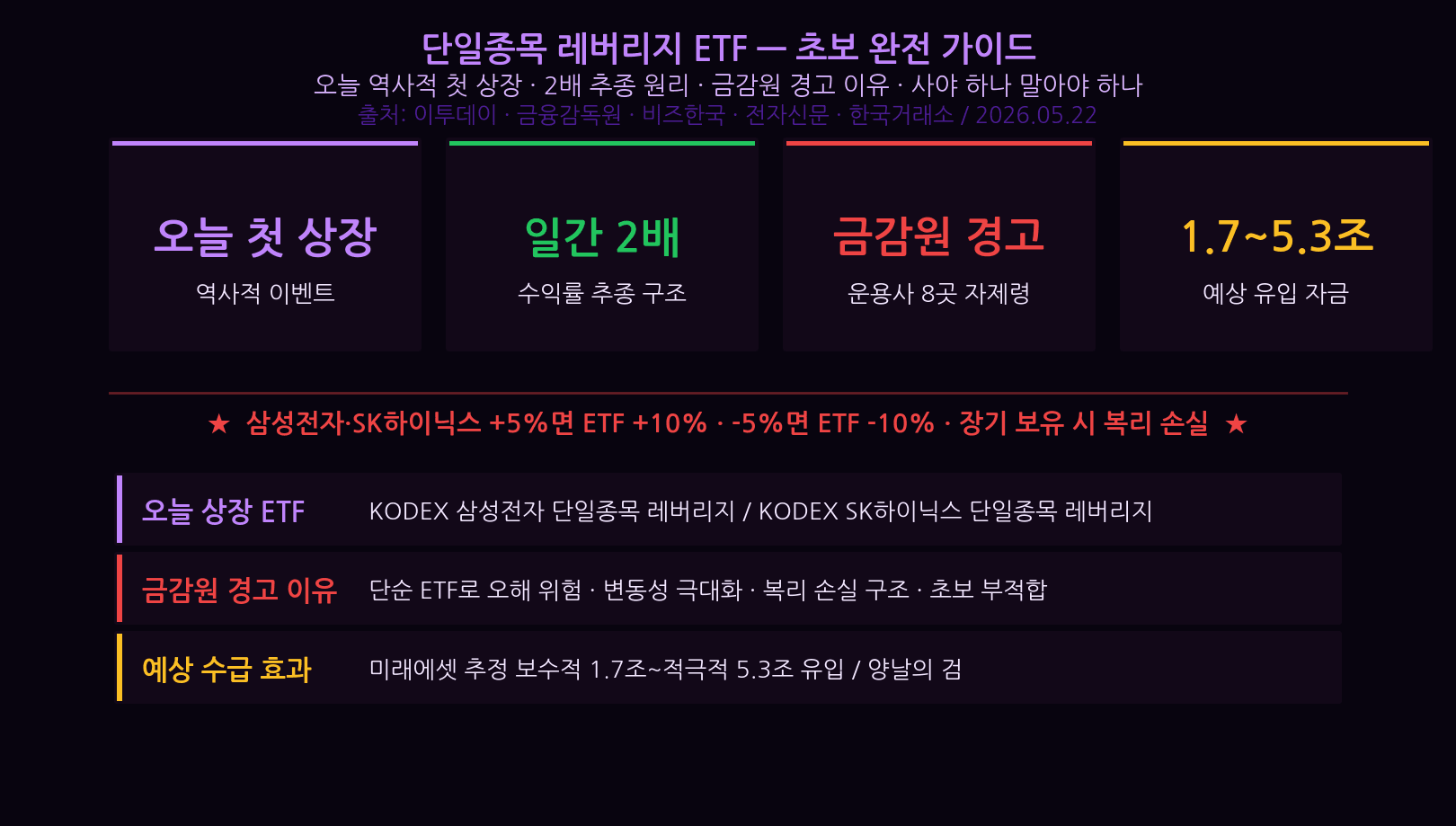
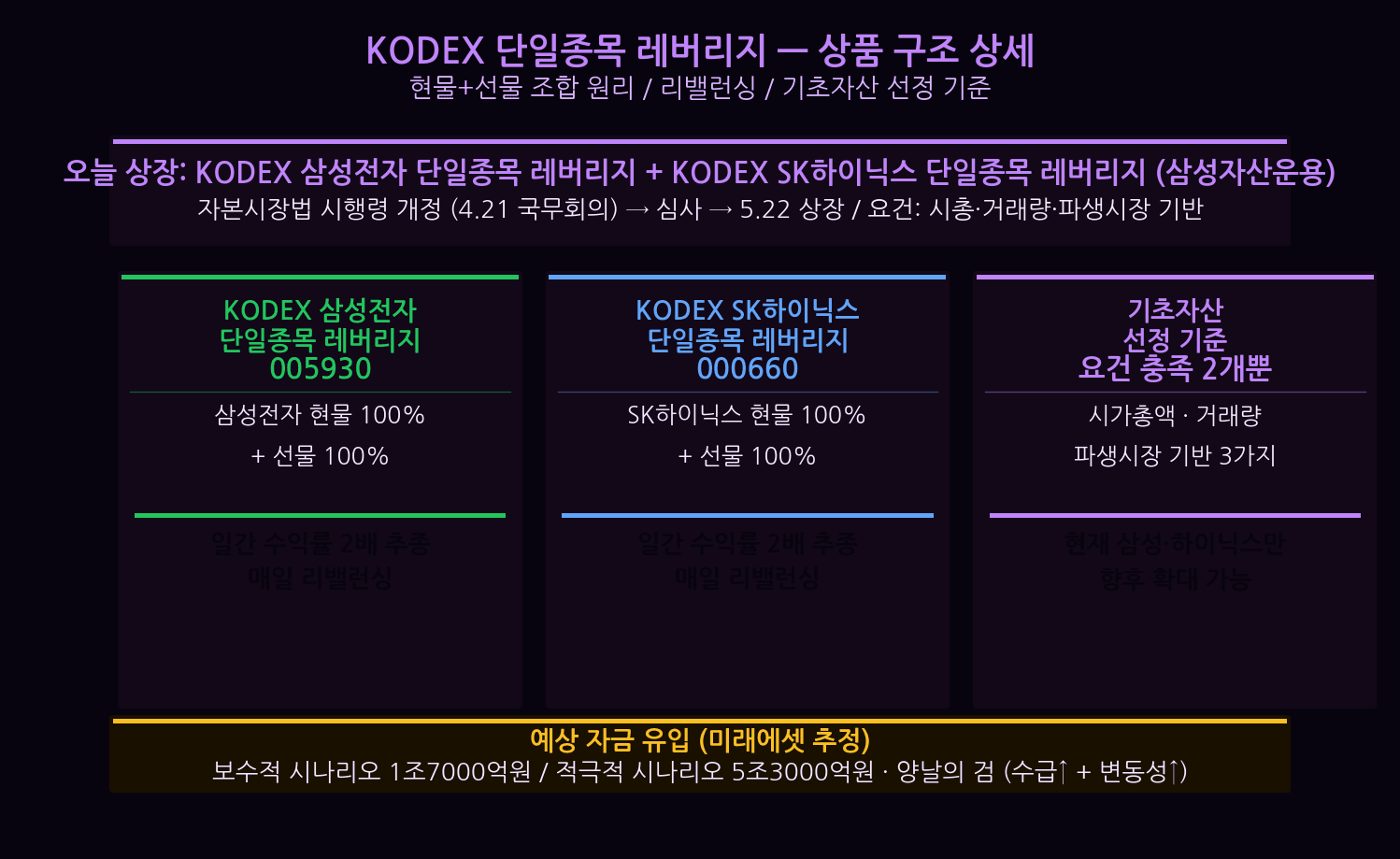
On May 22, 2026, South Korea’s capital markets saw their first-ever single-stock leverage ETFs listed on KOSPI and KOSDAQ. The debut products track Samsung Electronics and SK Hynix, each delivering 2x the daily return of the underlying stock.
- KODEX Samsung Electronics 2X Leverage — 2x daily Samsung returns
- KODEX SK Hynix 2X Leverage — 2x daily SK Hynix returns
- Launch-day trading volume: projected at hundreds of billions KRW
- Issuers: Samsung Asset Management, Mirae Asset, and others
While U.S. firms like ProShares and Direxion have offered single-stock leverage ETFs for years, this marks a historic first for the Korean market.
② How It Works — Daily 2x Tracking Mechanism
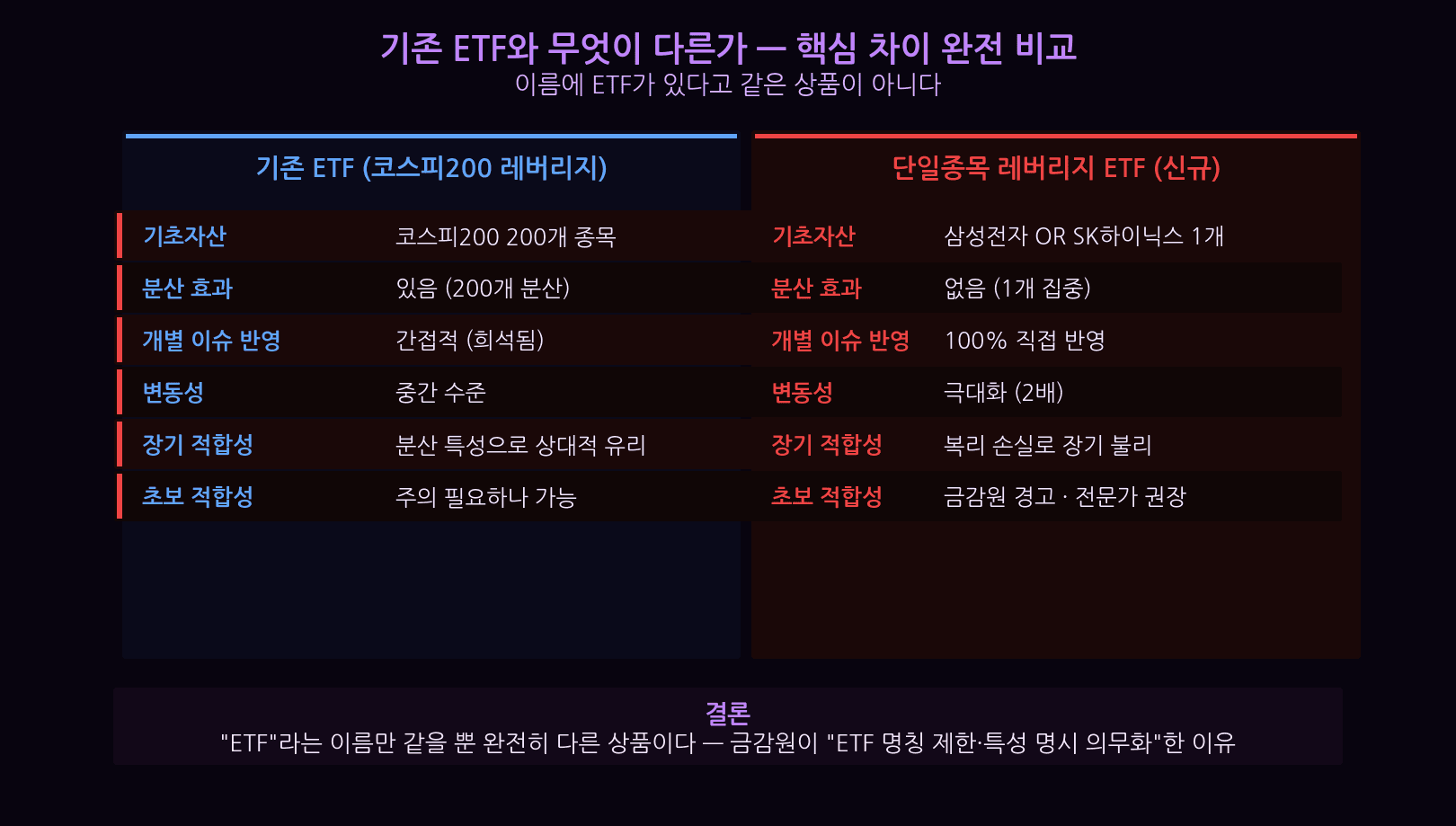
Single-stock leverage ETFs are designed to hit their target multiple on a day-by-day basis — not over longer periods.
- Samsung rises +5% in a day → ETF gains +10%
- Samsung falls -5% in a day → ETF loses -10%
Fund managers use swap contracts and futures to achieve this. Every evening after market close, the portfolio is rebalanced to maintain the 2x ratio for the next trading day. This daily rebalancing generates transaction costs that compound over time — a key reason why long-term holders often underperform even when they correctly anticipate the stock’s direction.
③ How It Differs from Regular ETFs
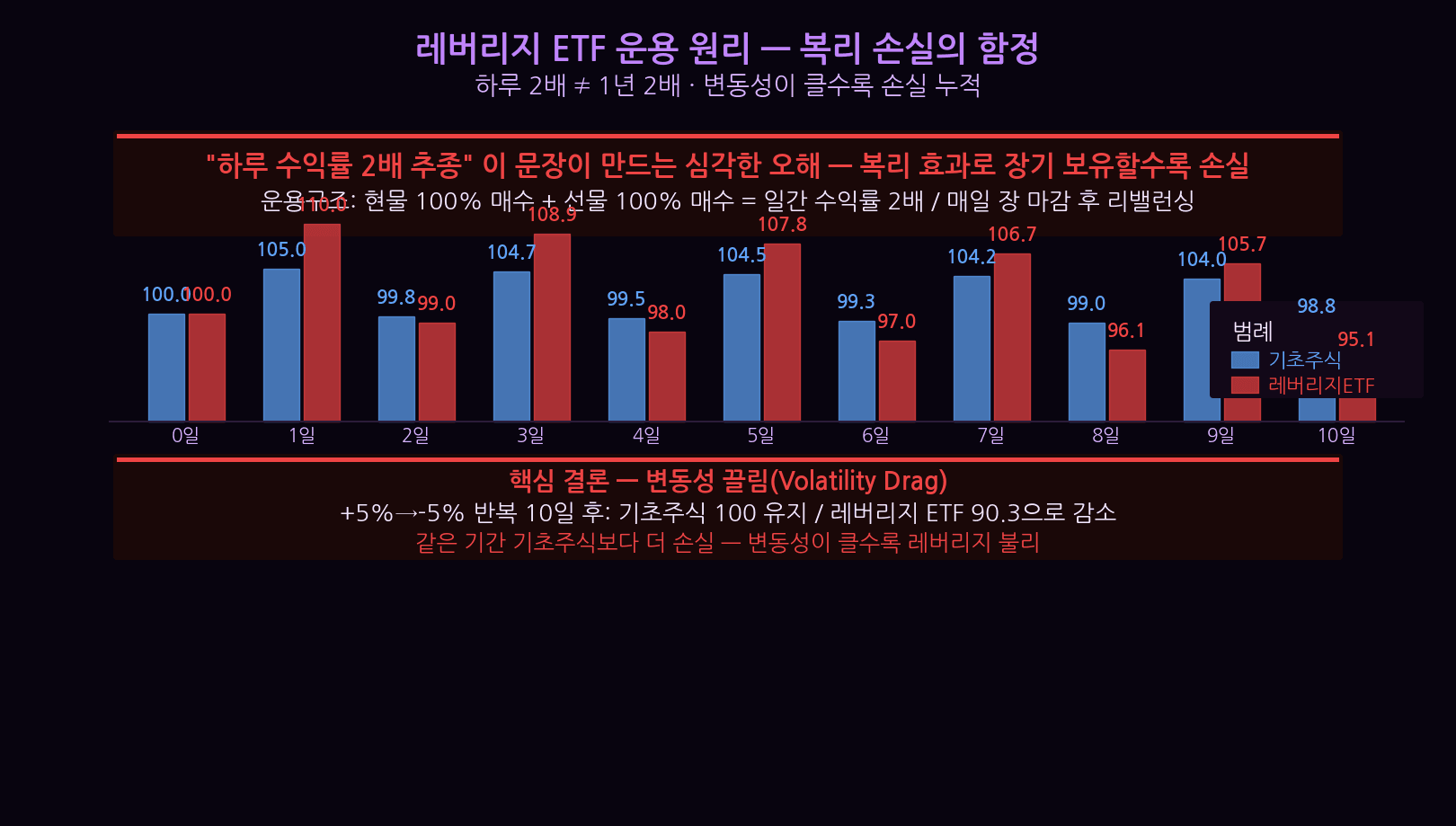
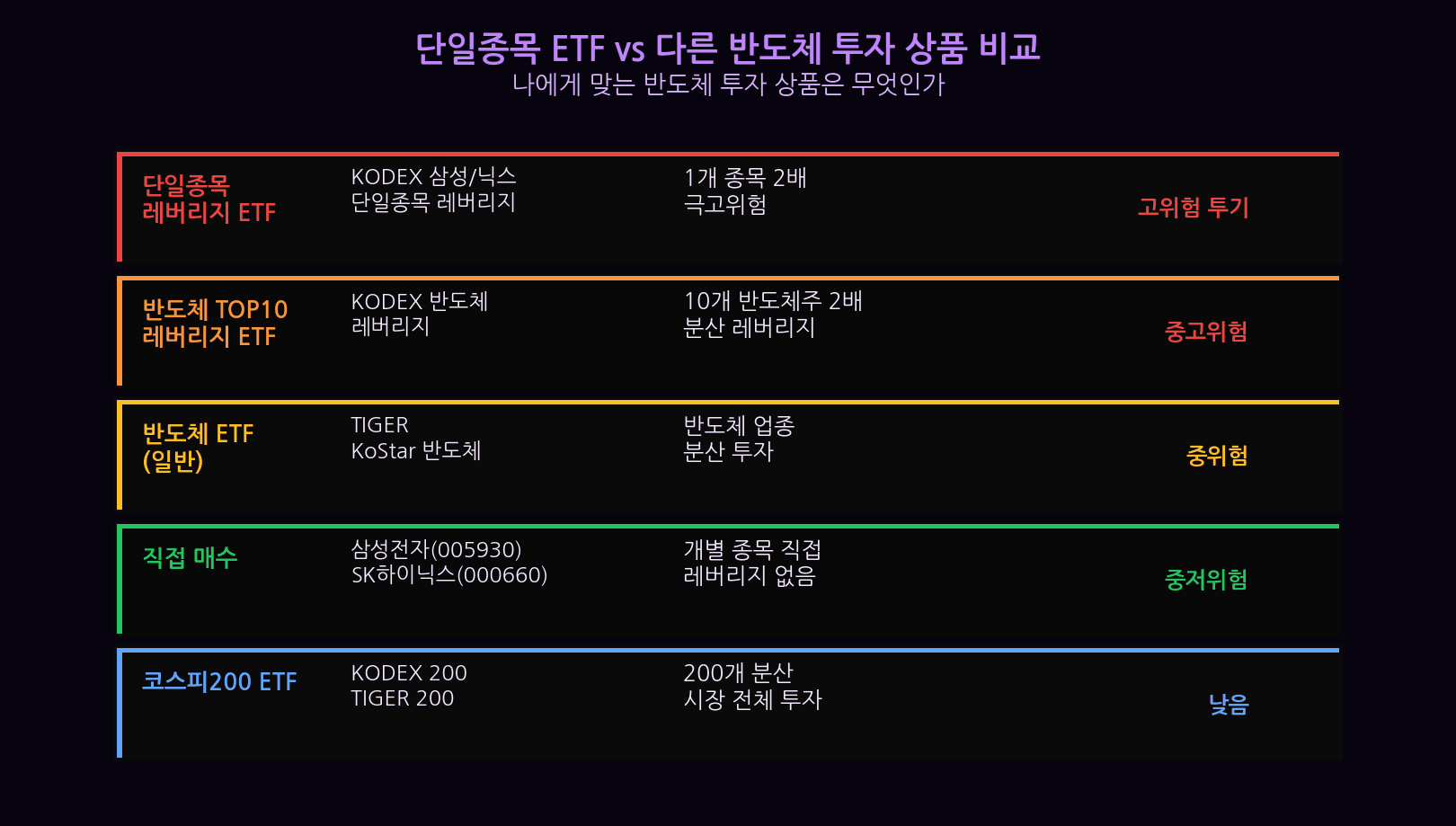
| Feature | Standard ETF | Single-Stock Leverage ETF |
|---|---|---|
| Underlying | Index or diversified portfolio | Single stock |
| Leverage | 1x (or 2x index) | 2x |
| Diversification | Yes | None |
| Volatility | Low to moderate | Very high |
| Long-term suitability | High | Very low |
| Management fee | 0.1–0.5% | 0.5–1.0%+ |
A single-stock leverage ETF completely abandons the core benefit of ETF investing — diversification. All risk is concentrated in one company’s daily price movement.
④ Why Korea’s FSS Issued Warnings
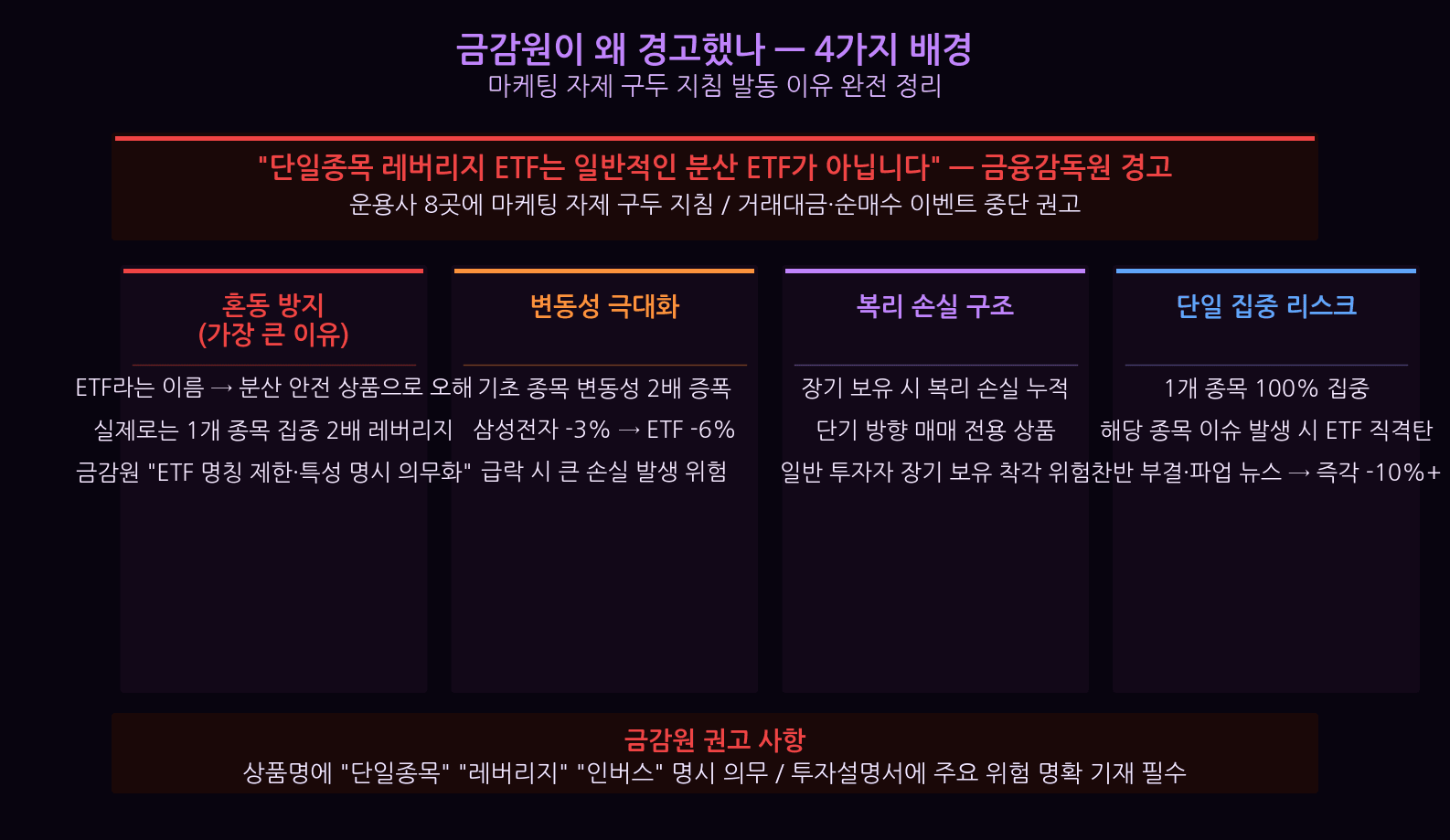
South Korea’s Financial Supervisory Service (FSS) issued strong warnings even before the listing. Key concerns:
- Extreme volatility — single stock + 2x leverage can produce ±20% daily swings
- Retail investor misconception — “It’s an ETF, so it must be safe” is dangerously wrong here
- Sideways market losses — even flat stock performance results in ETF losses over time
- Retail concentration risk — individual investors, not institutions, are the primary buyers
The FSS is exploring mandatory investor education requirements and position limits as potential regulatory responses.
⑤ The Compounding Loss Trap — Sideways Market Simulation
The most dangerous flaw of leverage ETFs is volatility decay. Even when the underlying stock ends flat, the ETF loses value.
Example — 3-Day Sideways Scenario:
| Day | Samsung Stock | 2x ETF |
|---|---|---|
| Day 1 | +10% | +20% |
| Day 2 | -9.09% | -18.18% |
| Net result | 0% (flat) | -1.6% loss |
The stock returns to its starting price, but the ETF investor has lost money. The larger the swings and the longer the period, the worse the erosion. One month of sideways trading can produce 5–15% ETF losses; three months can produce 20–40% losses — with the underlying stock unchanged.
⑥ Who Should (and Shouldn’t) Use These ETFs
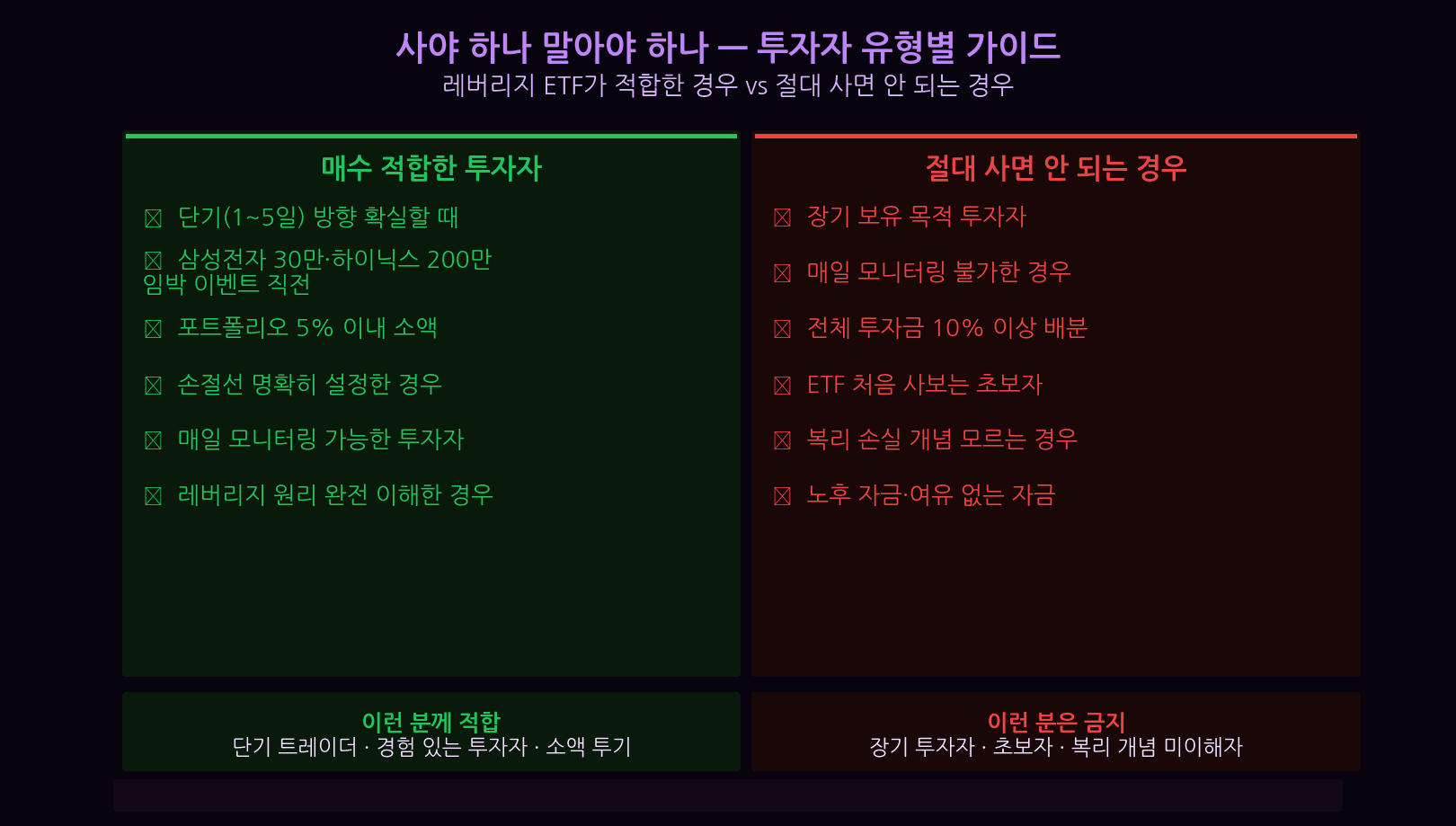
Potentially suitable for:
- Short-term directional traders with a 1–3 day horizon
- Event-driven positioning (earnings releases, product launches)
- Investors limiting exposure to under 5% of total portfolio
- Those who fully understand leverage mechanics and accept the risks
Not suitable for:
- Long-term investors (6+ month horizon)
- Dollar-cost averaging (DCA) strategies
- Retirement or emergency funds that cannot absorb significant losses
- Retail investors who believe “ETF = safe”
⑦ Five Key Risks
- Volatility decay — continuous losses during sideways markets
- Concentration risk — 2x exposure to a single company with zero diversification
- Liquidity risk — early market depth may be thin, widening bid-ask spreads
- Tracking error — swap and futures costs cause divergence from theoretical values
- Regulatory risk — FSS is actively reviewing additional rules that could alter product structure
If Samsung faces an earnings shock or a major product recall, a 2x leverage ETF could lose -20% to -30% in a single trading session.
⑧ Investment Strategy
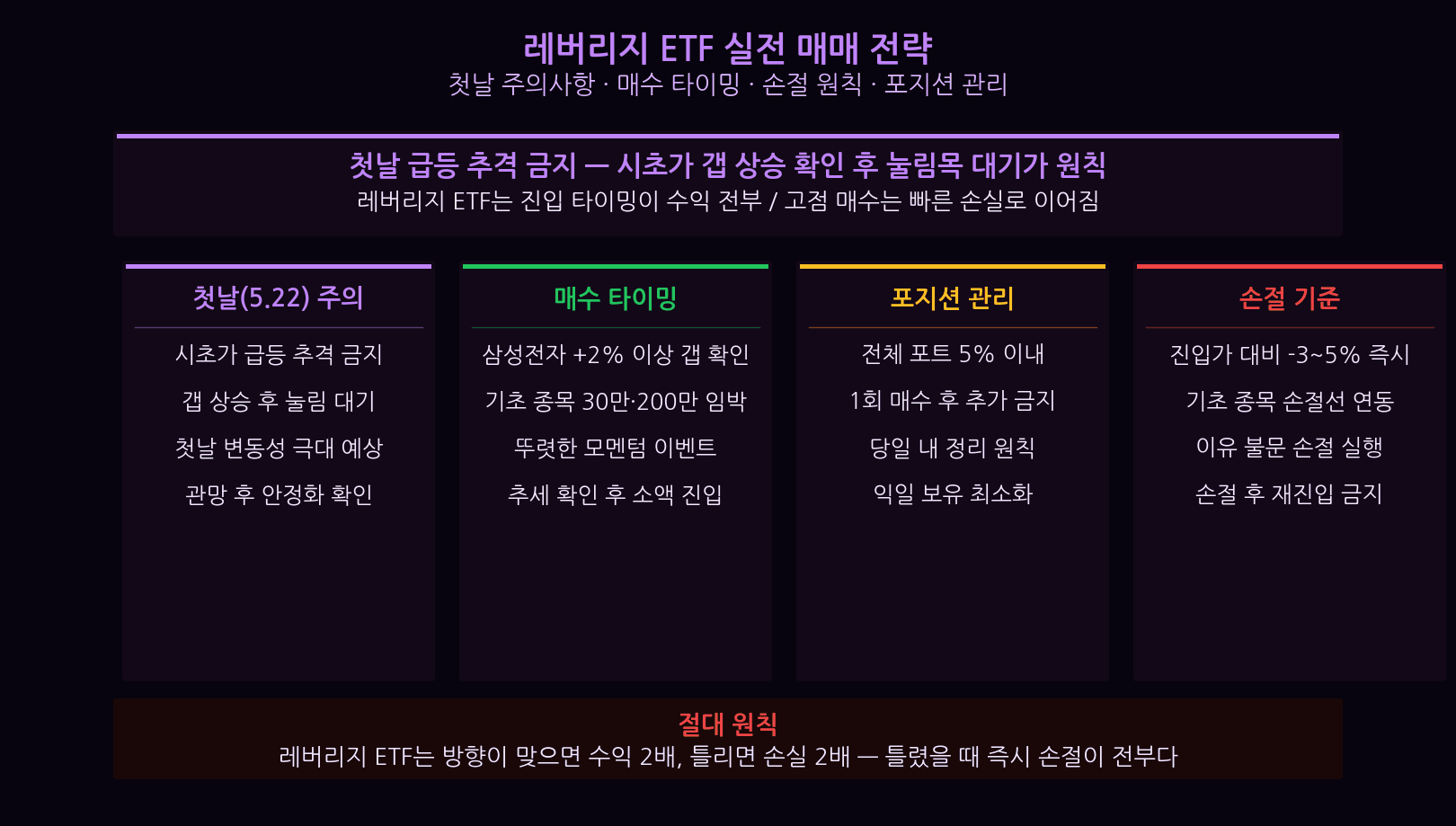
If you choose to trade single-stock leverage ETFs, follow these rules strictly:
- Size limit — allocate no more than 5% of total portfolio
- Short holding period — maximum 1–2 weeks, ideally 1–3 days
- Hard stop-loss — exit unconditionally at -15% from entry
- Event-based entry only — enter only with a clear, time-bound catalyst
- Take profits quickly — sell when target return is reached, no hesitation
“I’ll sell when it goes a bit higher” is the most dangerous mindset with leverage ETFs. The discipline to exit quickly on gains is what separates successful short-term traders from everyone else.
⑨ Conclusion — Pre-Investment Checklist
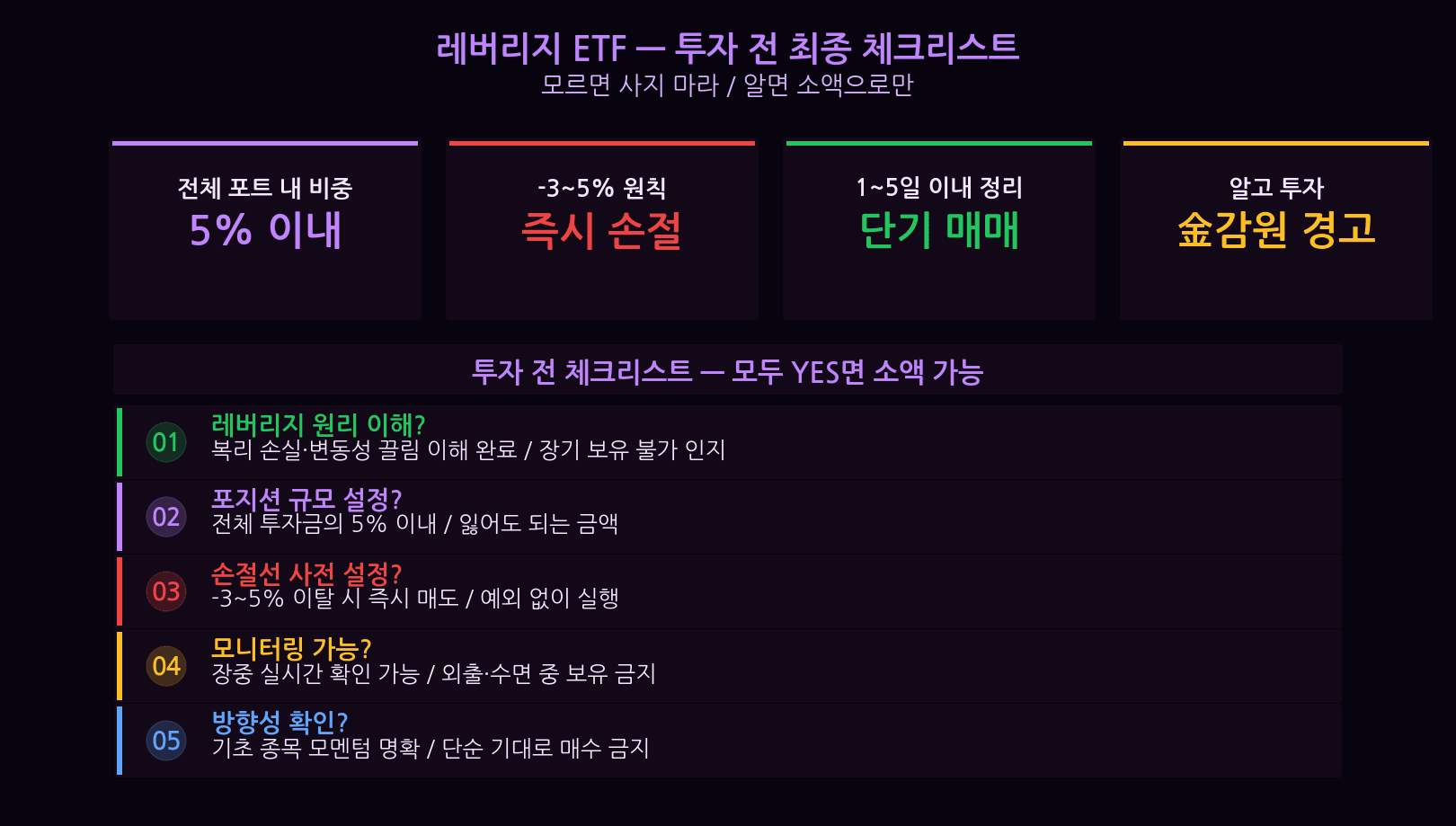
Despite the historic significance of this launch, single-stock leverage ETFs are unsuitable for the vast majority of retail investors. Before investing, answer these questions honestly:
- ☑ Do you fully understand volatility decay and compounding losses?
- ☑ Can you strictly limit exposure to under 5% of your portfolio?
- ☑ Will you hold for no longer than 1–2 weeks, without exception?
- ☑ Have you preset a -15% stop-loss before entering?
- ☑ Can your financial situation absorb a total loss of this position?
If any answer is “no,” a regular Samsung stock purchase or a diversified semiconductor sector ETF is the wiser choice.
📌 For more real-time issues, visit Trending News. Learn more about getdir.app at our About page.