Margin Call Crisis — Record ₩145.8B in Forced Liquidations Hits Korea
Real-Time Issue · May 22, 2026
Margin Call Crisis — ₩145.8B in Forced Liquidations Hits Record High
₩305.1B Forced Sold in 3 Days · Structure, Causes, Historical Comparison · 5 Investor Strategies

How Margin Calls Work — Complete Breakdown
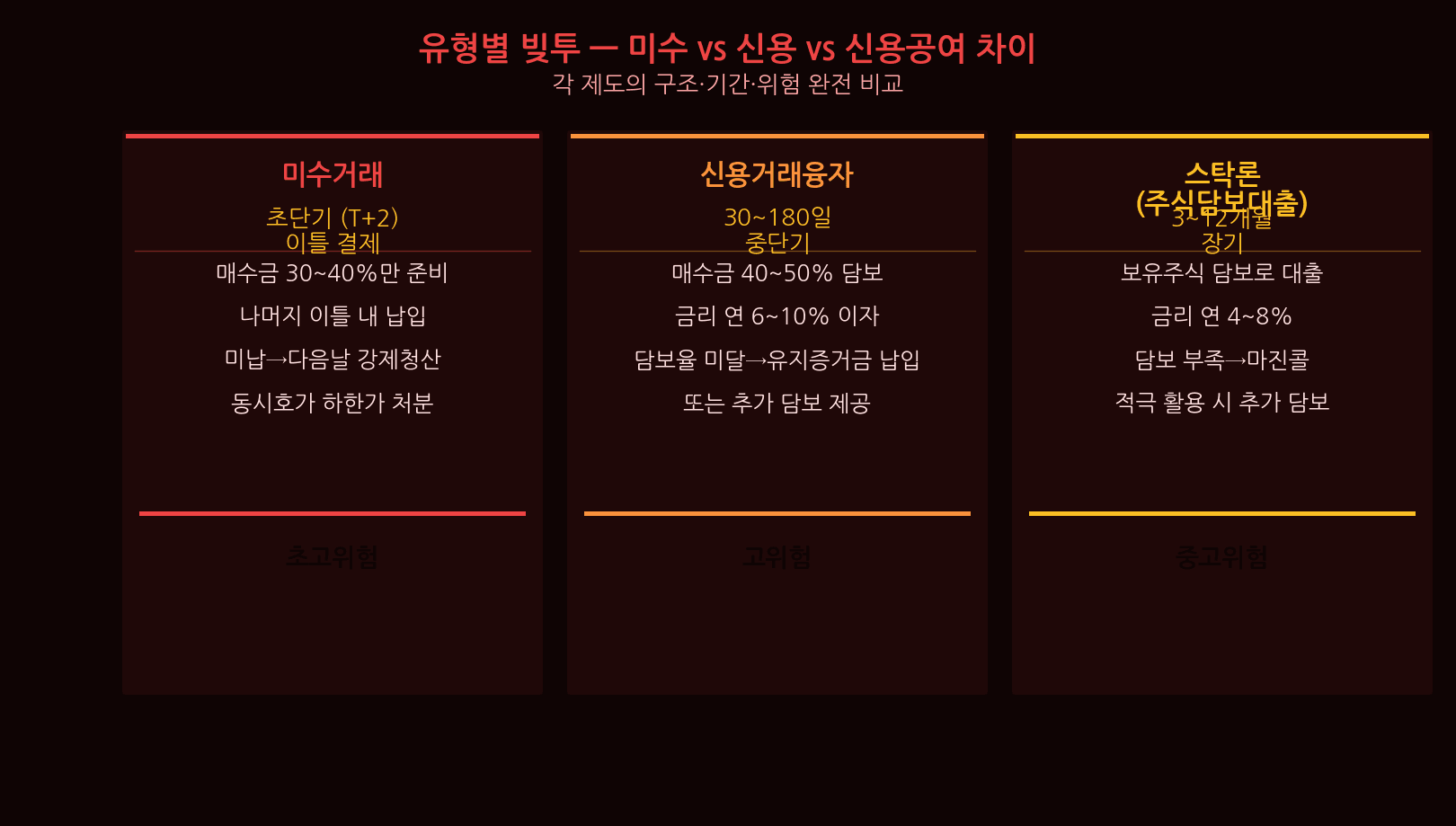
A margin call occurs when an investor who bought stocks with borrowed money from a brokerage cannot repay within the specified period, forcing the brokerage to sell those stocks. The liquidation happens during the simultaneous-bid auction just before market open, at the lower-limit price — the worst possible execution price. When forced sell orders flood the market, prices drop further, triggering more margin calls in a cascading cycle.
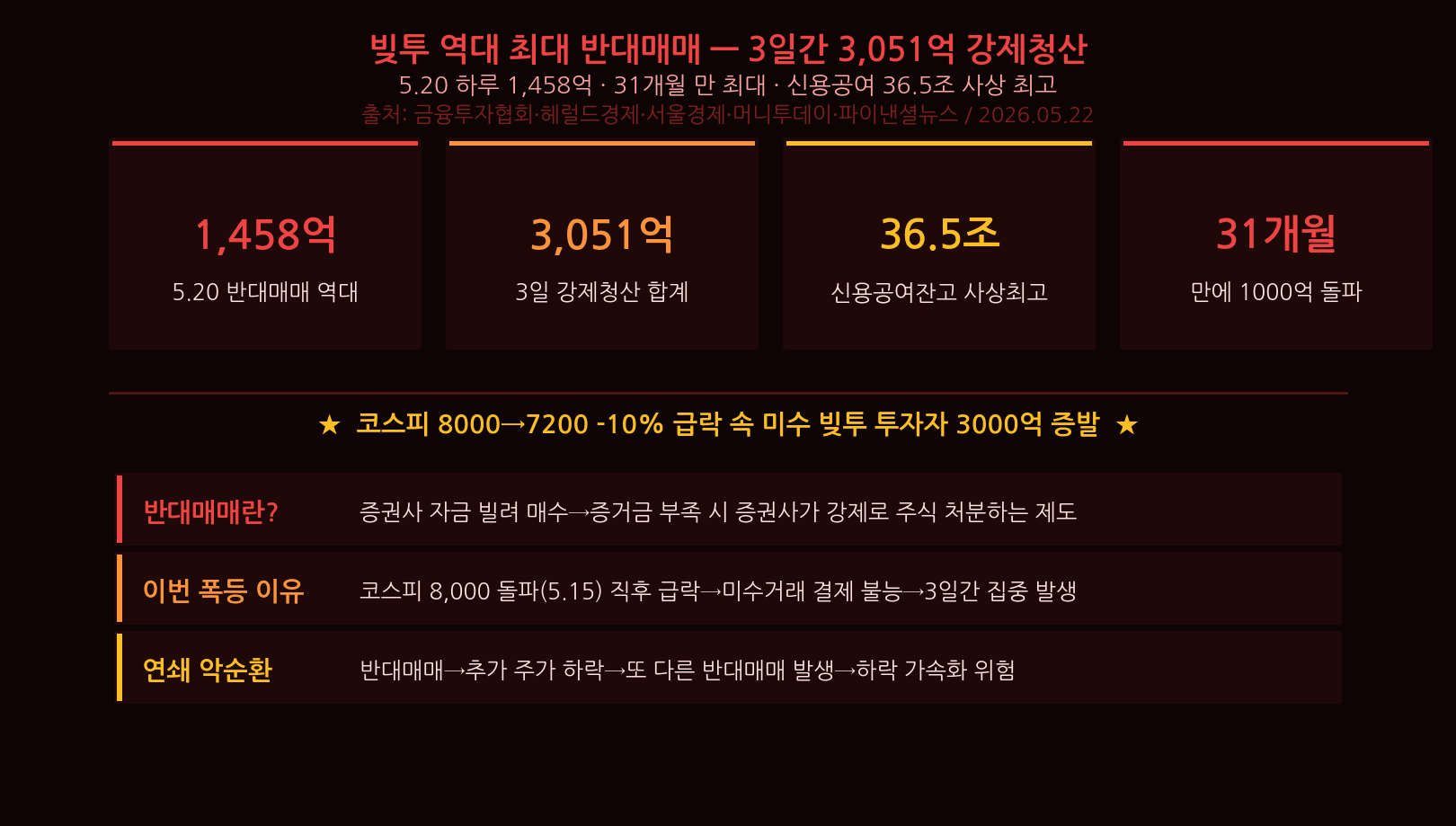
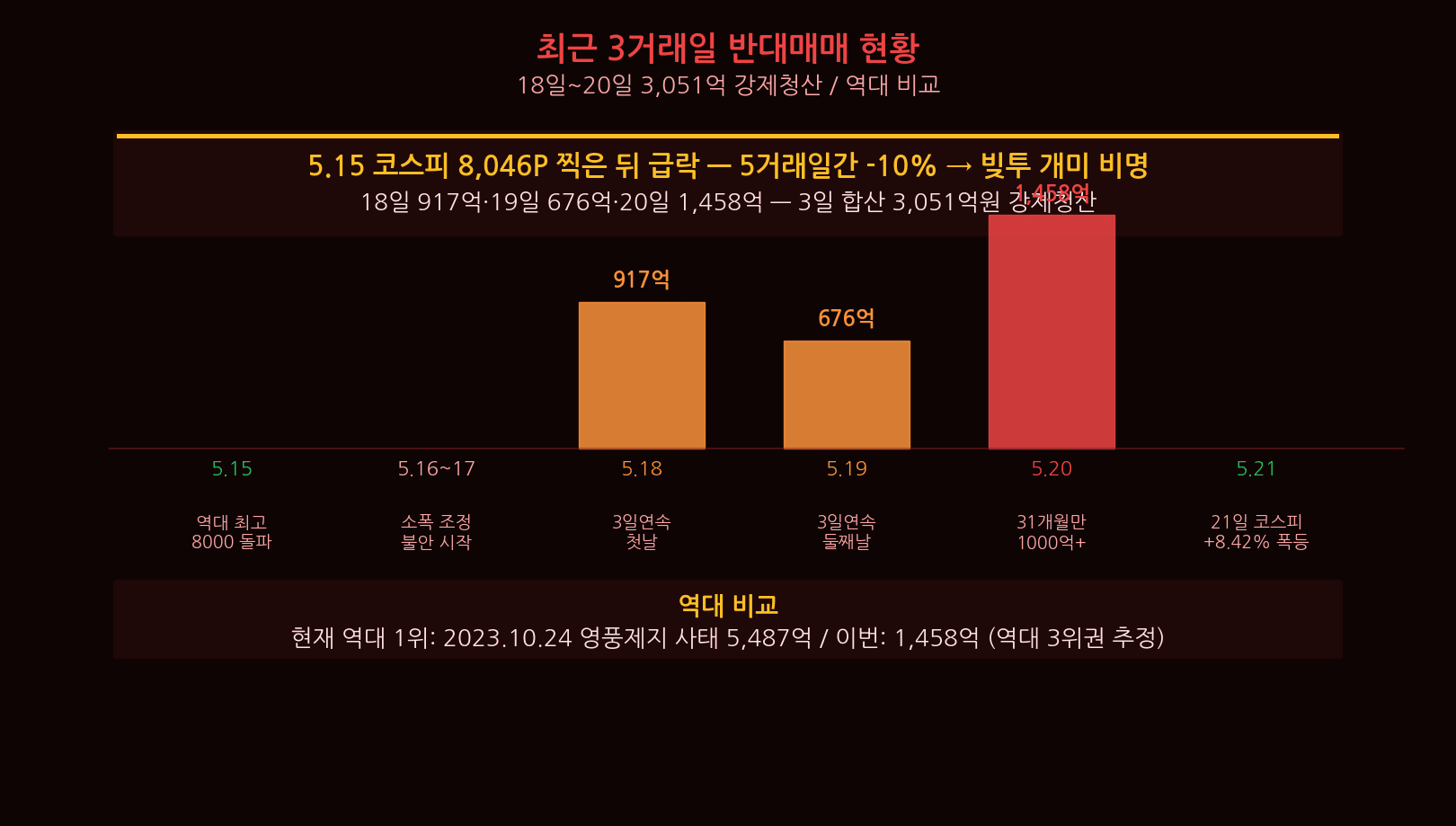
3-Day Forced Liquidation Surge — ₩305.1B Total
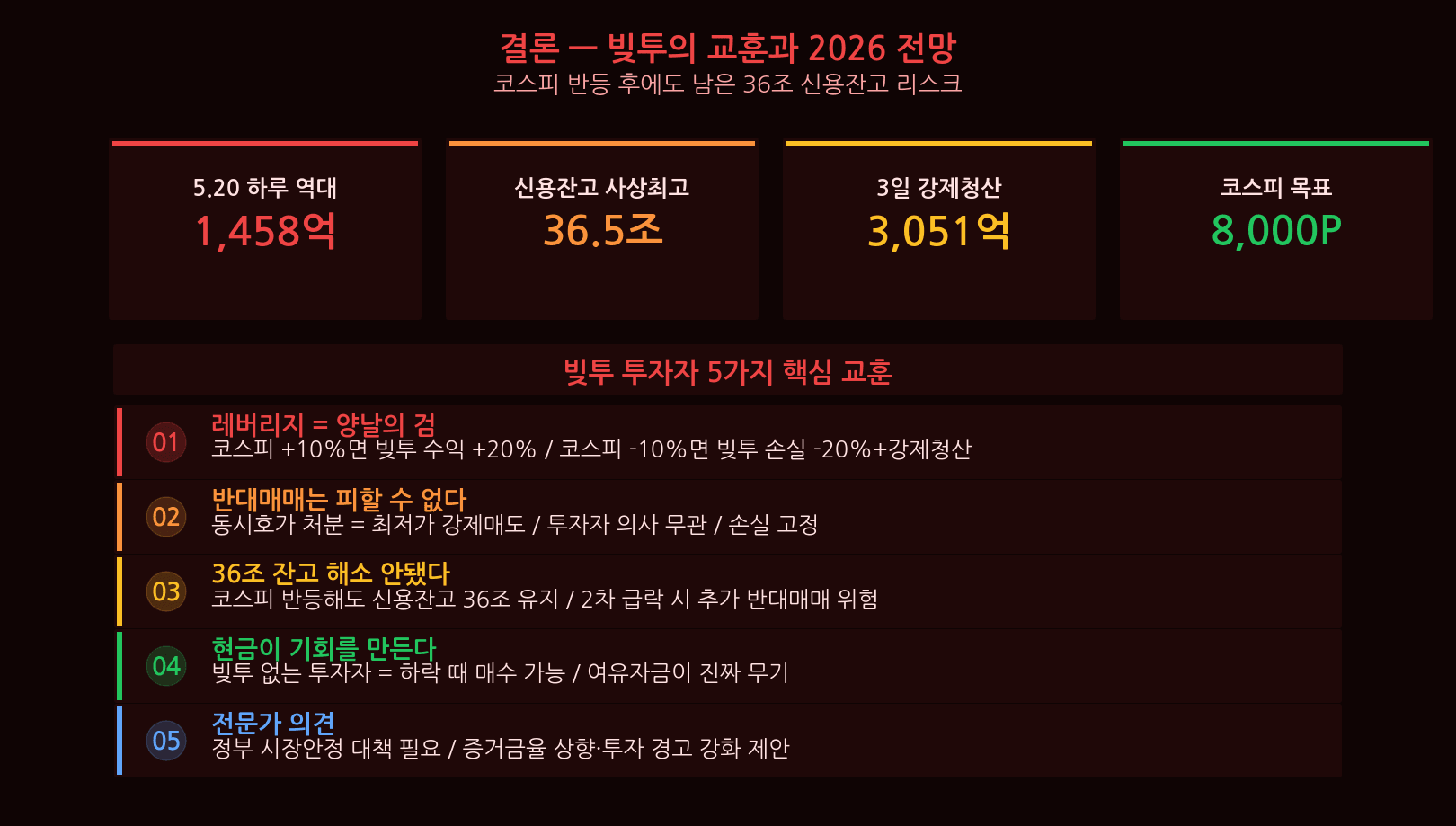
On May 20, 2026, daily forced liquidations hit ₩145.8B — the largest since the Youngpoong Paper incident in October 2023, 31 months ago. Following ₩91.7B on May 18 and ₩67.6B on May 19, a cumulative ₩305.1B was forcibly sold in just three trading days. KOSPI had hit an all-time high of 8,046 points on May 15 before plunging 10% over five sessions, catching FOMO-driven leveraged retail investors completely off-guard.
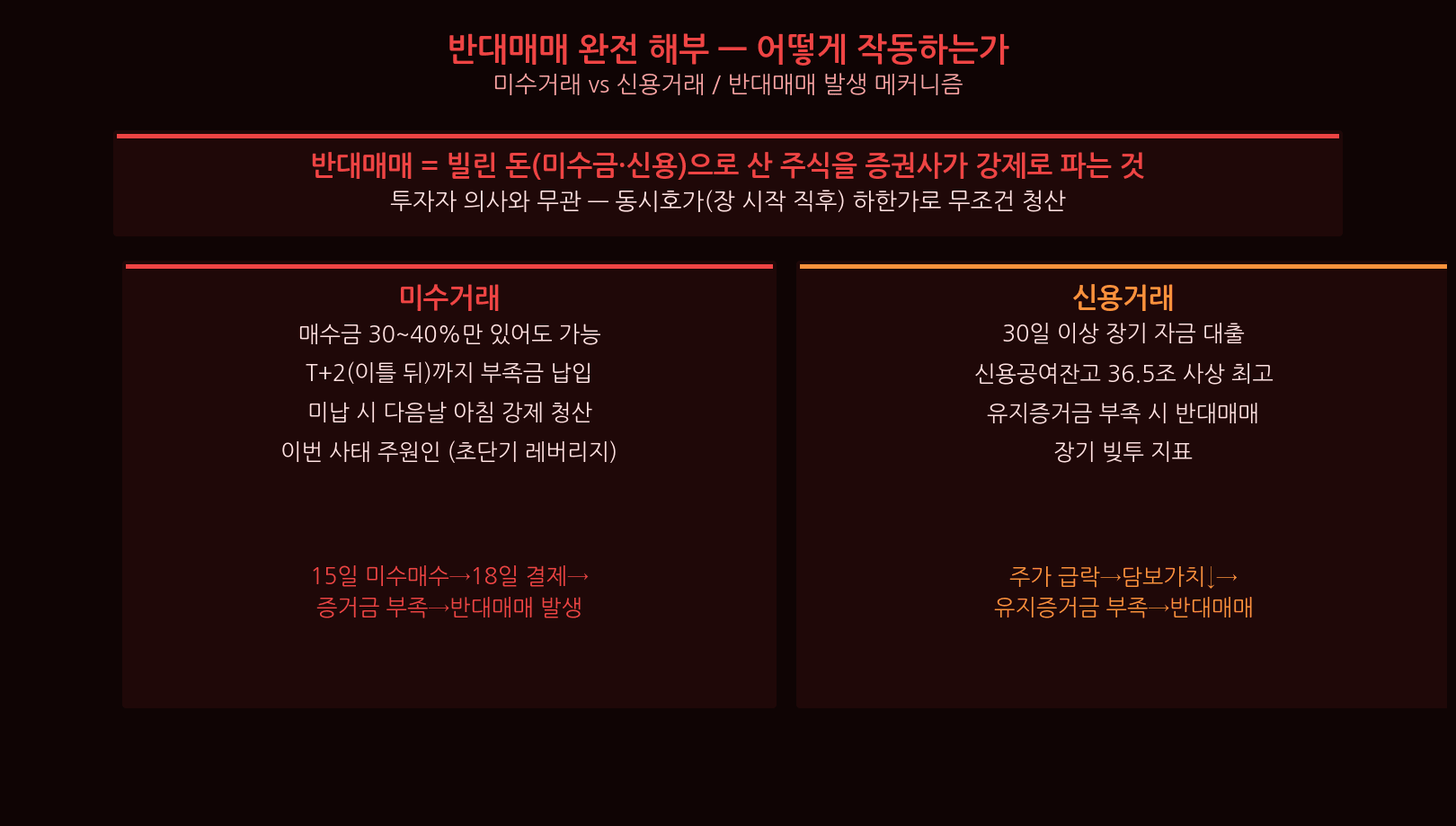
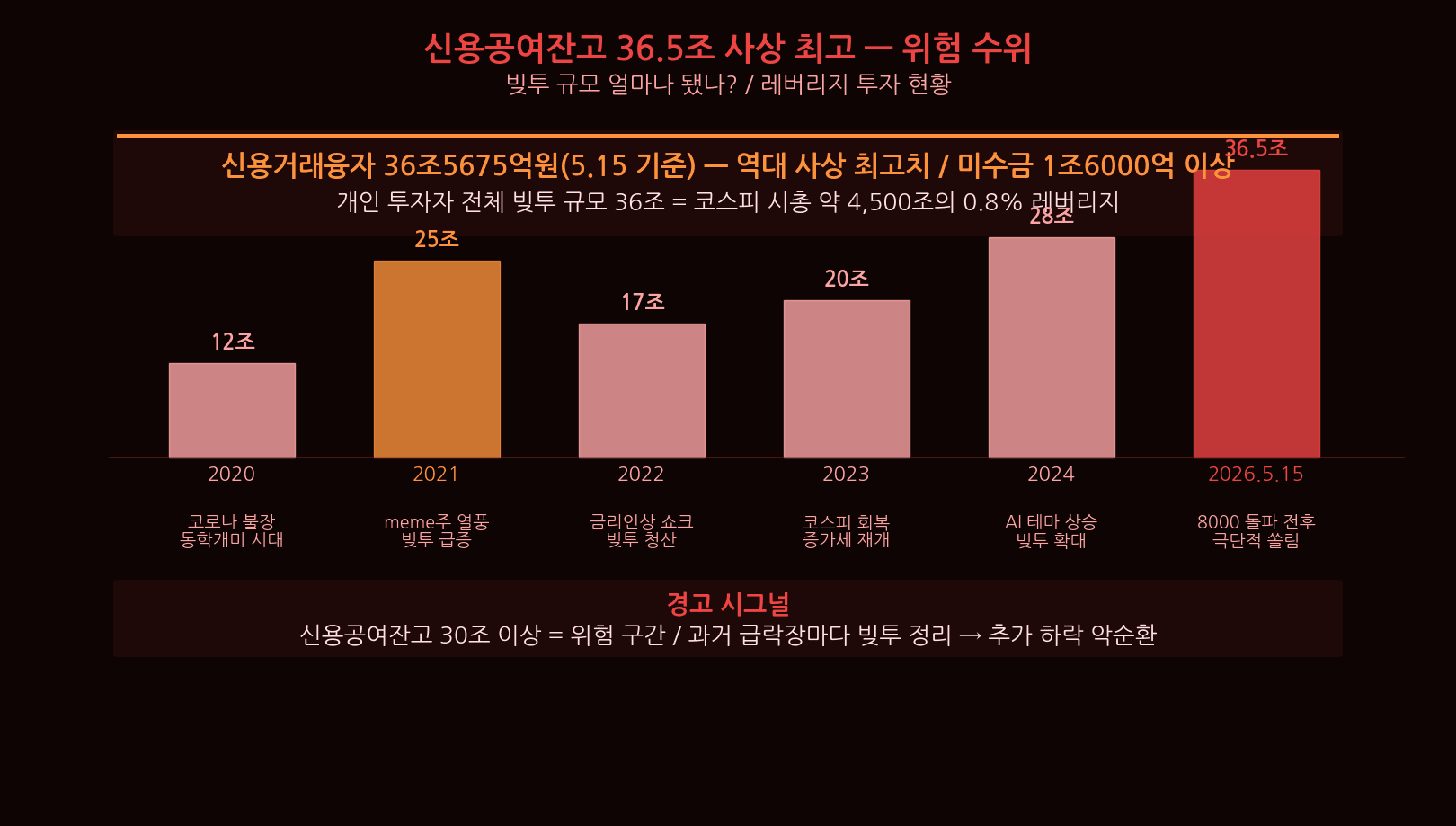
Margin Balance Hits All-Time High ₩36.5T — Leverage Alert
Total credit balance reached an all-time high of ₩36.57T. KOSPI bounced +8.42% on May 21, but ₩36T in debt remains on the books. This surpasses the ₩25T peak during the 2021 metaverse boom and ₩28T during the 2024 AI theme. If a second wave of selling hits, a far larger wave of forced liquidations could follow. Leveraged investors must review their positions immediately.
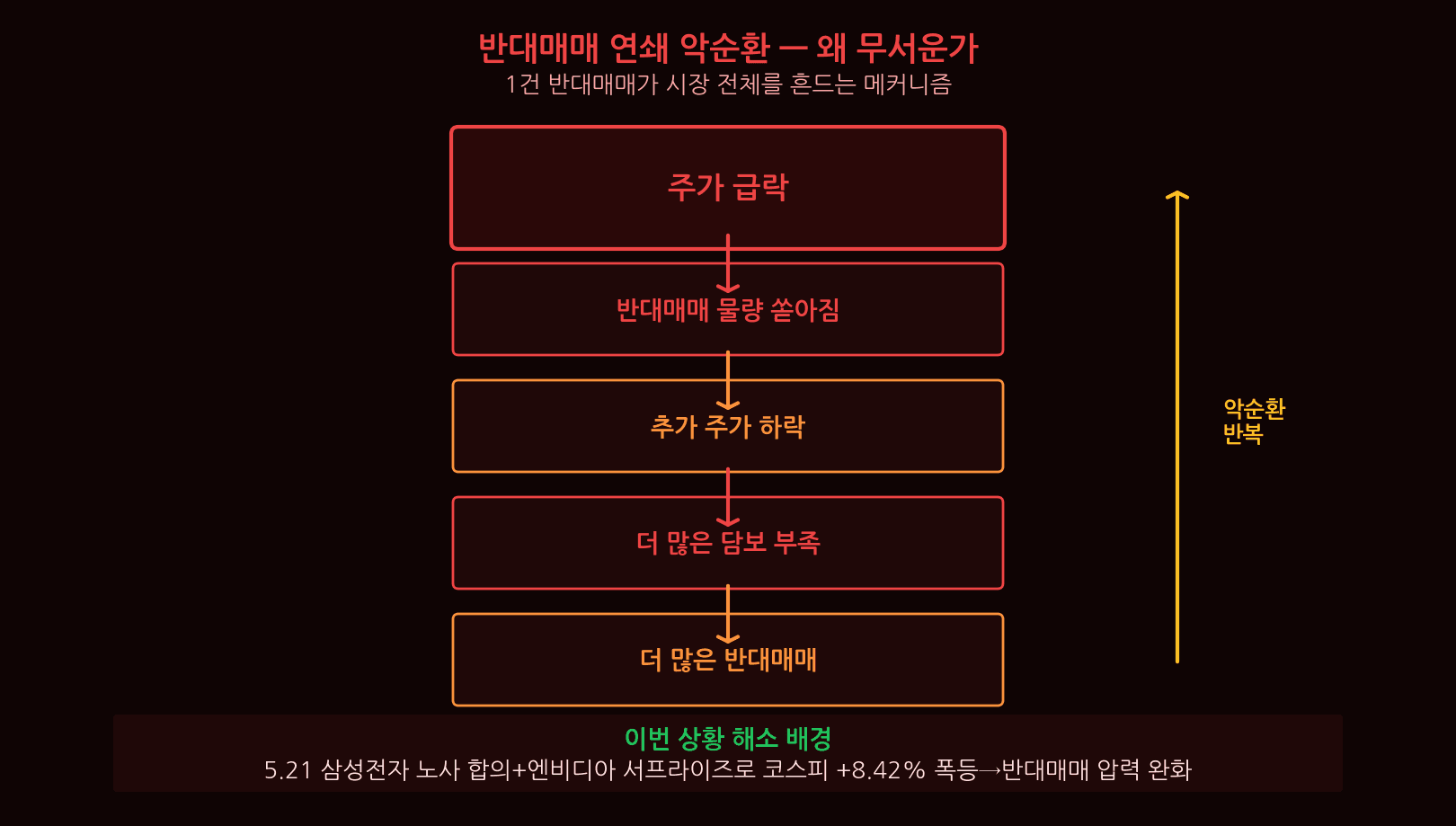
The Cascade Mechanism — How Margin Calls Feed on Themselves
The cycle is self-reinforcing: price drops → collateral value falls → maintenance margin breached → brokerage issues call notice → forced sell at lower-limit price → market drops further → new margin calls triggered. The 10% KOSPI decline from 8,046 set this loop in motion. When T+2 settlement for margin trading and 30–180 day credit facility deadlines coincide, the impact multiplies.
Historical Comparison — Where This Ranks
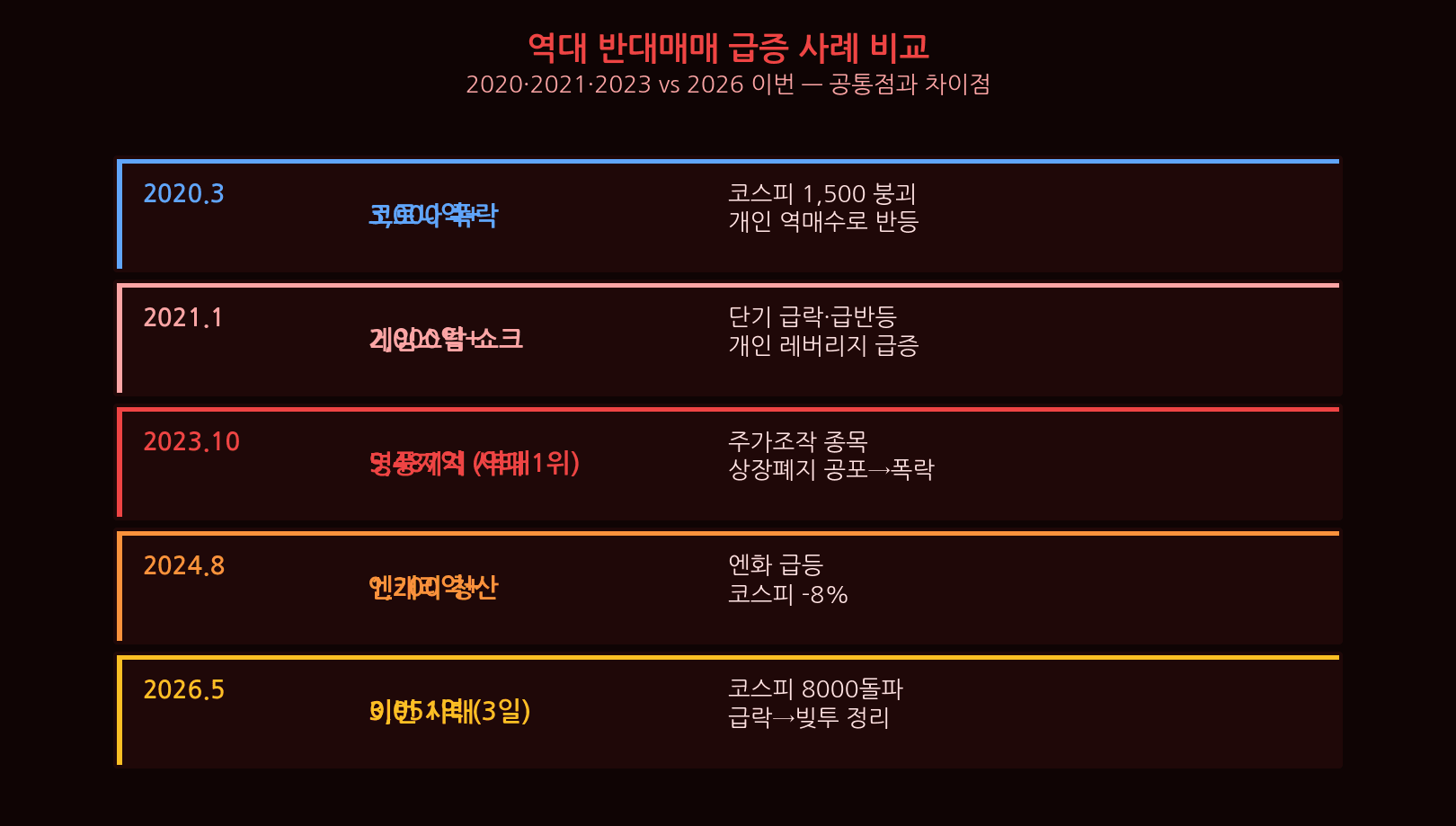
Comparing major historical forced-liquidation events reveals the severity of this episode. The Youngpoong Paper incident (Oct 24, 2023) holds the record at ₩548.7B. The COVID crash (March 2020) saw an estimated ₩300B+. The yen-carry unwind (August 2024) triggered ₩120B+. The May 20, 2026 episode at ₩145.8B ranks in the all-time top three. The May 21 bounce provided relief, but the ₩36T credit overhang persists.
5 Strategies for Leveraged Investors — How to Respond Now
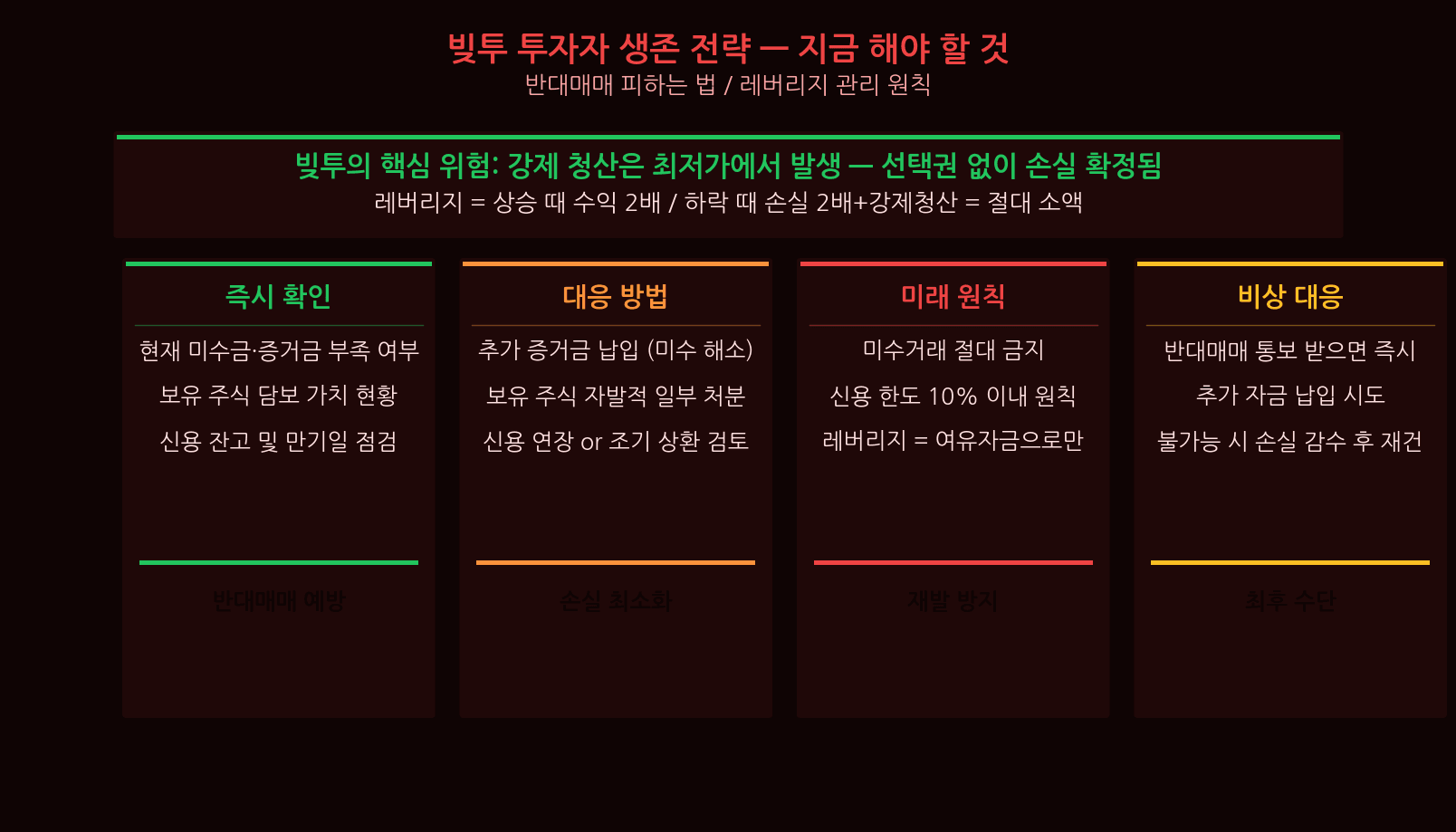
Five immediate strategies drawn from lessons of the margin call crisis: ① Audit all credit and margin positions — check maintenance margin status first. ② KODEX 200 (069500) dollar-cost average in three tranches between 7,500–7,800. ③ SK Hynix (000660) momentum play — confirm breakout above ₩2M before entering. ④ KODEX KOSPI Leverage (122630) small short-term position only after confirming 7,500 support; keep under 5% of portfolio. ⑤ Maintain 30–40% cash — hold off on new leverage until the ₩36T credit balance normalizes.
Conclusion — 5 Lessons from the Leverage Trap
Leverage doubles gains on the way up — and doubles losses plus forced exits on the way down. Free capital is the real weapon in investing. Final checklist: ① Check current margin and credit balances immediately ② Verify maintenance margin status ③ Assess ability to post additional margin ④ If unable, voluntarily reduce positions ⑤ Avoid new leverage until the ₩36T credit balance normalizes ⑥ Going forward: cap leverage at 10% of total portfolio as a firm rule.
Sources: Bloomberg Reuters Korea JoongAng Daily