US Iran War Status Update — Hormuz Blockade, Negotiation Issues, Korea Impact
Real-Time Issue · May 24, 2026
US Iran War Status Update — Hormuz Blockade, Negotiation Issues, Korea Impact
2026 progression / Dual Hormuz blockade / Negotiation issues / Global economic shock / Korea impact and scenarios

Iran War Outbreak — 2026 Timeline
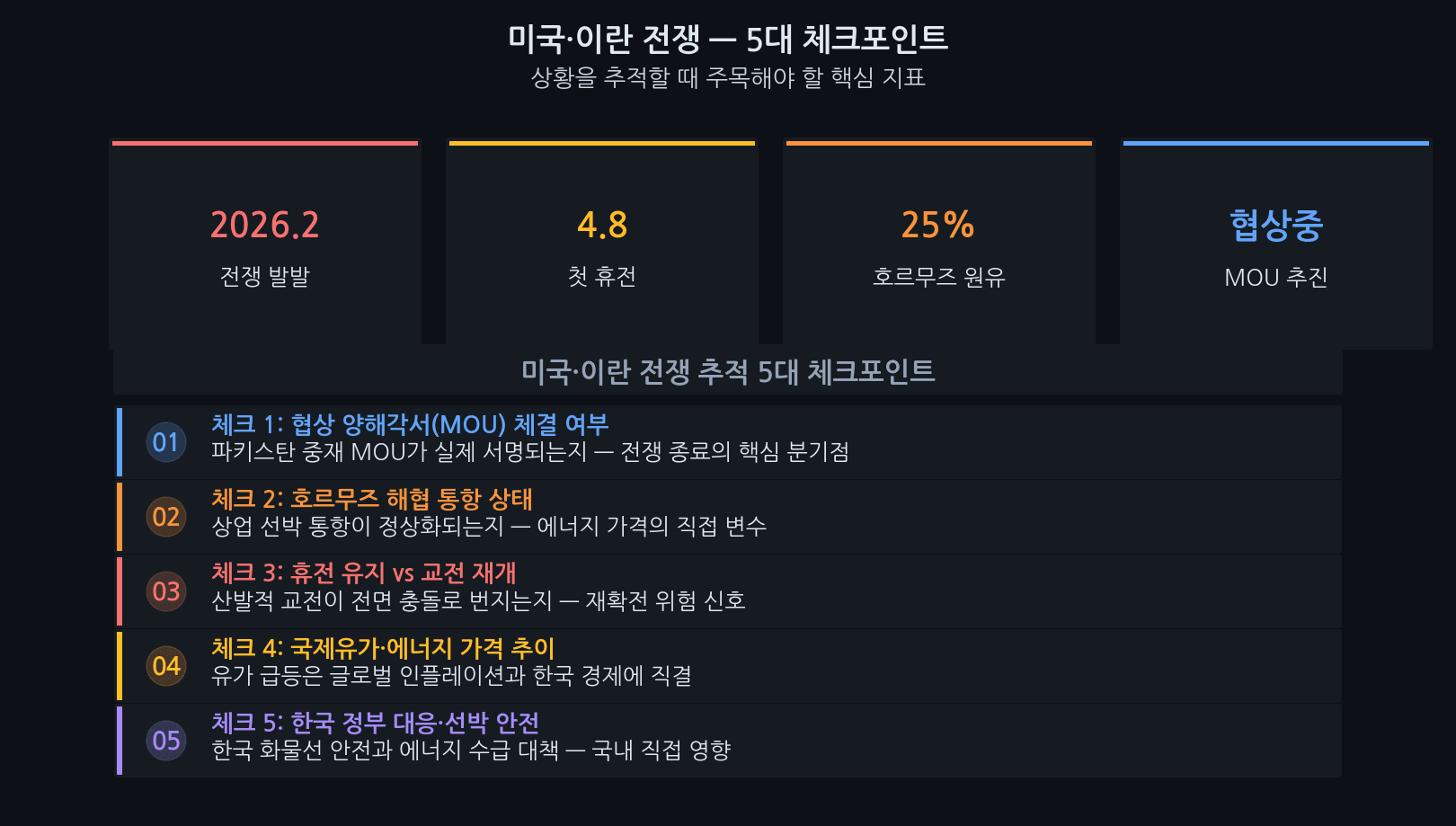
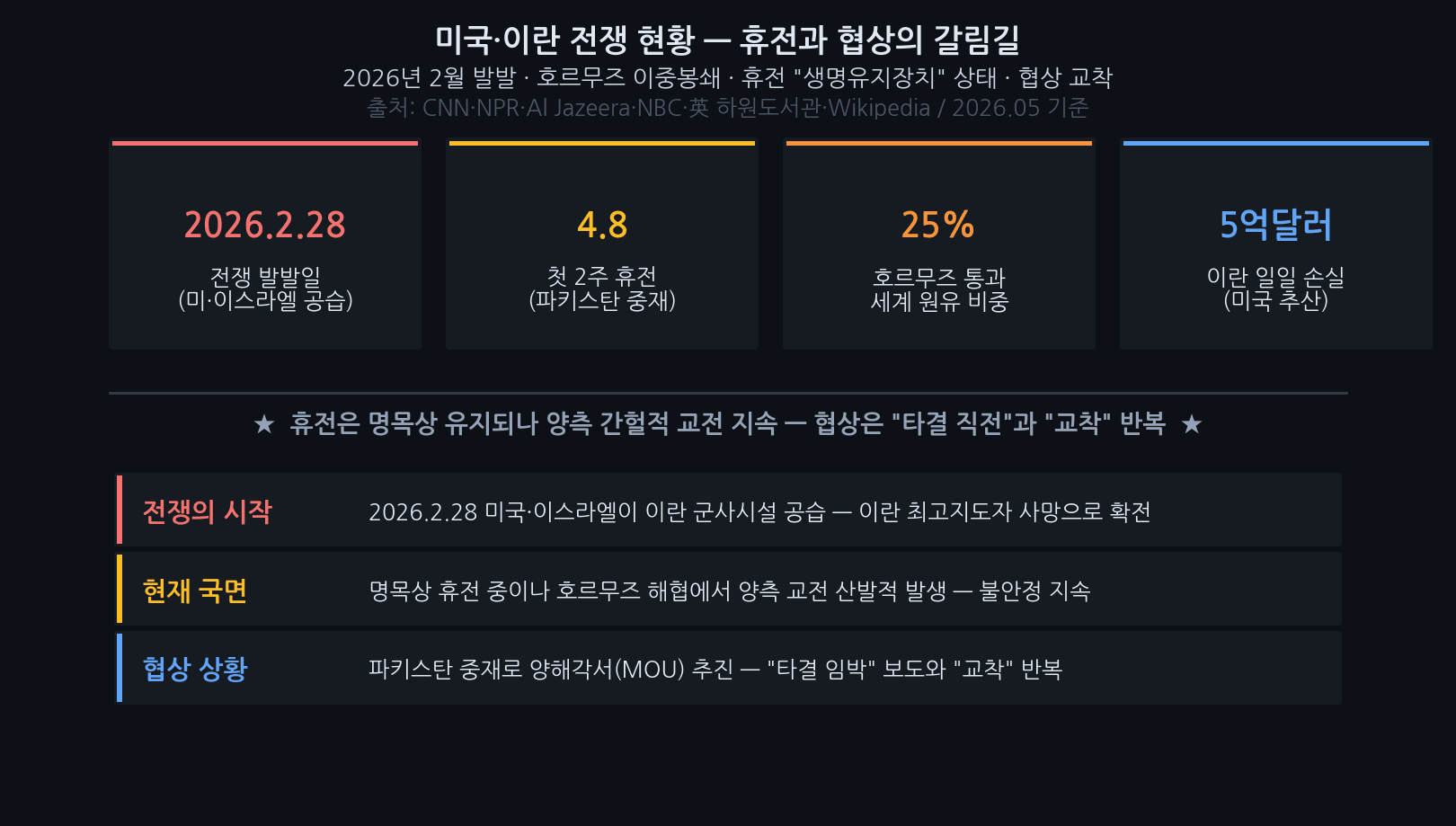
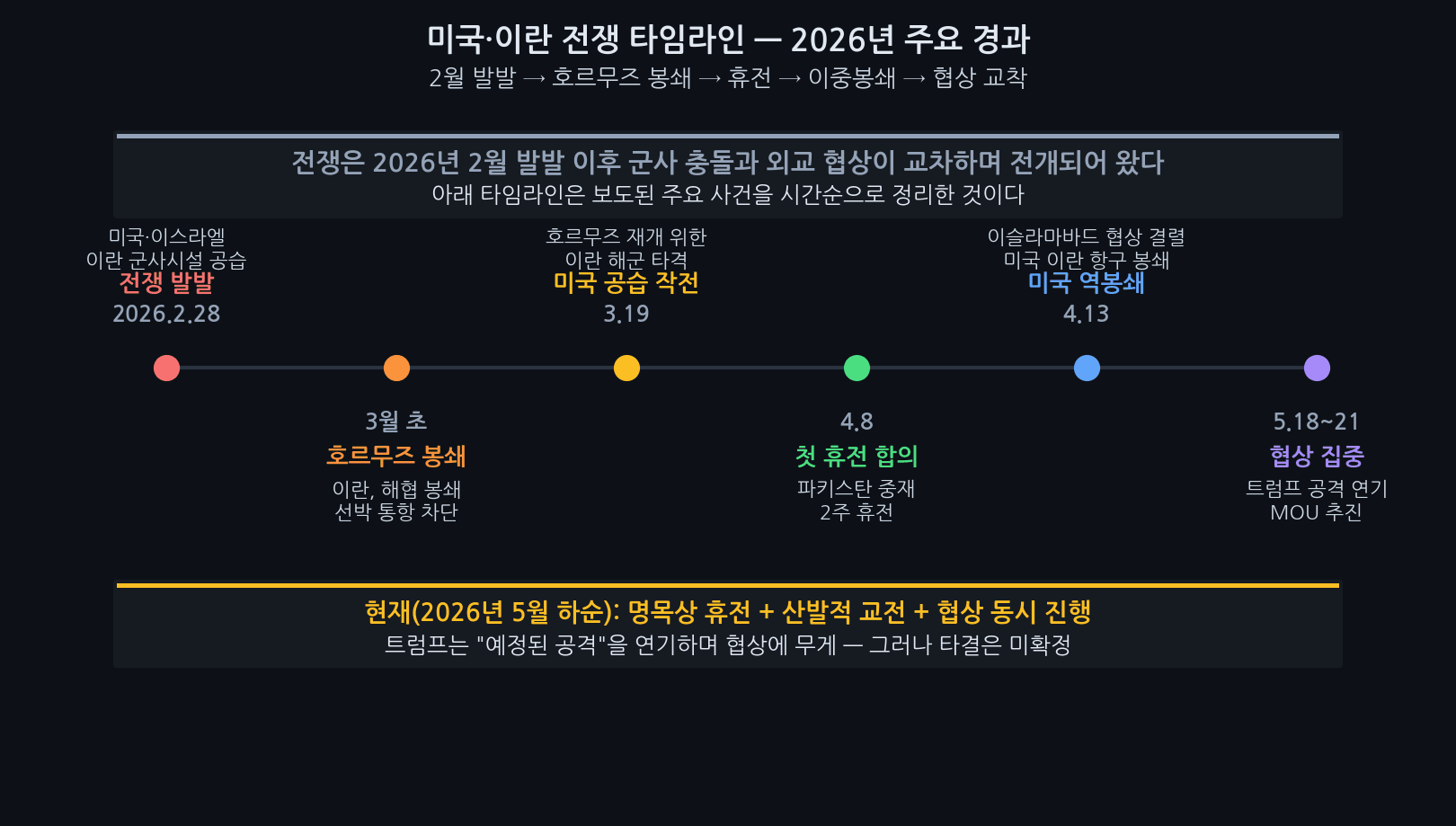
The Iran war erupted on February 28, 2026 when the US and Israel struck Iranian military facilities. Iran responded by blockading the Strait of Hormuz, prompting US airstrikes to reopen the strait. A 2-week ceasefire brokered by Pakistan held from April 8 — but after the Islamabad negotiations collapsed, on April 13 the US imposed a counter-blockade on Iranian ports. In May, President Trump postponed announced strikes and pivoted to negotiations.
Strait of Hormuz — Choke Point of Global Energy
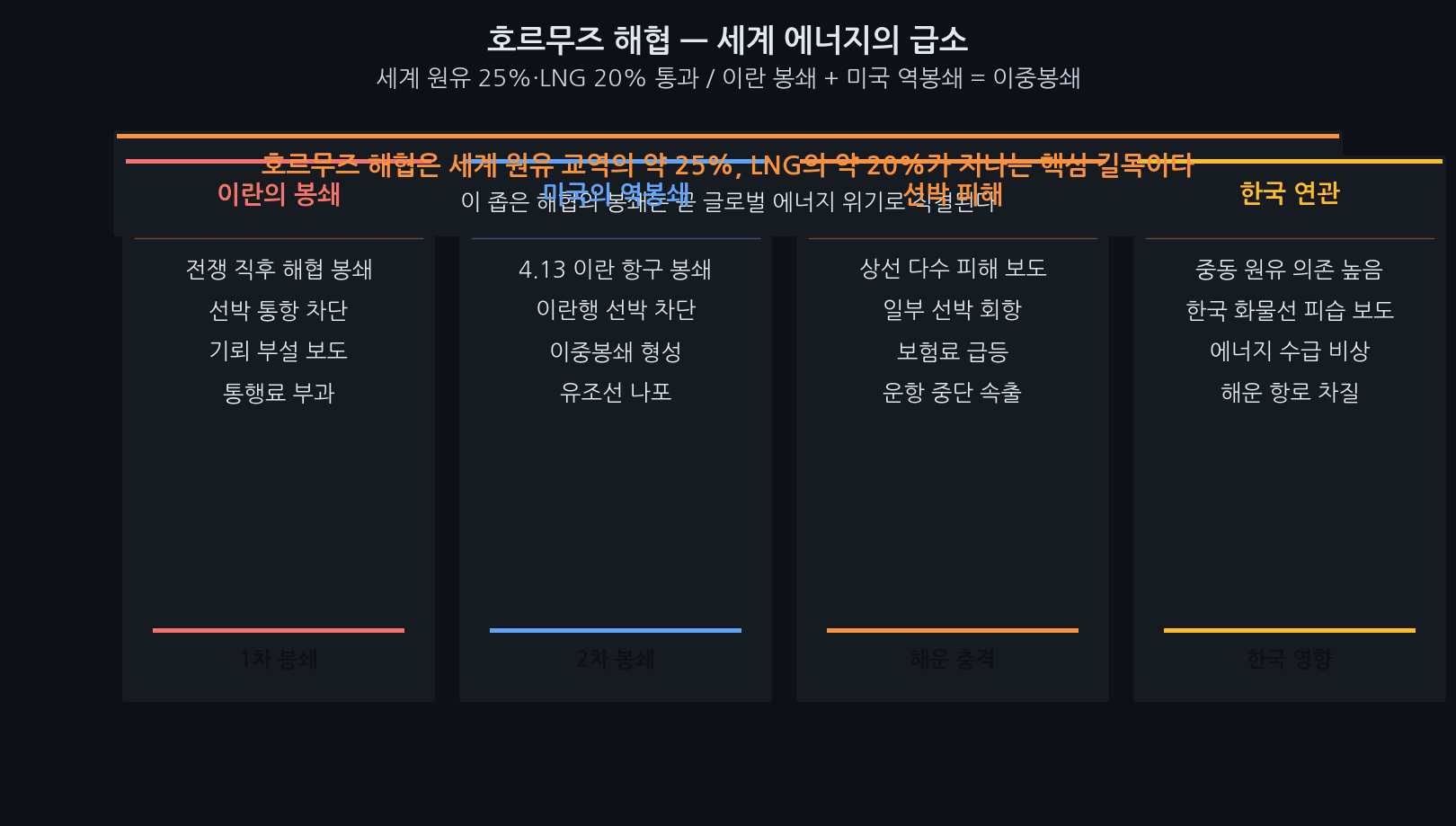
The reason the Iran war commands global attention is the Strait of Hormuz. This narrow strait connecting the Persian Gulf and Gulf of Oman handles roughly 25% of global crude trade and 20% of LNG. After Iran’s blockade halted shipping in March, the US counter-blockade of Iranian ports on April 13 created a “dual blockade” situation. Multiple commercial vessels were damaged; some halted operations or rerouted.
Core Negotiation Issues in the Iran War
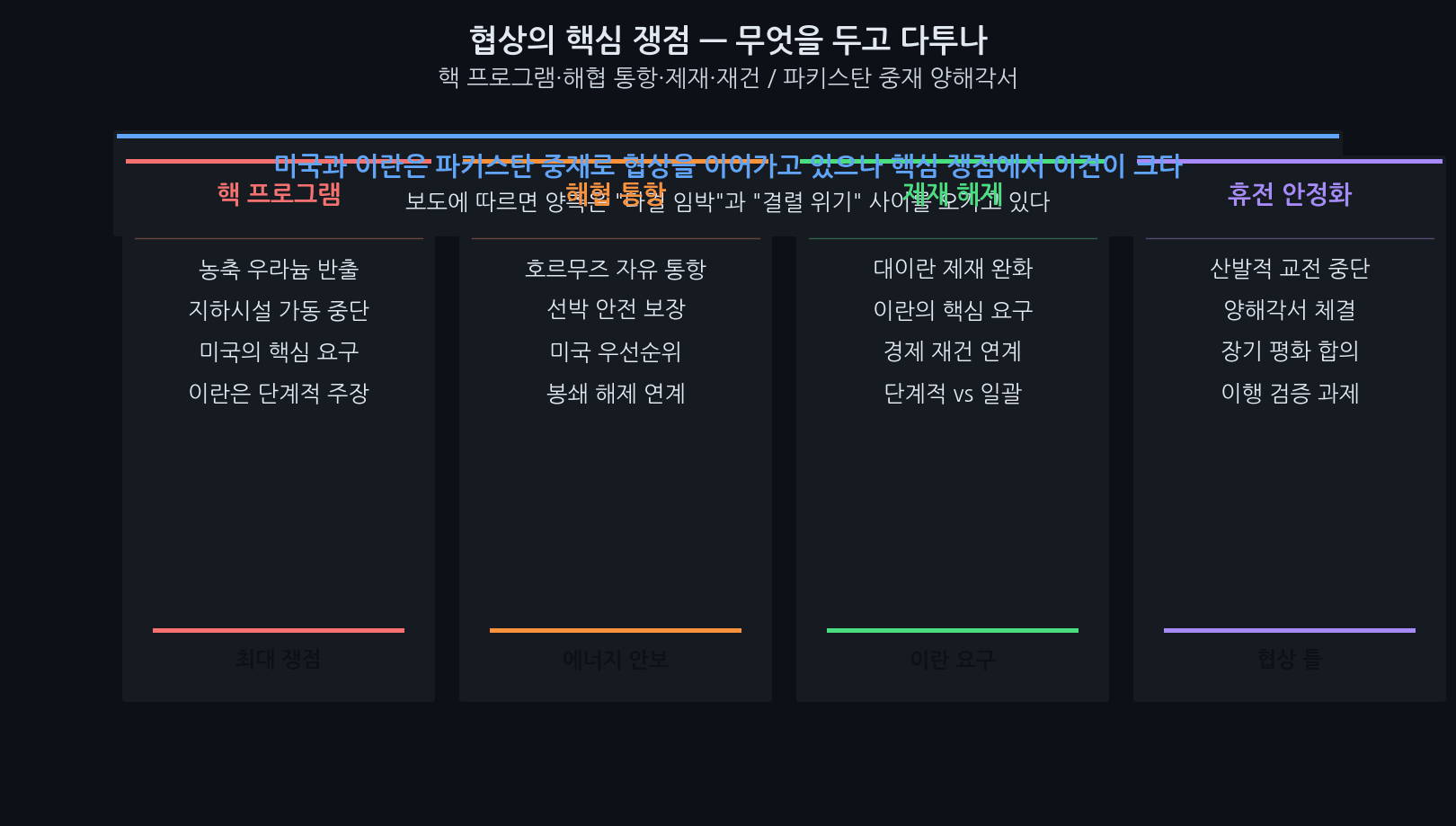
The US and Iran continue negotiations mediated by Pakistan. Both sides target a memorandum of understanding, but core differences remain wide. The biggest issue is Iran’s nuclear program — the US demands removal of enriched uranium and shutdown of underground facilities. Iran insists on a phased approach linking Hormuz passage, sanctions relief, and an end to the Iran war. The talks oscillate between “deal imminent” and “stalemate.”
Global Economic Impact of the Iran War
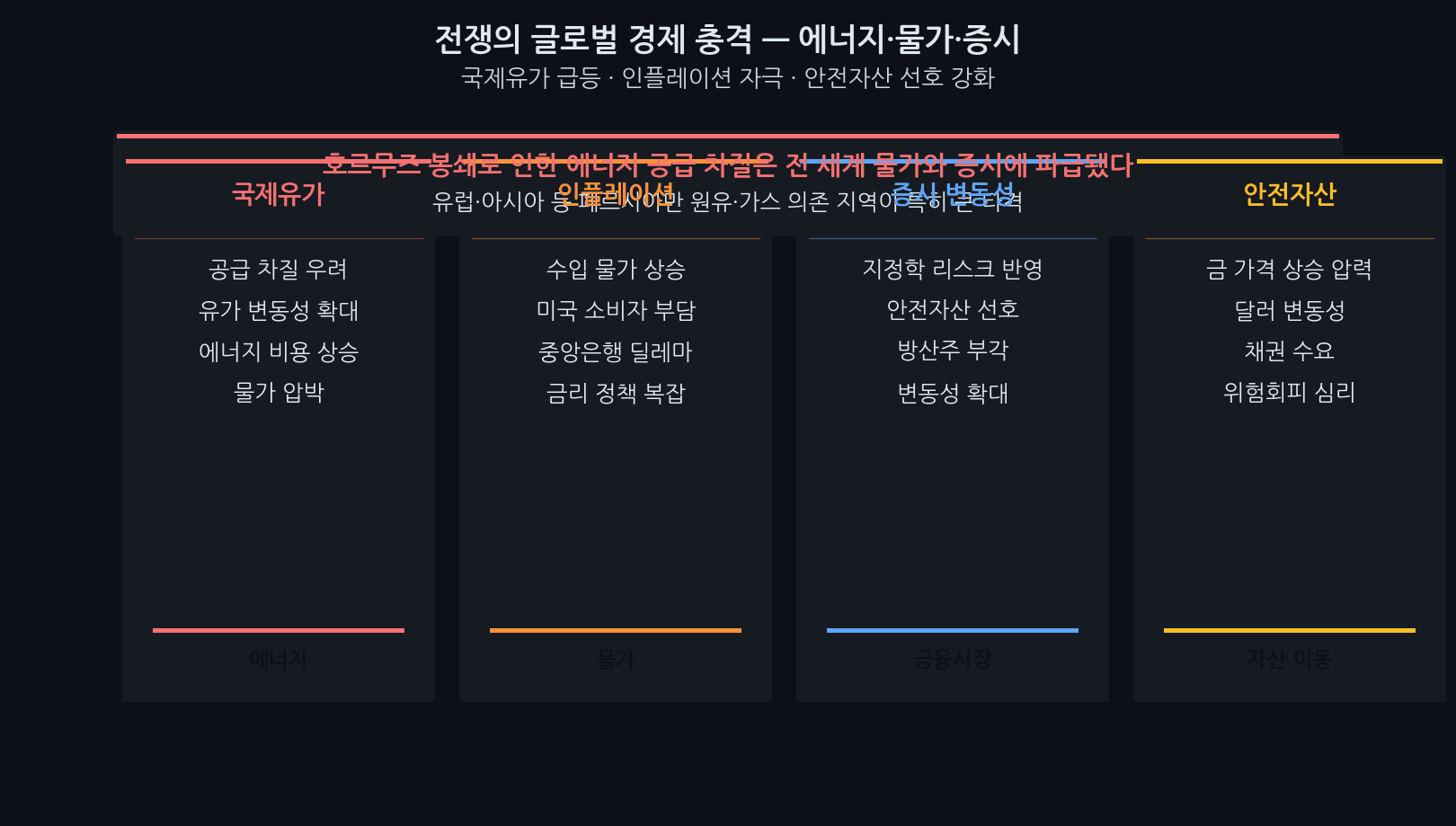
The Iran war has triggered shocks far beyond military spheres. Hormuz supply disruptions amplified oil price volatility, propagating to inflation and equity markets. European and Asian economies dependent on Persian Gulf crude and gas have been hit hardest. Rising energy costs reignited inflation and complicated central bank policy. Financial markets priced in geopolitical risk, with safe-haven demand strengthening.
Impact on Korea — Iran War Spillover
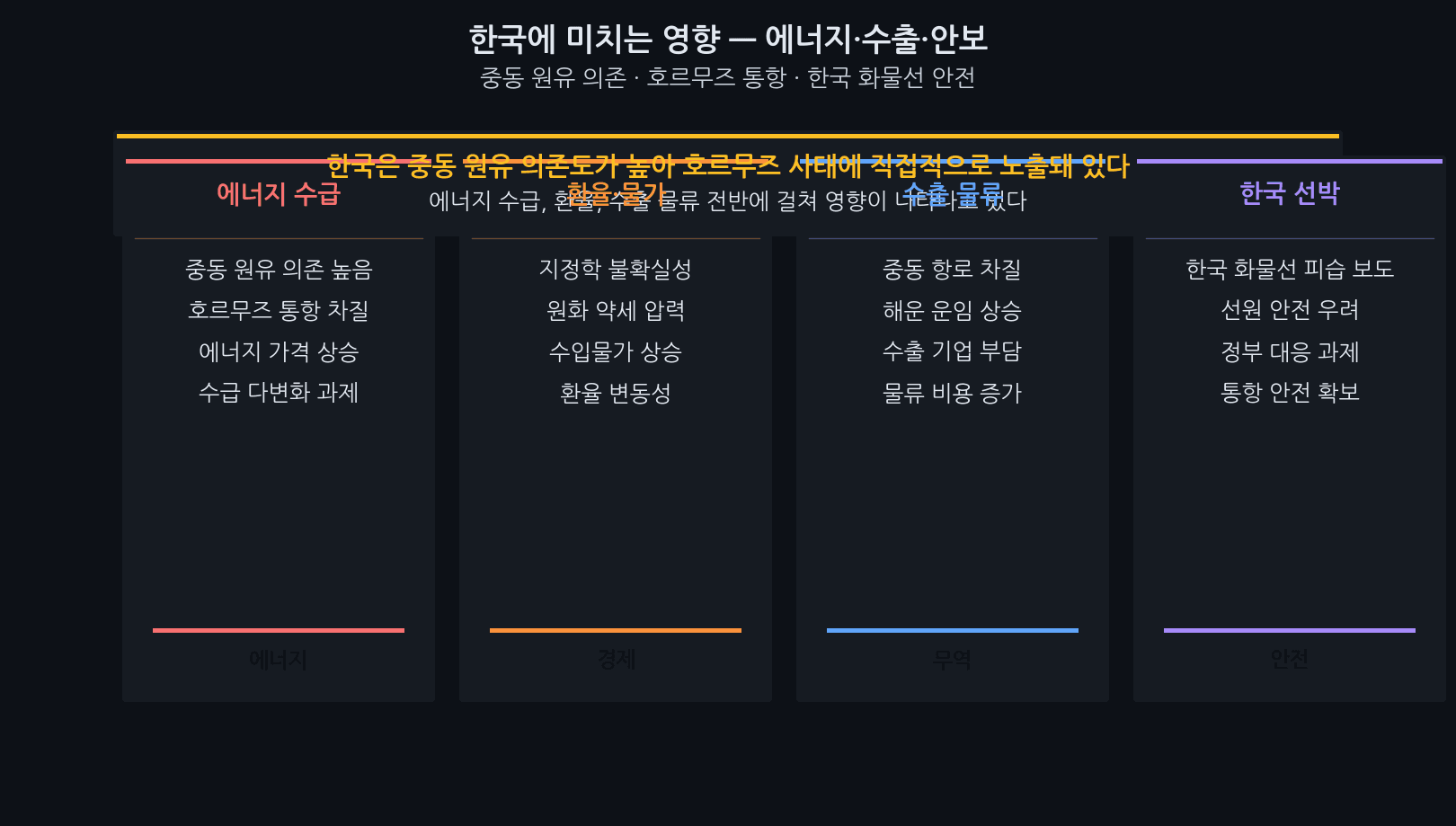
Korea is not a direct party to the Iran war, but is far from insulated economically. Korea imports a large share of its crude from the Middle East via the Strait of Hormuz. Reports indicate Korean cargo vessels were targeted near Hormuz. Energy supply, FX, and export logistics are all affected, raising urgent policy challenges for the government. Cargo vessel and crew safety has become an immediate priority.
Iran War Scenarios — Three Possible Paths
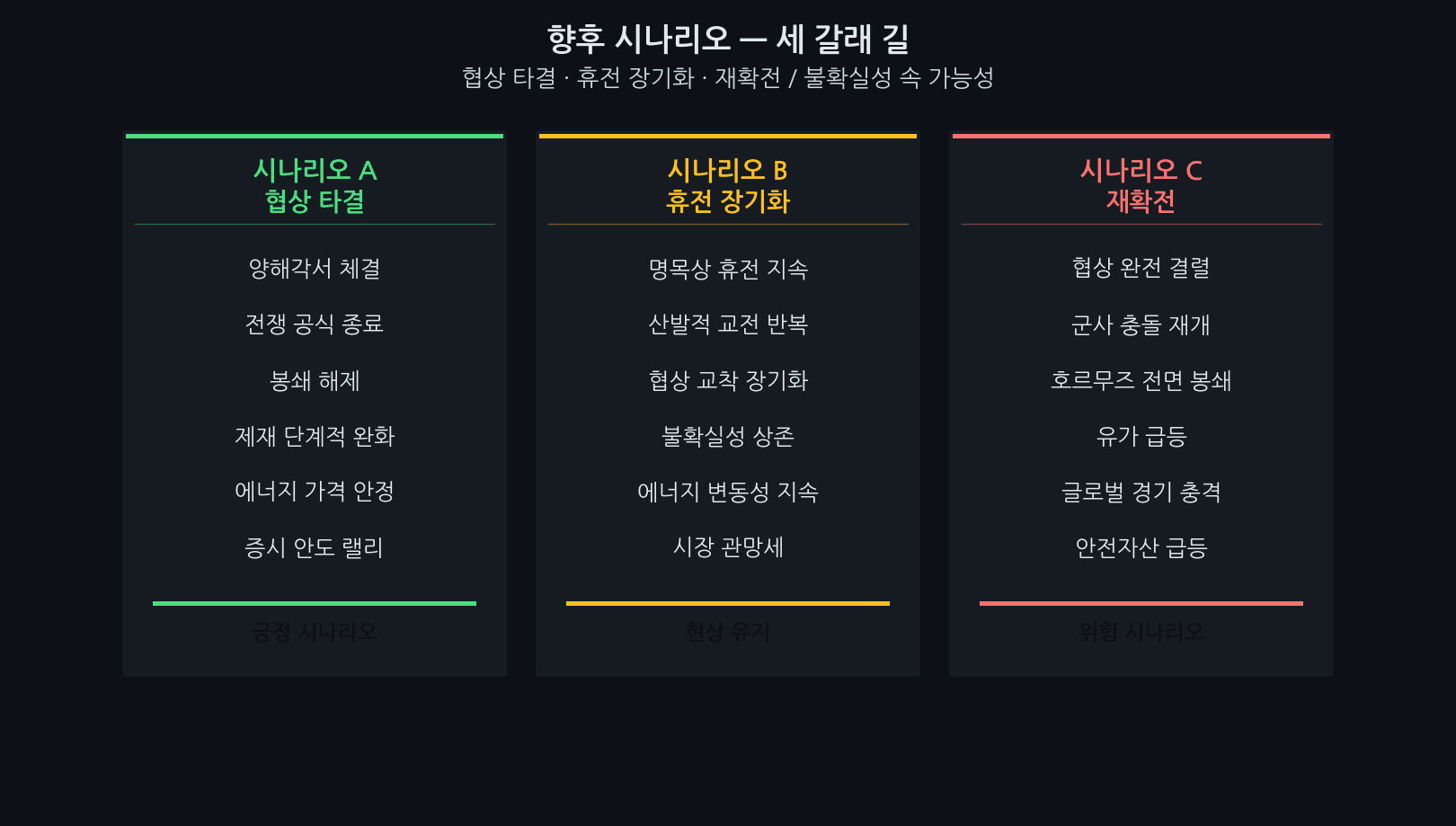
No one can definitively predict where the Iran war goes from here. Drawing from reporting, three scenarios are plausible. ① Negotiated settlement — MOU signed, war officially ends, energy markets stabilize. ② Prolonged ceasefire — nominal truce with sporadic skirmishes, sustained volatility. ③ Re-escalation — talks collapse, military strikes resume, oil prices spike. Which path materializes will dramatically shape the global and Korean economic outlook.
Korean Government and Corporate Response
A prolonged Iran war requires multilayered responses from Korean government and corporations. At the government level: diversifying energy sources (US/Australia LNG, non-Middle East crude), diplomatic efforts for cargo vessel escorts, emergency oil reserve audits. At the corporate level: Middle East exporters are reviewing alternative routes (Cape of Good Hope detour) and insurance cost burdens. Refiners are absorbing short-term shocks via supplier diversification.
5 Strategies for Korean Investors — Iran War Era
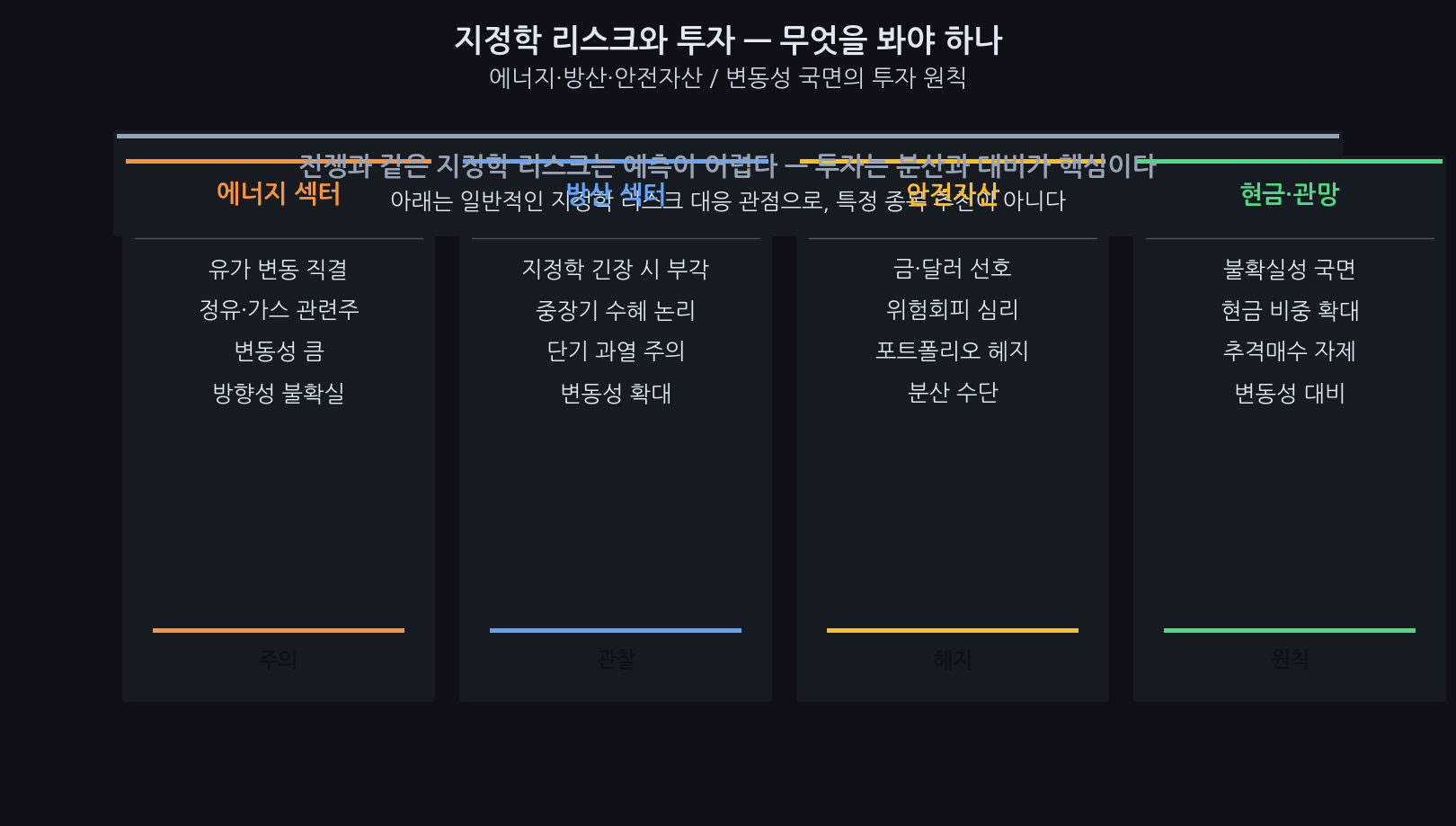
Five strategies for Iran war risk. ① KODEX Gold Futures (132030) — geopolitical hedge, DCA, stop-loss -8%, weight 10%. ② TIGER WTI Crude Futures (130680) — oil price hedge, stop-loss -10%, weight 5%. ③ Hanwha Aerospace (012450) — defense beneficiary, DCA, stop-loss -10%, weight 8%. ④ KODEX 200 (069500) — KOSPI core, 7,500 support, stop-loss -8%, weight 20%. ⑤ Cash 30%+ — reserve for oil spike scenario.
Conclusion — Hoping for Peaceful Resolution of the Iran War
The Iran war is good news for no one. Military conflict produces loss of life, massive economic costs, and permanent scars on global supply chains. A peaceful resolution is the most desirable scenario. For Korean investors, the priority is preparing scenario-based response strategies while resisting reactive trading on short-term volatility. We sincerely hope for an end to the conflict and restoration of peace.