Incheon i Dream — 100M Won Birth Incentive Model Spreads Nationwide
Real-Time Issue · May 24, 2026
Incheon i Dream — 100M Won Birth Incentive Model Spreads Nationwide
Fertility rebound to 0.84 / Jeonnam basic birth allowance / Government baseline support / Parent checklist

Incheon i Dream — Signal of Birth Rate Rebound
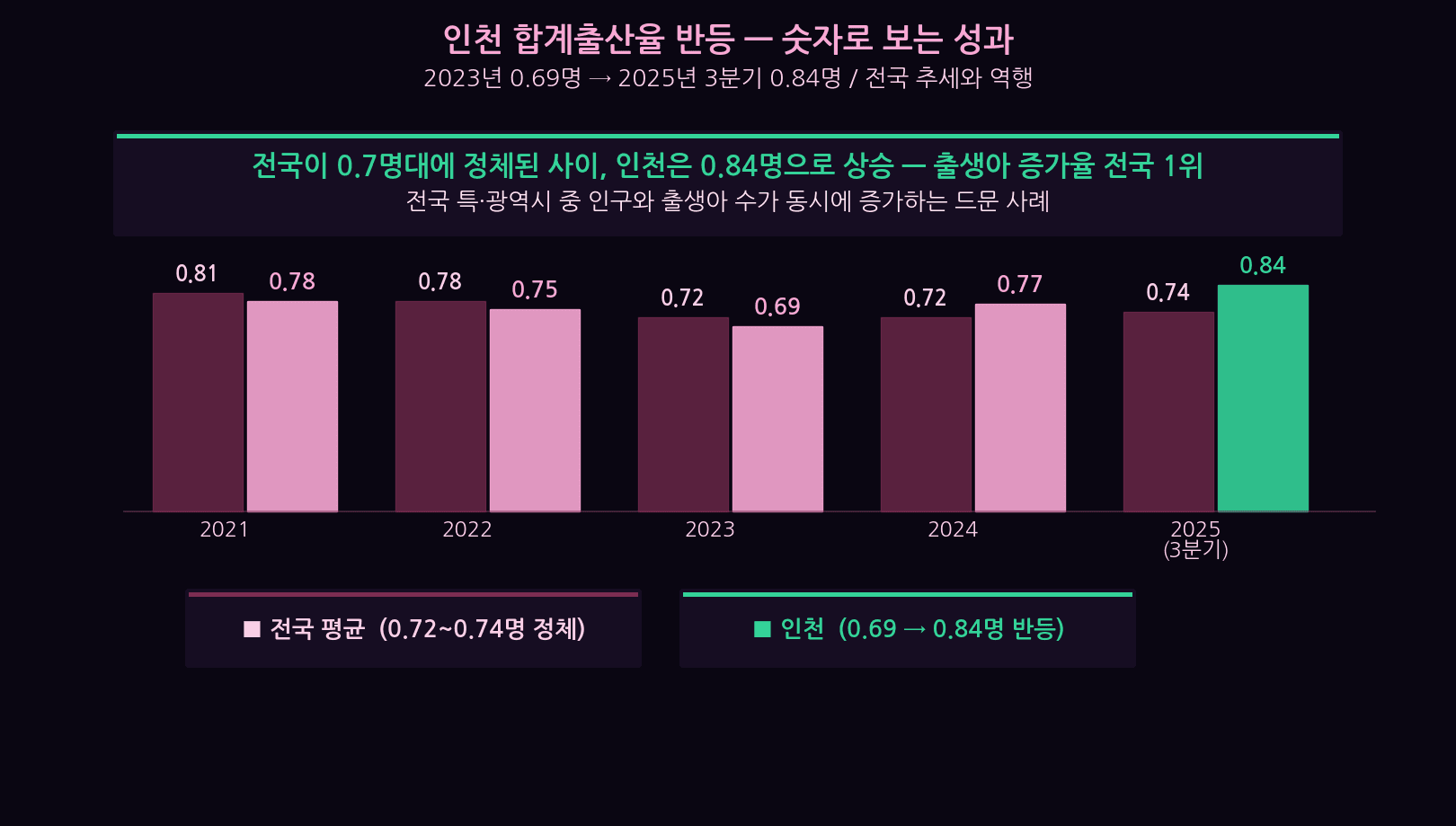
Amid Korea\’s low birth rate crisis with a national fertility rate stuck in the 0.7 range, Incheon has succeeded in reversing the trend and is drawing nationwide attention. The result is striking against the backdrop of a central government spending 50 trillion won annually with no clear impact. Incheon\’s total fertility rate rose from 0.69 in 2023 to 0.84 in Q3 2025. At the center of this turnaround is a policy called Incheon i Dream (1 Billion+ i Dream).
Incheon i Dream — Lifecycle Support Structure
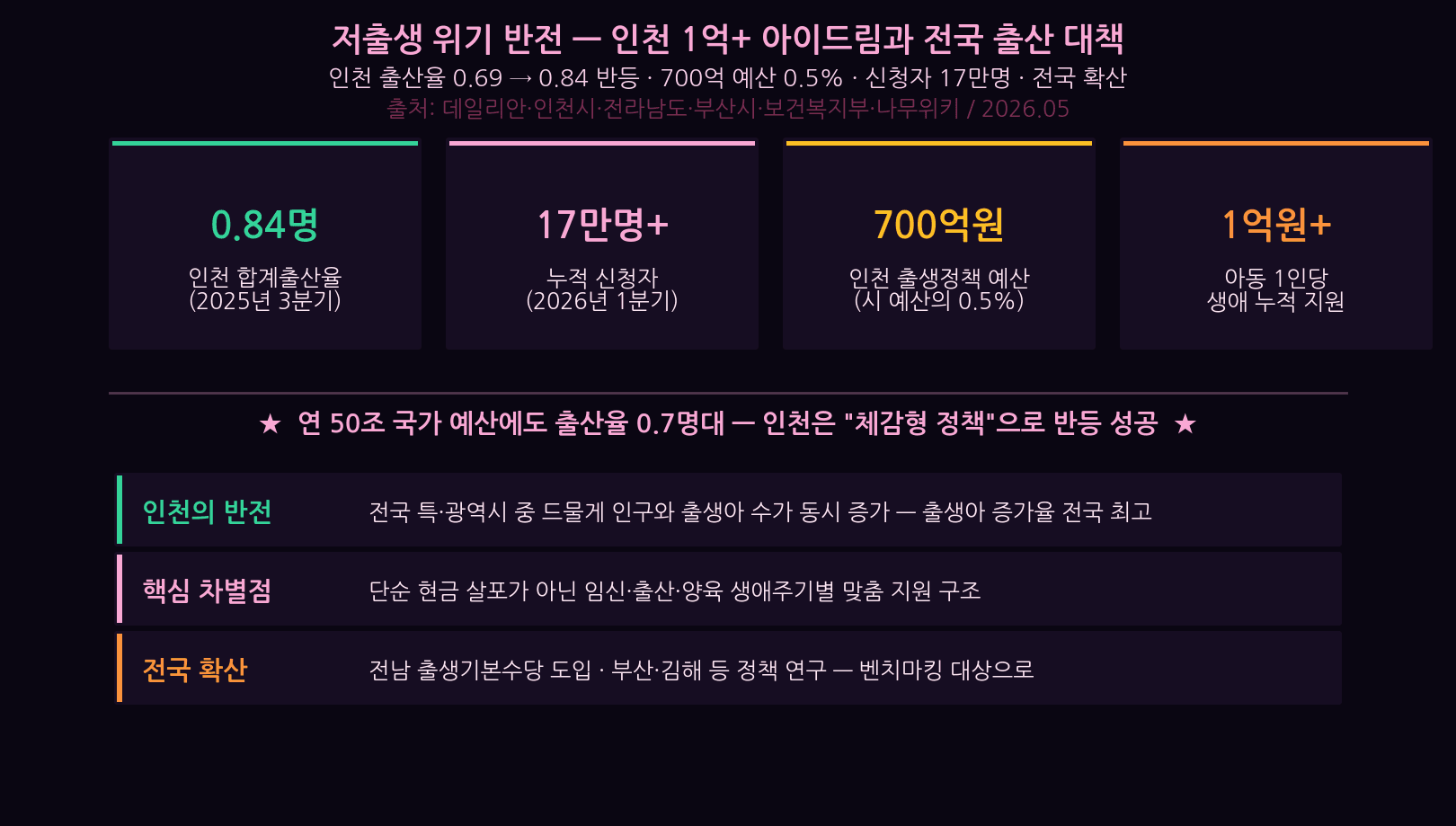
The core of Incheon i Dream is not the amount but the structure. The program provides over 100 million KRW in cumulative support as a child grows. Pregnant women receive 500K KRW for transportation pre-birth; the “angel allowance” pays 1.2M KRW annually from ages 1 to 7 (total 8.4M); the “i Dream allowance” fills the welfare gap after the national child allowance ends; housing, transit, and childcare integration brings the lifetime total to 100M+. Support arrives at the exact moments parents need it most.
Incheon Fertility Rebound — The Numbers
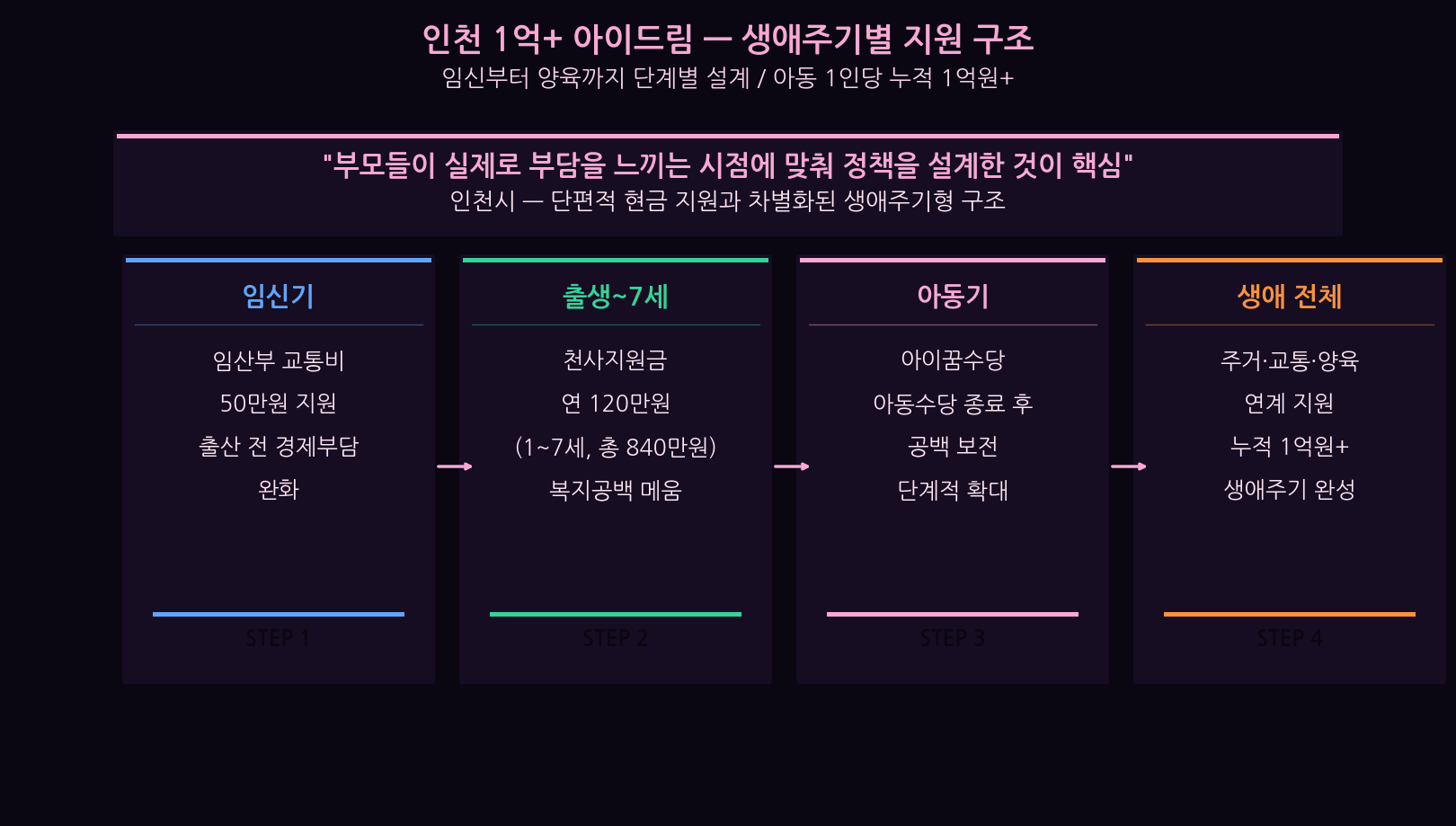
The performance is visible in the numbers. Incheon\’s total fertility rate moved from 0.69 (2023) to 0.84 (Q3 2025) — an increase of +0.15. The national average over the same period stagnated at 0.72 → 0.74 (+0.02). Incheon also leads the country in birth growth rate and is one of the few major metropolitan cities where both population and births are rising simultaneously. Despite receiving the same federal support, outcomes differ dramatically based on local policy design.
Nationwide Birth Incentive Policies — Compared
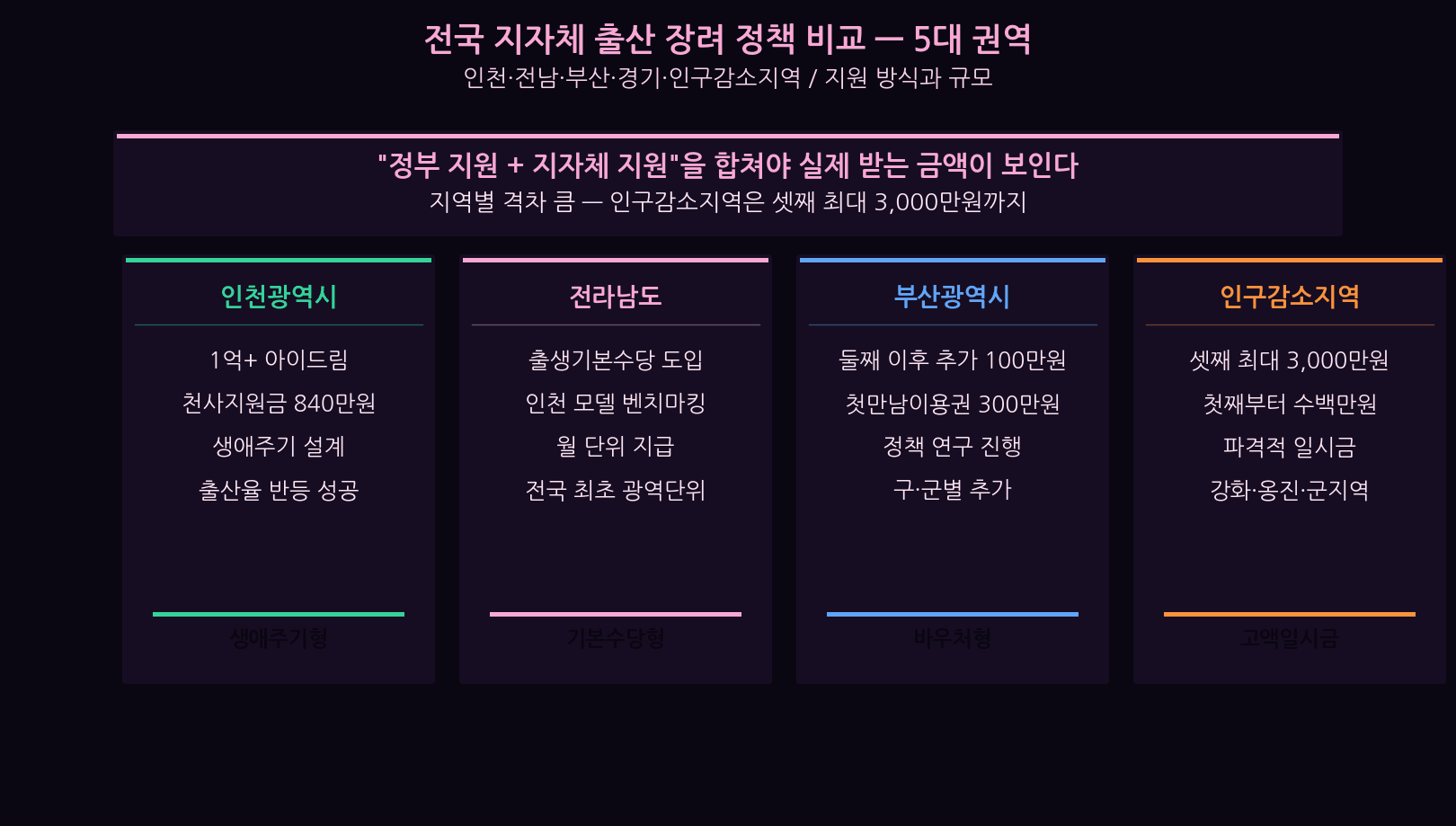
Birth support equals the sum of central + local subsidies, and the amount depends heavily on where you live. Incheon uses a lifecycle model (i Dream); Jeonnam pioneered the regional basic birth allowance; Busan combines vouchers and cash with bonuses from the second child; Gyeonggi pays a postnatal care subsidy of 500K per birth in local currency; depopulating county areas offer up to 30M KRW lump sums for a third child. The benefits vary wildly by jurisdiction.
Lump Sum vs. Lifecycle — Which Works Better?
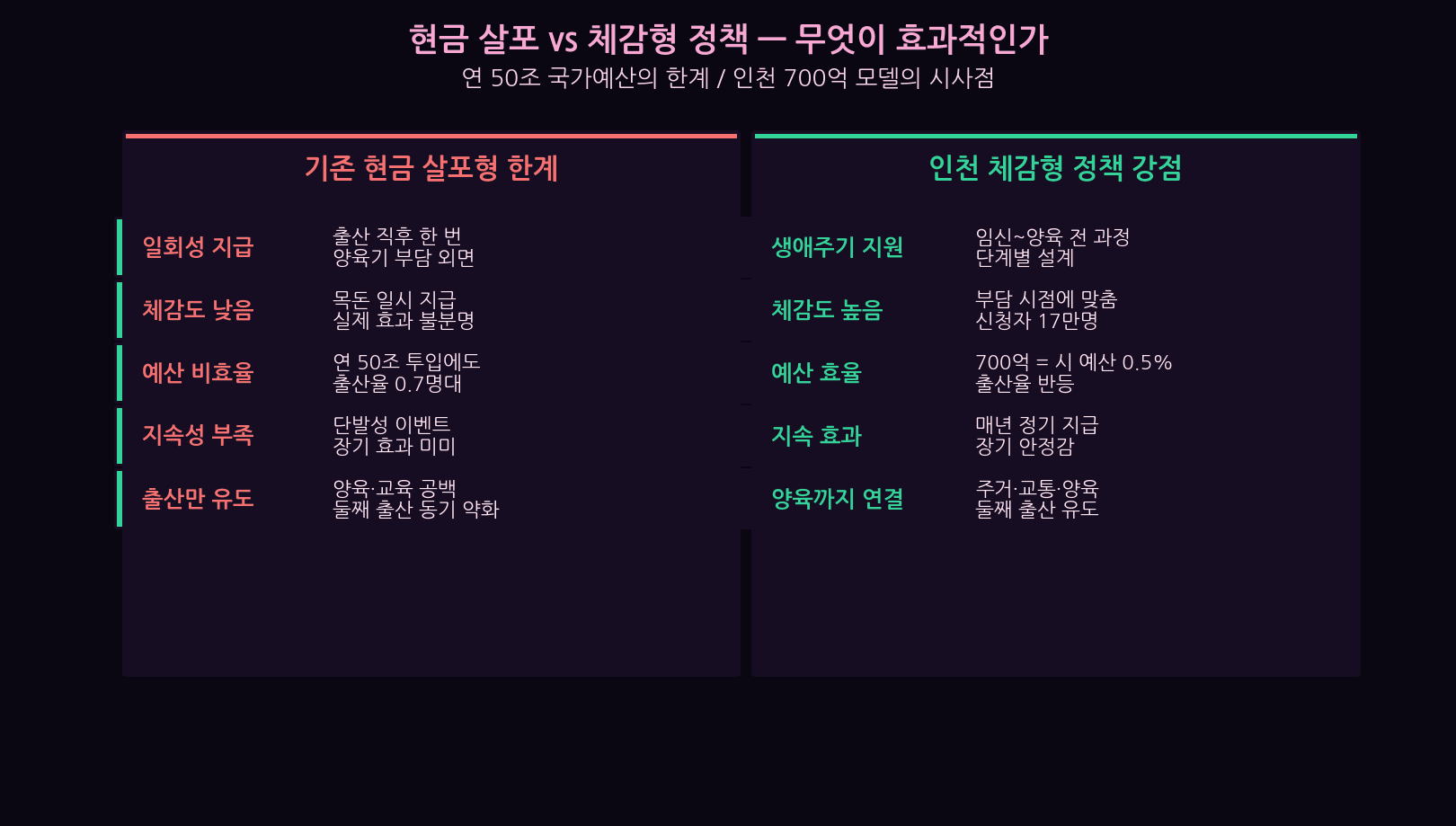
A long-standing debate in low-fertility policy: are large one-time lump sums better than sustained support across the parenting years? The Incheon i Dream case sides decisively with the latter. Support that arrives whenever costs spike has more impact on actual fertility decisions than one big payment at birth. Incheon achieved its rebound on just 70B KRW — a fraction of the central government\’s 50T annual budget that has failed to move the needle.
Jeonnam Basic Birth Allowance — First Spread of the Incheon i Dream Model
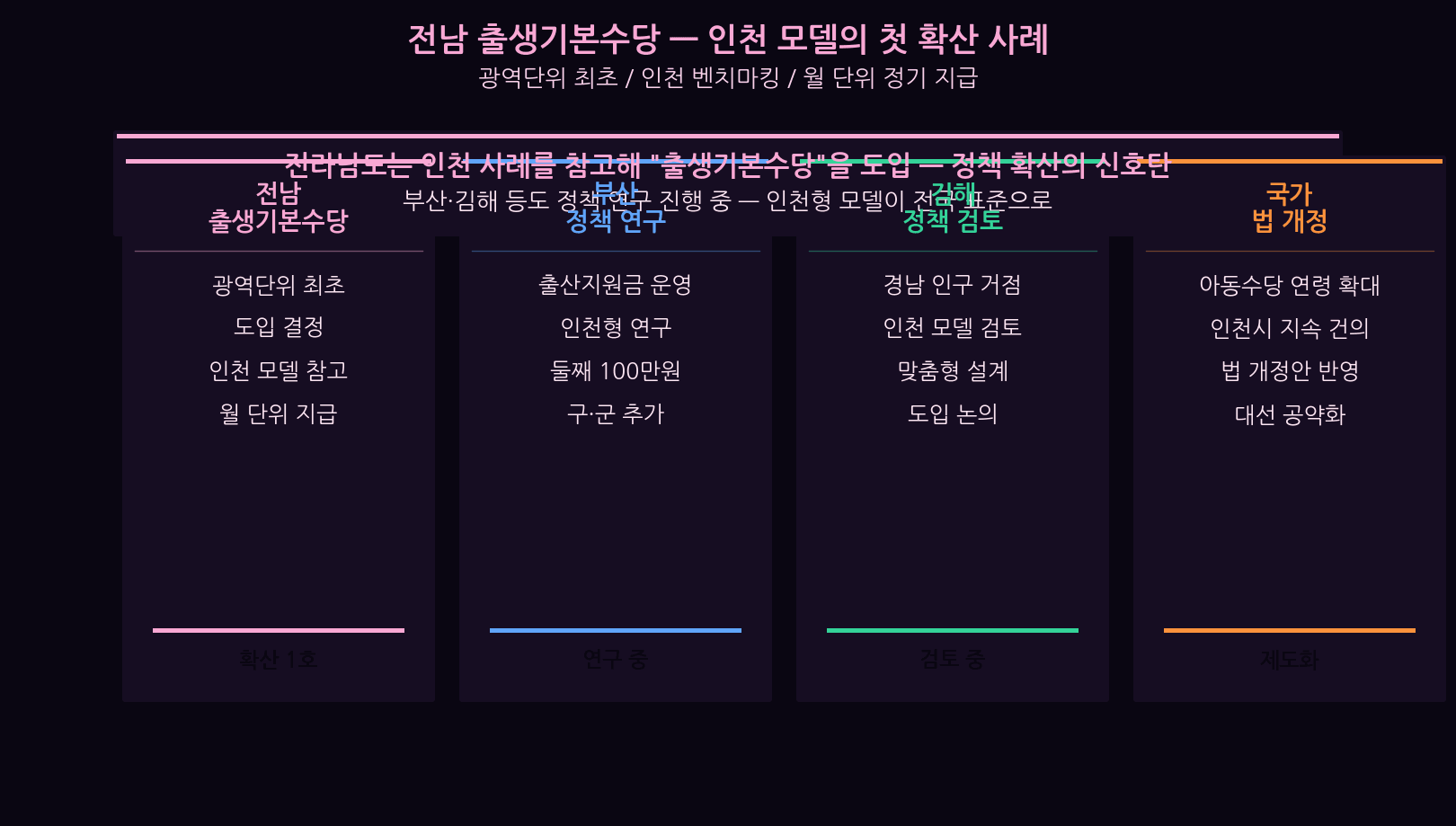
Incheon i Dream\’s success is spreading to other regions. Jeollanam-do referenced the Incheon case and introduced its own basic birth allowance — the first adoption of the Incheon model at the provincial level. Busan and Gimhae are conducting similar policy studies. Incheon city has also lobbied the central government and National Assembly to extend the child allowance age, and that proposal has reached legislative amendments and presidential campaign platforms.
2026 Universal Government Birth Support — Income-Blind Baseline
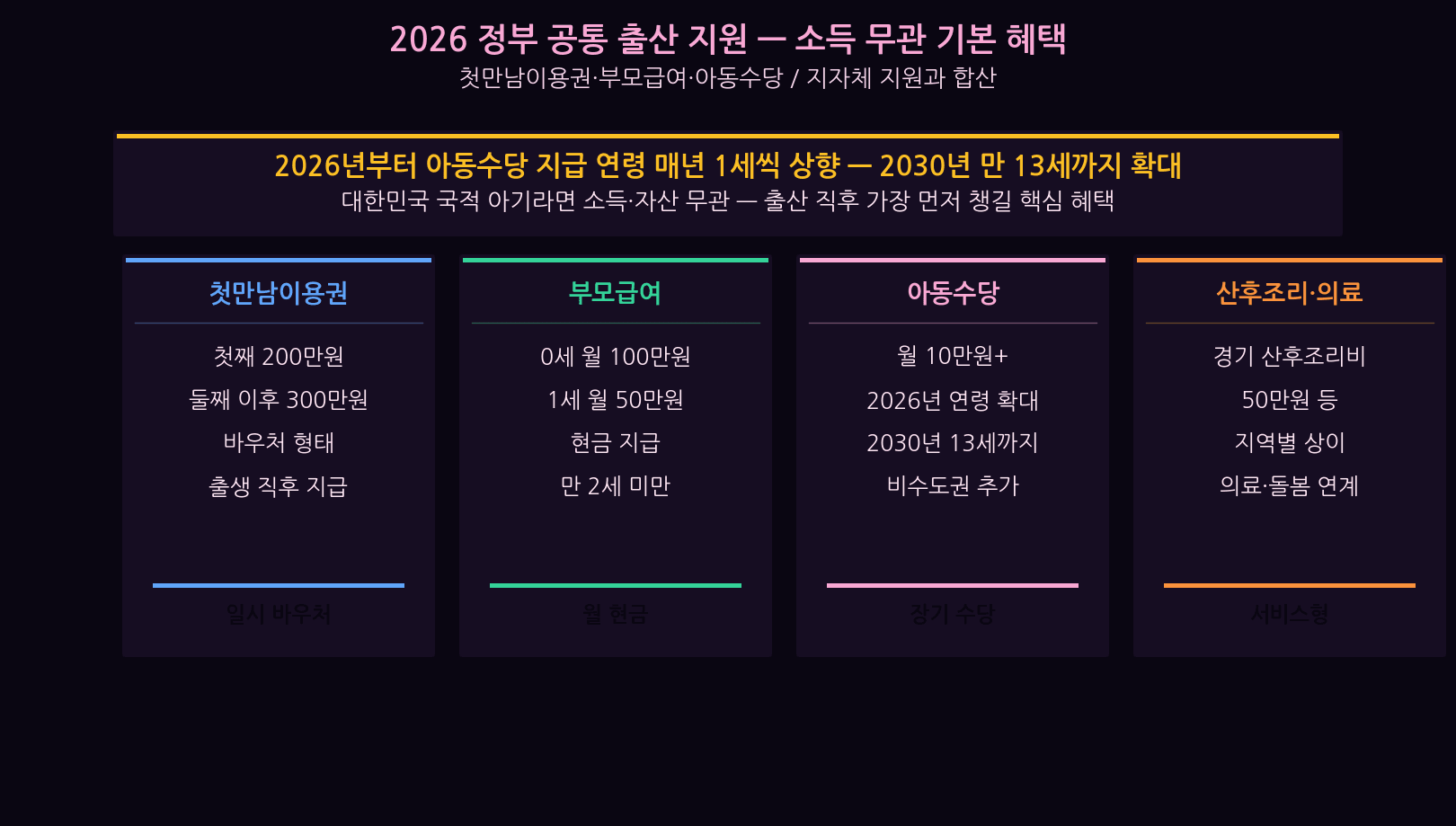
Before chasing local benefits, check universal central government support first. Any child with Korean nationality receives these regardless of parental income. First Meeting Voucher — 2M for the first child, 3M for subsequent children. Parent Allowance — 1M/month for age 0, 500K/month for age 1 (cash). Child Allowance — 100K+/month, with the eligibility age expanding by 1 year annually starting 2026, reaching age 13 by 2030. Postnatal and maternal care vary by region. Apply immediately via gov.kr, bokjiro.go.kr, or your local welfare center.
Policy Effects and Remaining Challenges
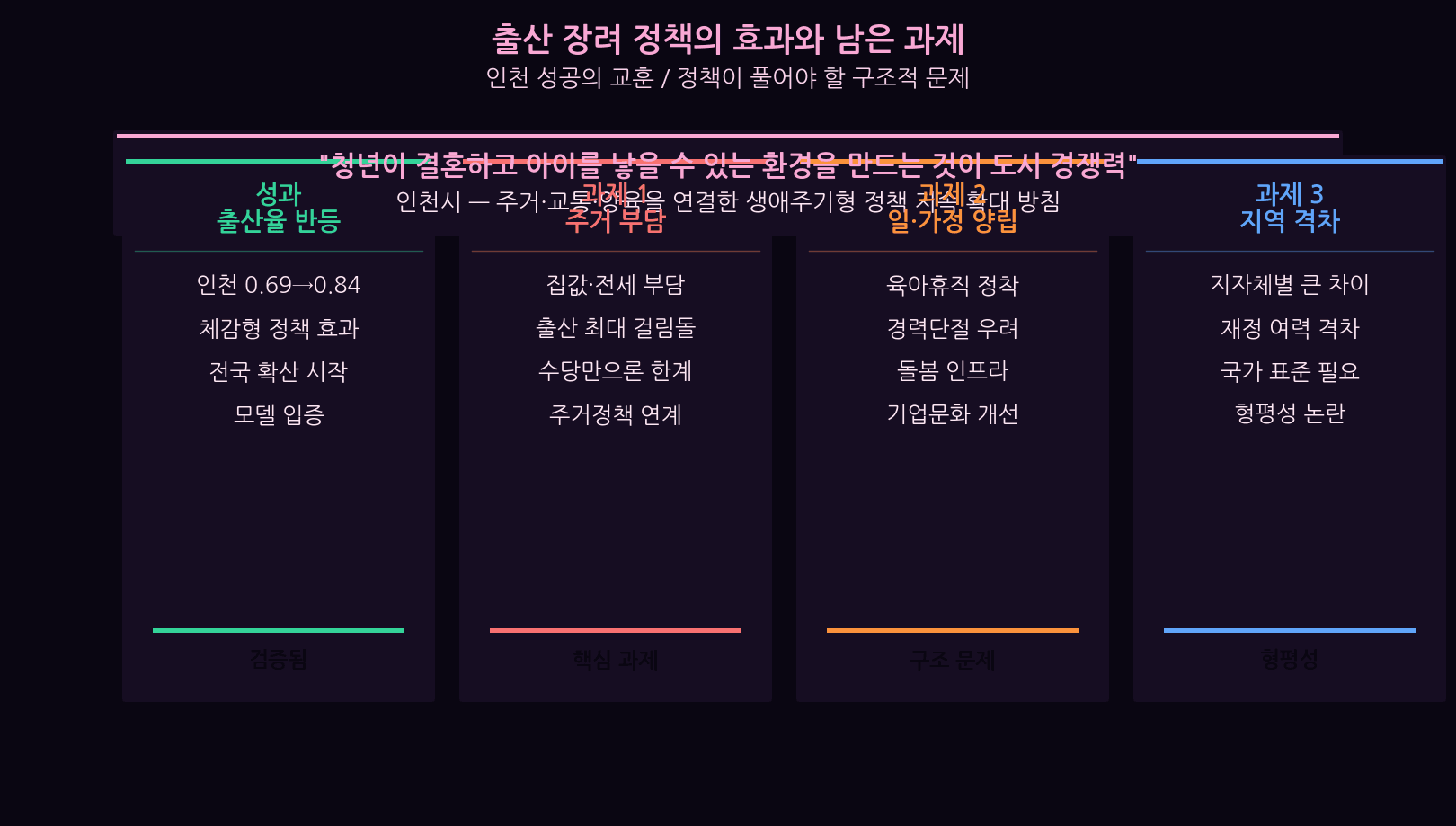
The Incheon i Dream model proves that reversing the fertility decline is not impossible. But cash subsidies alone cannot solve everything. The biggest wall remains housing affordability — home prices and lease deposits are the single largest barrier to having children, and a birth allowance cannot offset that. Work-family balance culture, childcare infrastructure, and fiscal disparities between local governments are all structural challenges still to be solved. “Building a city where young people can marry and have children is itself the city\’s competitiveness” — Incheon city official.
5 Checkpoints for Expecting Parents — Birth Incentive Application Guide
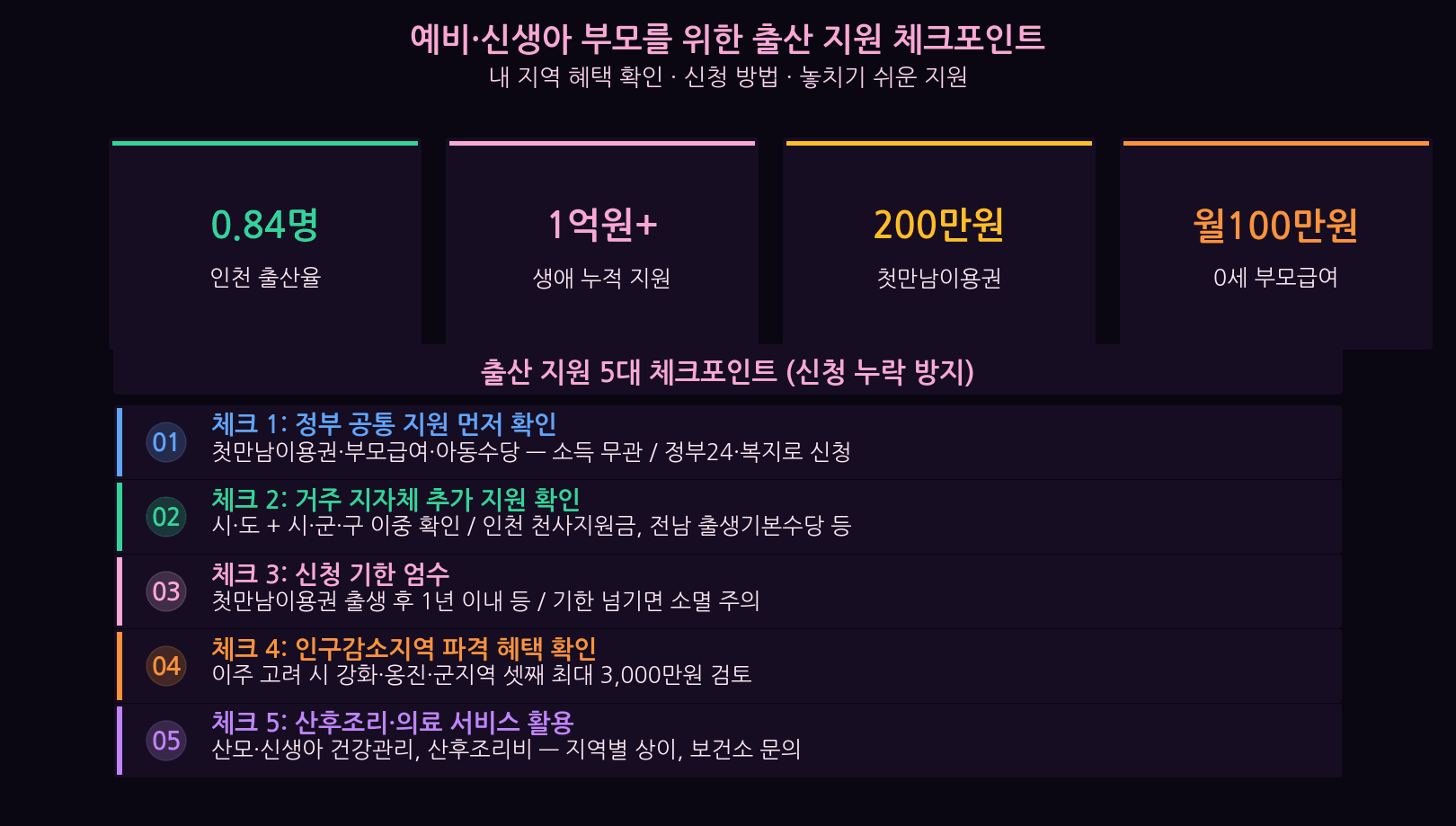
Five checkpoints for claiming birth incentive support. ① Apply for universal government support first (First Meeting Voucher, Parent Allowance, Child Allowance) via gov.kr and bokjiro. ② Double-check local benefits — both province and city/county level. ③ Strictly observe deadlines — benefits lapse if missed. ④ Consider relocation to depopulating regions for third-child lump sums up to 30M KRW. ⑤ Inquire at health centers for postnatal and maternal care services. Incheon residents claim Incheon i Dream angel allowance; Jeonnam residents add the basic birth allowance.
Sources: Dailian Bokjiro Government24